

Categories
Learn how Categories in Paragraph CMS create collection-specific taxonomies for classifying and organizing pages without relying on global labels.
 Grzegorz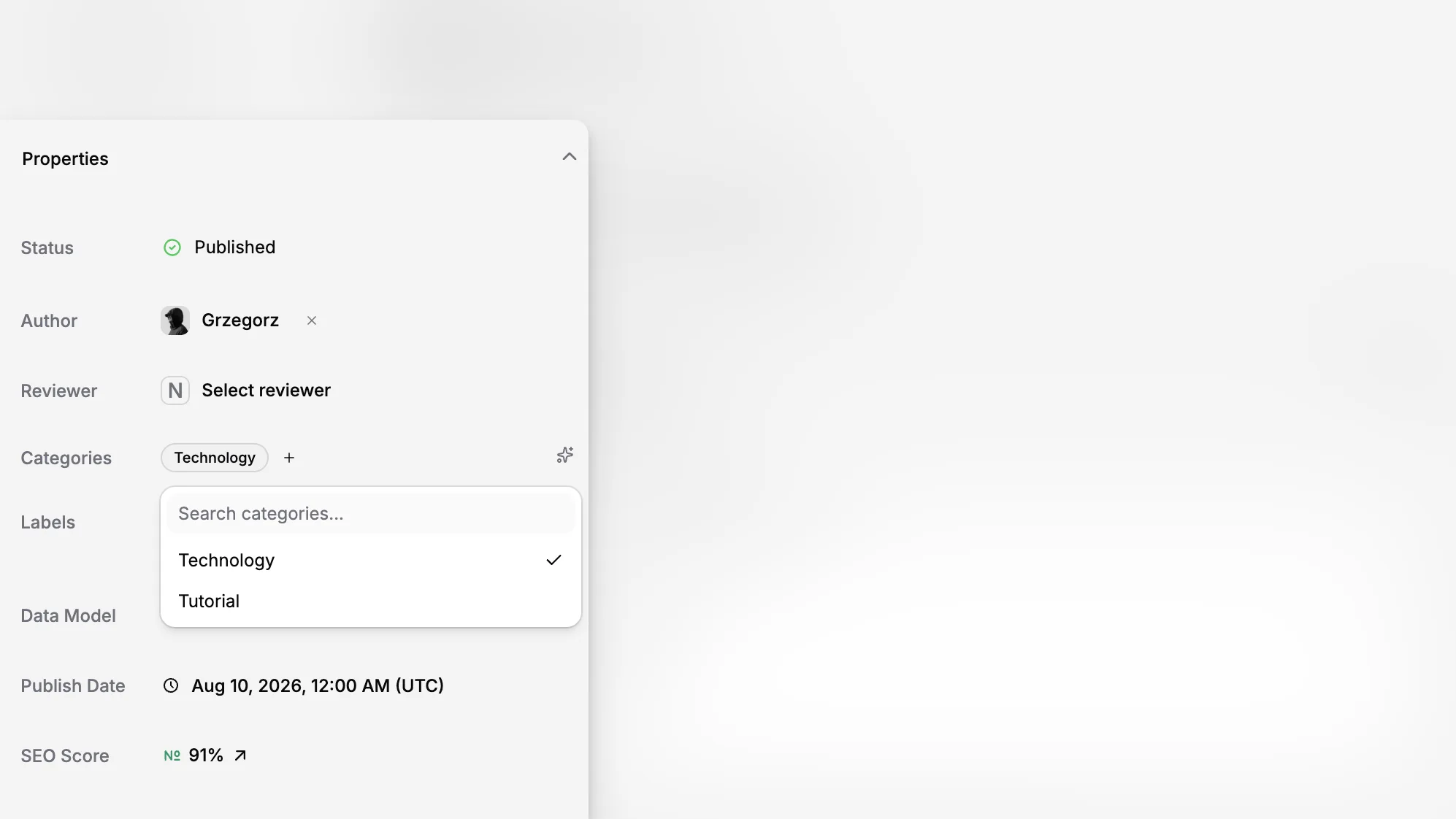
Categories help teams organize pages within the context of a single collection. They create a shared, collection-specific taxonomy for content such as blog posts, documentation, product pages, or releases.
Unlike Labels, categories are not global across the organization. A category belongs to the collection that defines it, so each content area can use terms that make sense for its own pages.
Define categories where the content lives
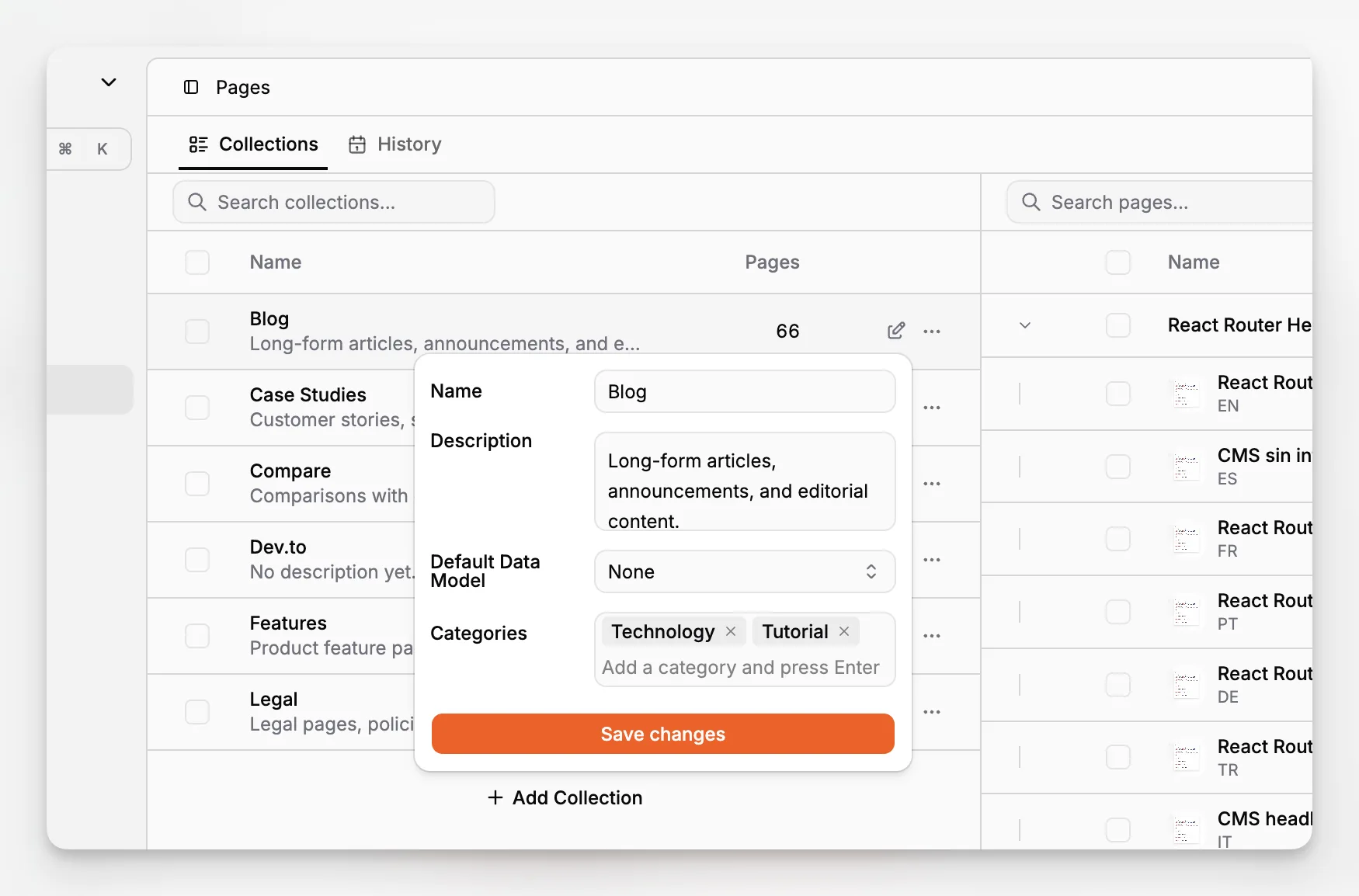
Categories are created and managed in a collection. When creating or editing a collection, teams add the reusable category names that should be available to its pages.
This is useful when different collections need different taxonomies. A blog can use categories such as Guides, Product Updates, and Company News, while a documentation collection can use Getting Started, API Reference, and Troubleshooting.
If a category is removed from a collection, it is also removed from pages in that collection that used it. That keeps the available options and assigned values consistent as the taxonomy changes.
Choose categories directly on a page
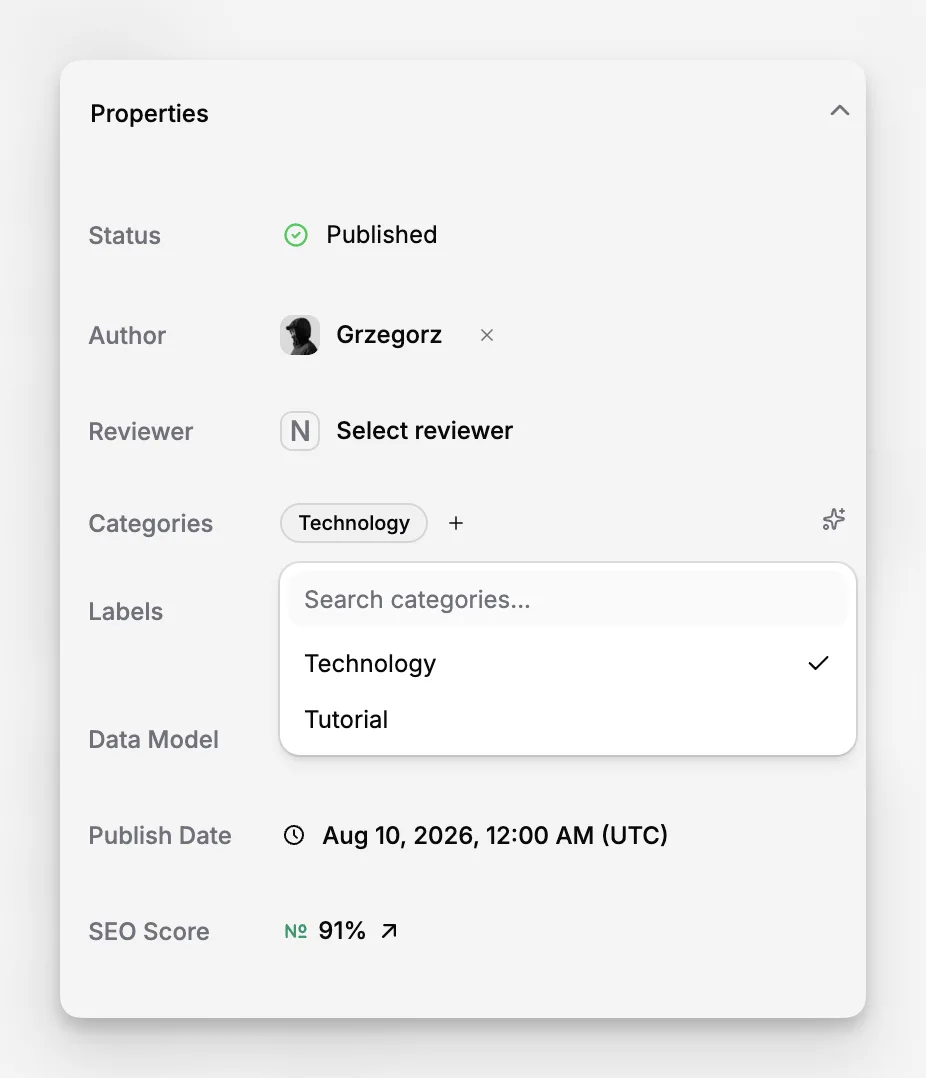
Once a page belongs to a collection with categories, editors select one or more of its available categories from Page Properties. The selector only shows categories defined by the current collection, which prevents unrelated content areas from sharing the wrong taxonomy.
Changing a page to another collection clears categories that are not available in the new collection. This keeps a page’s classification aligned with the content area it belongs to.
Categories and labels solve different problems
Categories and labels can work together, but they organize content at different scopes.
Categories are collection-specific. Use them for a taxonomy that belongs to one content type or area.
Labels are organization-wide. Use them for tags that should work across multiple collections, such as a campaign, priority, audience, or initiative.
For example, a blog post can be categorized as a Guide within the Blog collection while also carrying an organization-wide SEO Priority label. The category explains where the content belongs; the label connects it to broader work across Paragraph CMS.
