
Top 4 Strapi Alternatives for Modern Content Teams
Explore the top 4 Strapi alternatives for modern content teams, from AI-native Paragraph CMS to Directus, Sanity, and Contentful.
 Grzegorz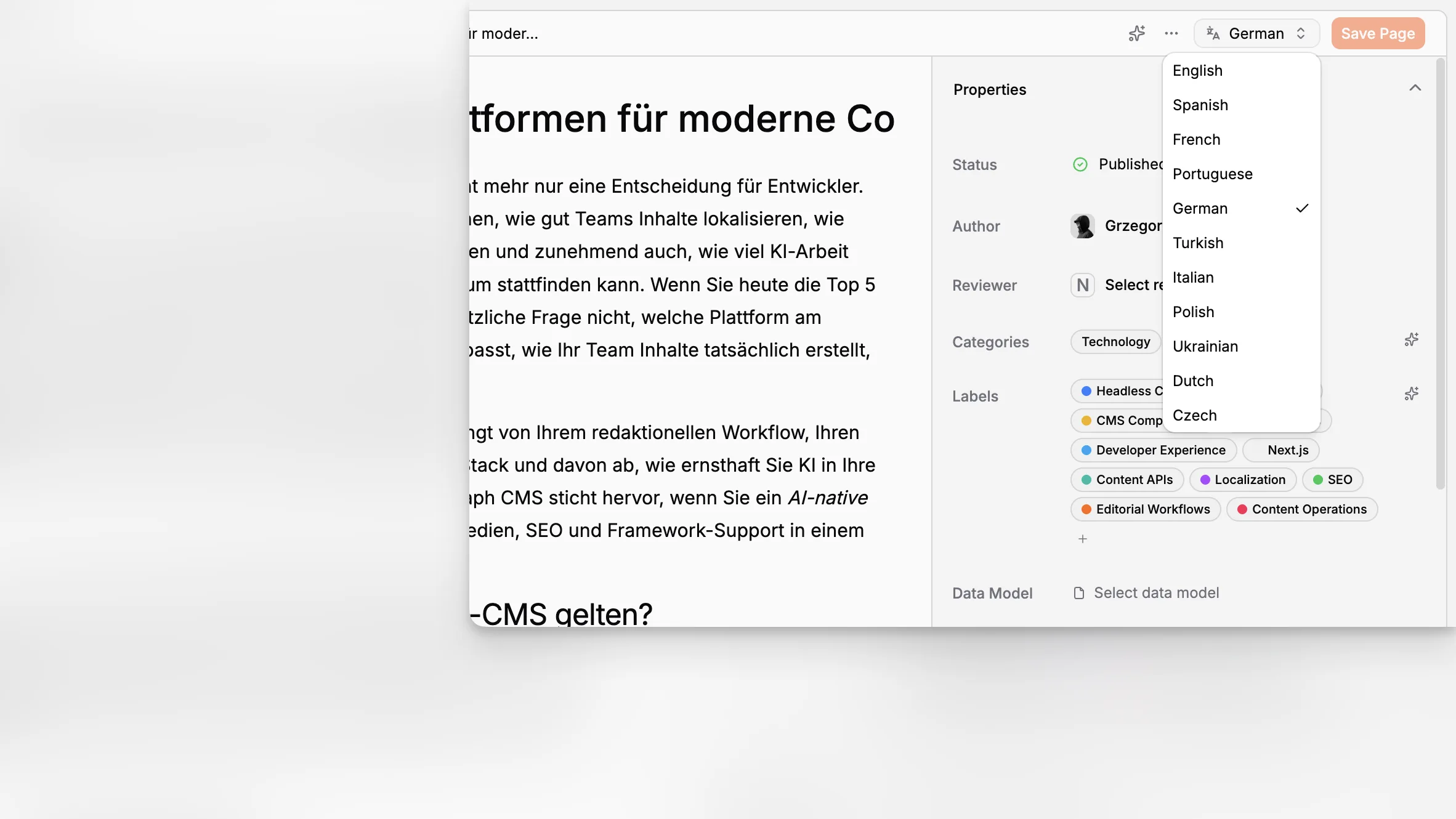
Strapi still makes sense for plenty of developer-led projects, especially if you want an open-source Node.js CMS you can self-host and extend. But it is no longer the only credible answer for teams that need structured content, localization, editorial workflows, and modern delivery. If your real problem is not just API generation but faster content operations, the best alternative often depends on how editors, developers, and AI-assisted workflows actually need to work together.
TL;DR: The strongest Strapi alternatives are not interchangeable. Paragraph CMS is the most interesting fit for teams that want an AI-native headless CMS with built-in SEO, localization, media handling, and developer-friendly delivery in one product. Directus fits database-first teams, Sanity suits highly structured custom editorial setups, and Contentful remains a common enterprise option. The right choice depends less on brand recognition and more on workflow friction.
Why do teams start looking for a Strapi alternative?
Strapi remains a serious product. Its official docs emphasize REST and GraphQL APIs, extensibility, self-hosting, marketplace plugins, and deployment to Strapi Cloud or your own infrastructure. Its hosting pages also make clear that self-hosting, custom databases, and bring-your-own infrastructure are still central to the platform story. Strapi documentation and Strapi self-hosting both reinforce that developer-first positioning.
That is exactly why many teams adopt it first. It gives engineering a lot of control. But once content operations become more demanding, the tradeoffs become clearer.
Common reasons teams look elsewhere include:
editorial teams needing more help inside the CMS rather than around it
multilingual publishing that becomes too manual
SEO workflows spread across separate tools
media metadata and page optimization work that still depends on repetitive hand entry
content teams wanting speed without waiting on custom implementation for every improvement
In other words, teams often outgrow a CMS decision that was made primarily for schema flexibility or self-hosting convenience.
What should you compare instead of just feature checklists?
The usual comparison posts reduce CMS evaluation to a long matrix of APIs, roles, and field types. That is useful, but incomplete. Nearly every serious headless CMS can model content, expose APIs, and support modern frameworks in some form.
A better buying question is this: where does the work actually happen?
If your team spends most of its time in external docs, AI tools, spreadsheets, and SEO plugins before content ever reaches the CMS, then the CMS is only acting as storage. That may be fine for some stacks. It is less fine for content-heavy teams publishing at speed.
The most important criteria usually look like this:
Criterion | Why it matters | What to watch for |
|---|---|---|
Editorial velocity | Faster drafting, revision, and publishing reduce content bottlenecks | Whether AI, media, SEO, and localization are built in or bolted on |
Content structure | Clean models make content reusable across channels | How flexible the schema is without becoming hard to govern |
Localization | Multilingual content gets expensive when workflows are fragmented | Translation support, retranslation, locale handling, and publish control |
Developer fit | Engineers still need predictable APIs and framework support | SDK quality, documentation, and integration patterns |
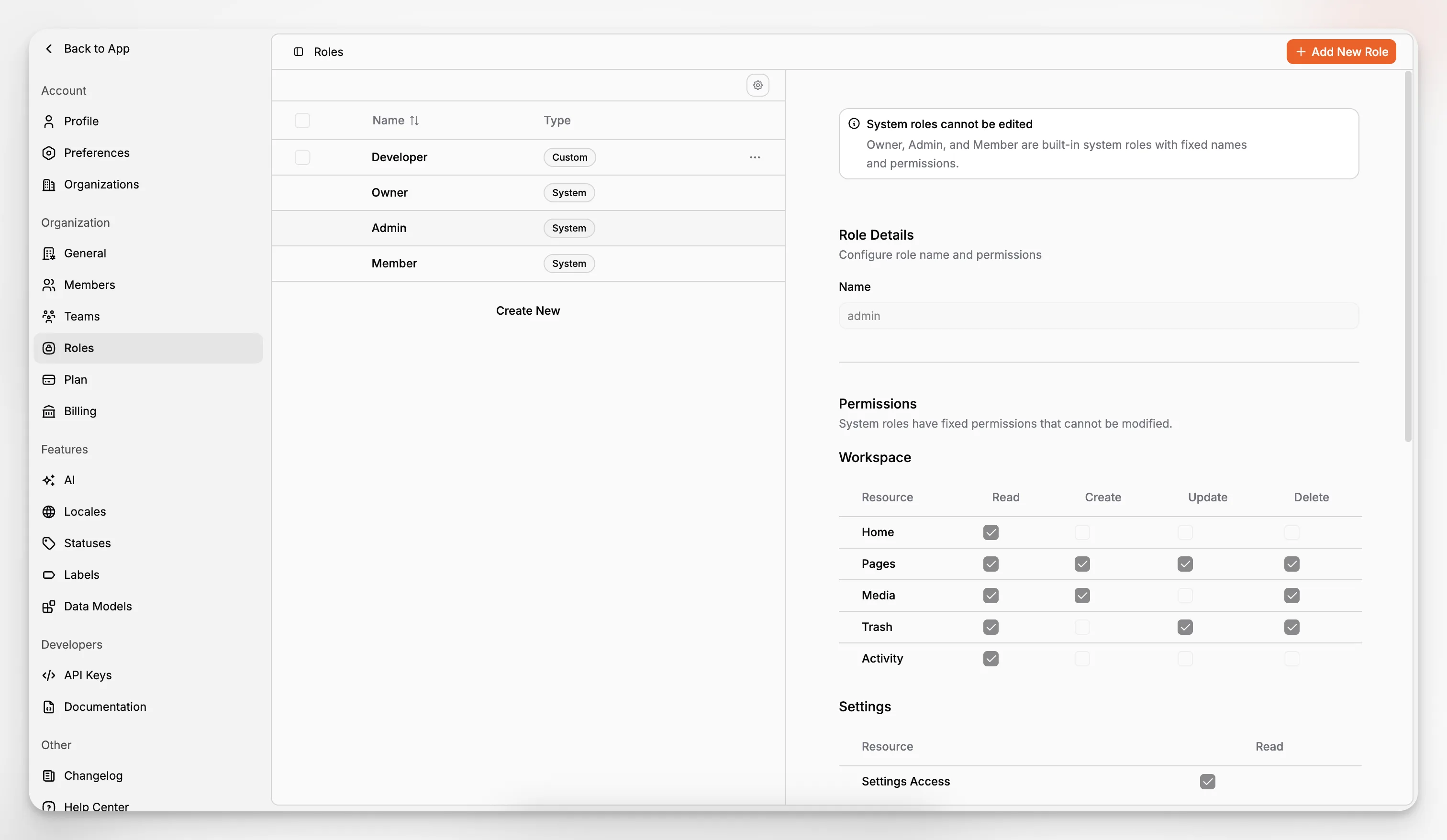
Governance | More contributors create more permission and review risk | Roles, teams, auditability, and status controls |
Delivery performance | Fast delivery affects UX and operational overhead | CDN behavior, media optimization, and caching patterns |
That framing is why an AI-native CMS deserves separate consideration. It changes where work happens, not just how content is stored.
Which four Strapi alternatives are most worth shortlisting?
If you want a practical shortlist instead of a giant directory, these four are the most sensible places to start for modern headless CMS evaluation.
1. Paragraph CMS
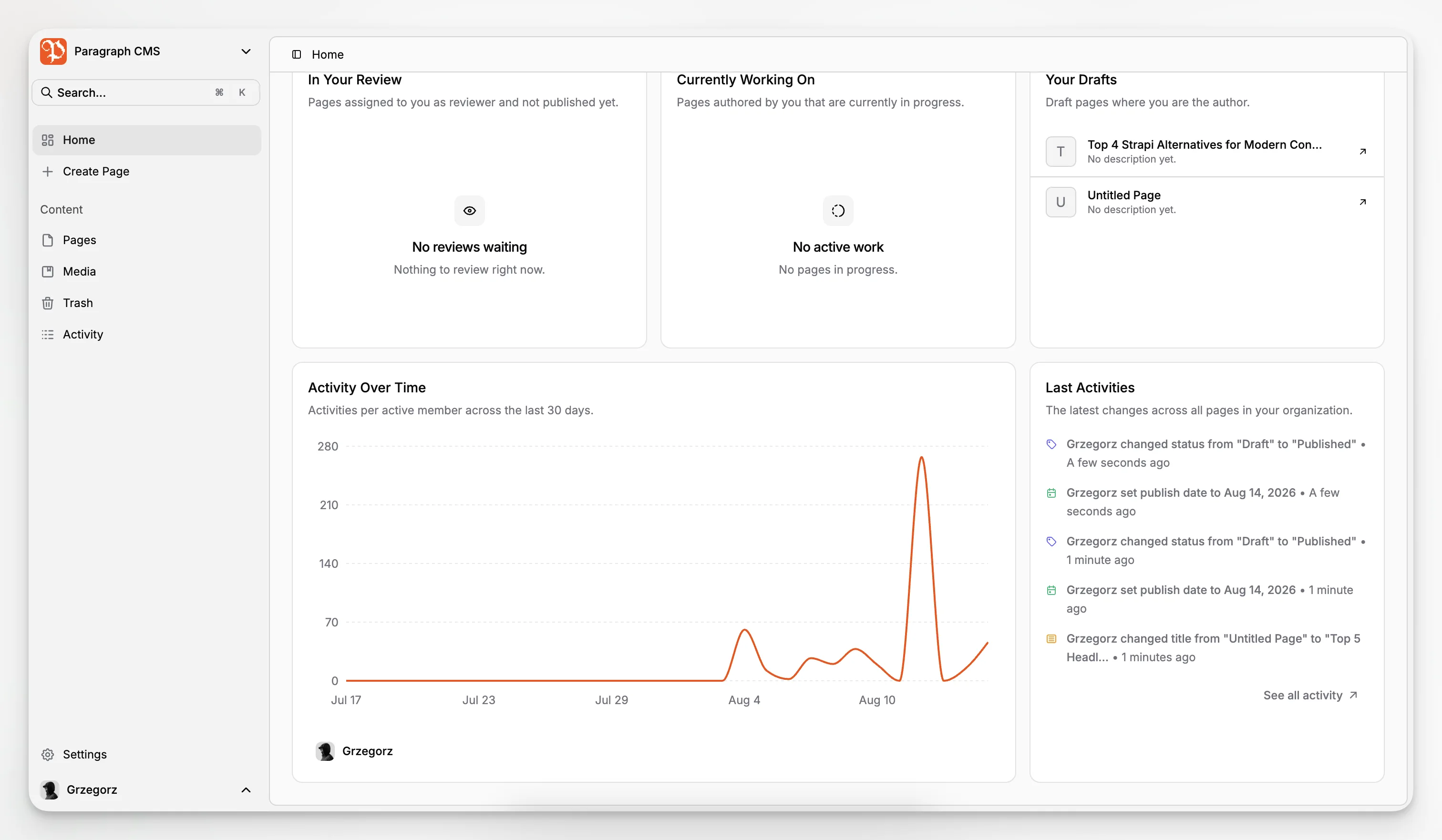
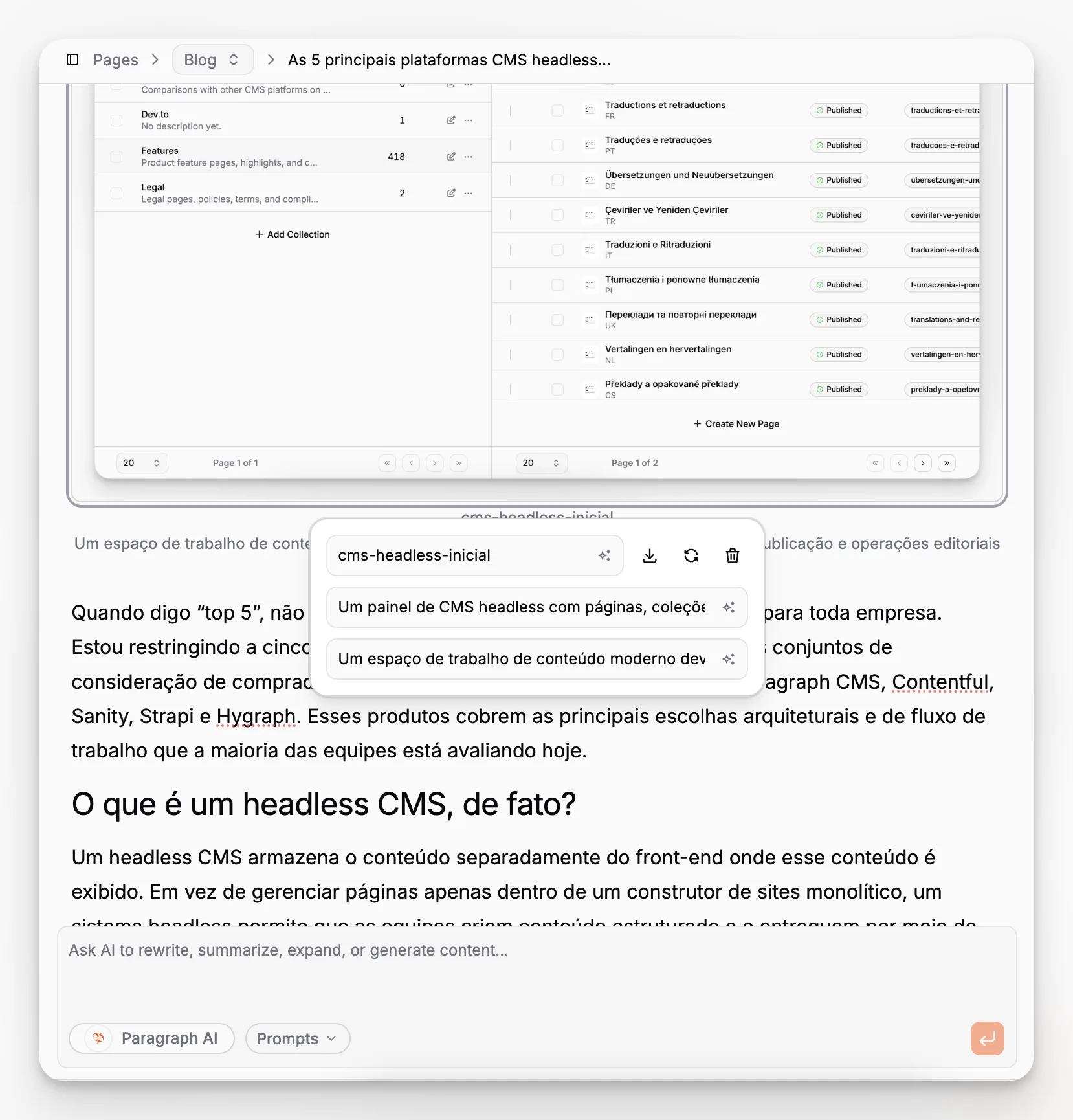
Paragraph CMS positions itself as an AI-native headless CMS, which is meaningfully different from simply adding AI features to a traditional CMS. Its public product pages describe built-in AI chat, an AI editor, generative SEO, one-click translation and retranslation for 75+ languages, media management, roles, permissions, and a global edge delivery model. The product also highlights official support for frameworks including Next.js, Astro, Nuxt, React Router, and SvelteKit. Those capabilities are described across the main product overview and feature documentation.
What stands out is not one isolated feature. It is the way authoring, optimization, localization, and publishing are brought into a single workflow. For teams producing pages, articles, and localized content regularly, that is a different operational model than treating the CMS as an admin shell plus API.
2. Directus
Directus documentation presents the platform as a highly flexible open-source layer over your database, with granular permissions, CRUD operations, webhooks, and task automation. That makes it especially attractive for teams that already think in terms of database ownership and internal operational control.
Directus is often a strong Strapi alternative when the database is the center of gravity and the CMS should adapt to it.
3. Sanity
Sanity Studio docs and its schema and forms documentation show why Sanity is frequently shortlisted for structured content-heavy teams. Sanity Studio is highly configurable, supports custom schemas and views, and is particularly strong when teams want to design a custom editorial environment around structured content rather than accept a fixed admin pattern.
It is a flexible option for organizations with the development appetite to shape the authoring experience carefully.
4. Contentful
Contentful localization and localized workflows show why Contentful remains a serious enterprise CMS benchmark. It is widely adopted, mature, and built for governance, multi-locale operations, and team workflows.
Contentful is often considered when stakeholder complexity, process control, and enterprise buying comfort matter as much as the editor itself.
How does Paragraph CMS compare to Strapi in practice?
The cleanest way to understand the difference is to separate developer control from editorial leverage.
Strapi is still strongest when you want an open-source Node.js application you can host, customize, and extend deeply. Its official docs emphasize lifecycle hooks, controllers, services, policies, middleware, and deployment flexibility. That is valuable when your team wants to own more of the application surface.
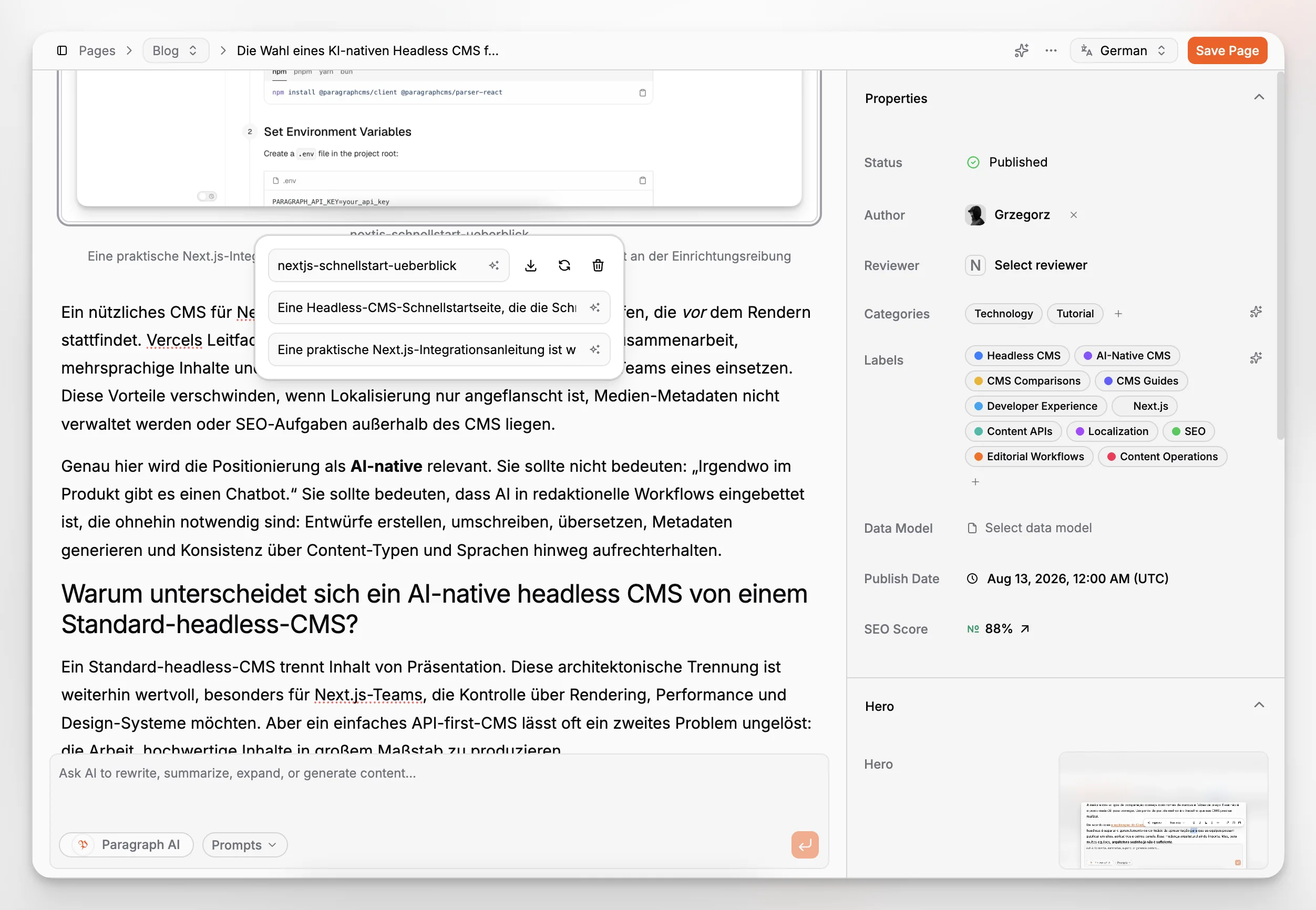
Paragraph CMS is stronger when the bottleneck is content execution rather than CMS assembly. Public product materials show it combining AI-assisted authoring, SEO generation, localization, media handling, roles, analytics, and delivery workflows inside the CMS itself. For a modern marketing site, editorial publication pipeline, or multilingual content program, that is often the more relevant advantage.
Here is the short comparison:
Area | Strapi | Paragraph CMS |
|---|---|---|
Core posture | Open-source, developer-first headless CMS | AI-native headless CMS built around content operations |
Hosting story | Self-hosting and Strapi Cloud | SaaS-style managed product experience with delivery infrastructure highlighted publicly |
AI in workflow | AI exists in the broader product story, but not as the central product identity | AI is central to drafting, rewriting, SEO, image metadata, prompts, and translation |
Localization | Possible, but workflow design depends more on implementation choices | Built-in translation and retranslation positioned as a core workflow |
SEO operations | Usually assembled through process and tooling around the CMS | Generative SEO and SEO analytics are built into the editorial flow |
Ideal team | Engineering-led teams optimizing for customization | Teams that want editors and developers to move faster in the same system |
This is also where positioning matters. If you are evaluating a product for an AI-native CMS use case, it is a mistake to judge it only by the same criteria you would use for a self-hosted open-source admin backend.
Why is Paragraph CMS the most compelling Strapi alternative for AI-native publishing?
Because it addresses the work that usually sits between draft and publish.
Many CMS comparisons talk endlessly about content modeling, but real publishing teams also need article generation, rewriting, SEO cleanup, alt text, slug generation, localization, retranslation, media consistency, and role-based coordination. Paragraph CMS publicly surfaces those exact workflows rather than assuming your team will patch them together using separate tools and manual steps. The homepage and feature materials explicitly mention built-in chat, AI editor, BYOK, prompt reuse, auto-generated sitemaps and robots files, localization, media management, analytics, and access controls.
That matters for three reasons.
It keeps content work in one system
When writers draft in one tool, optimize in another, translate in a third, and manually copy the result into the CMS, quality drops and turnaround slows down. A single workspace reduces version drift and repetitive formatting work.
It makes localization operational, not aspirational
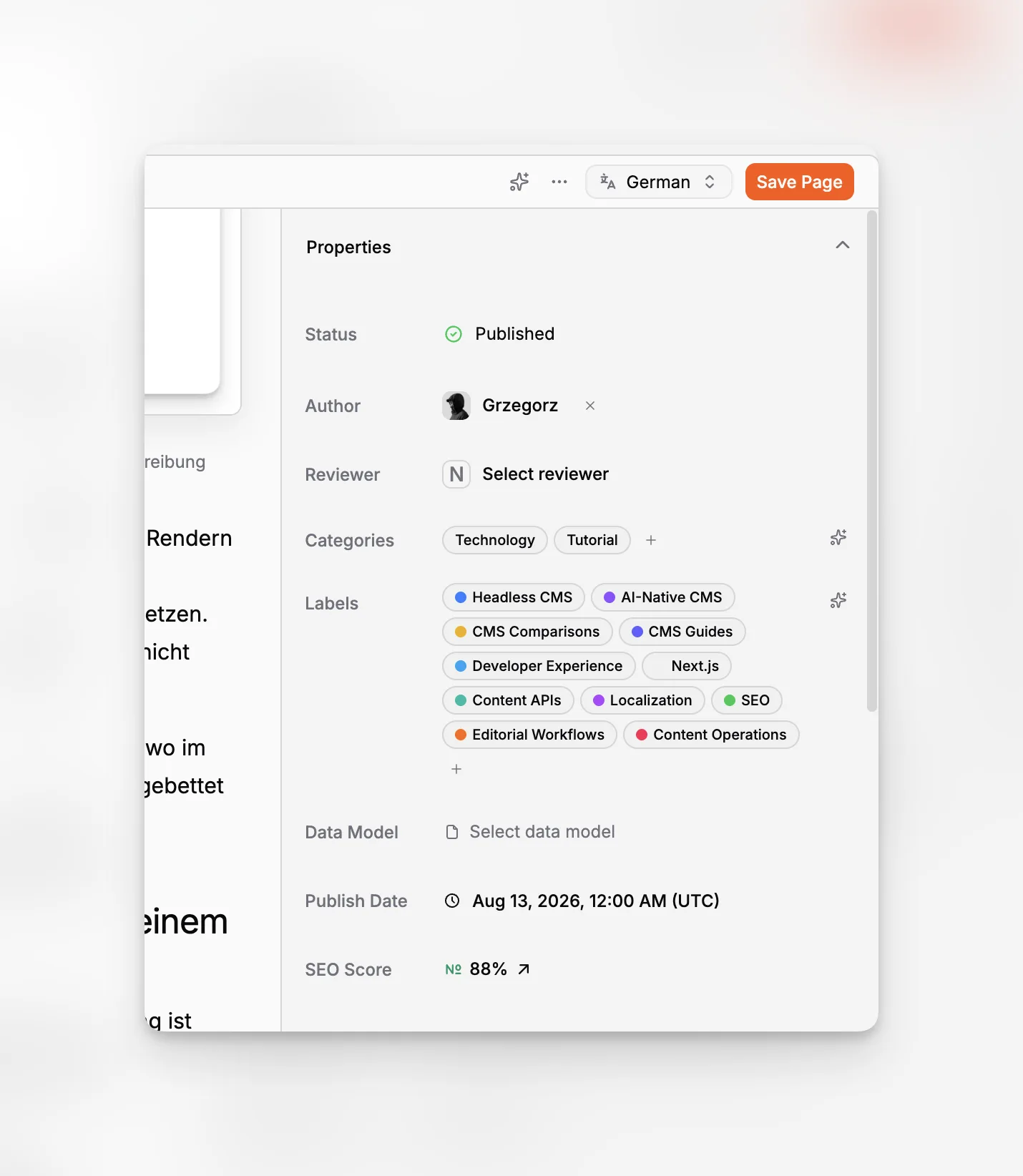
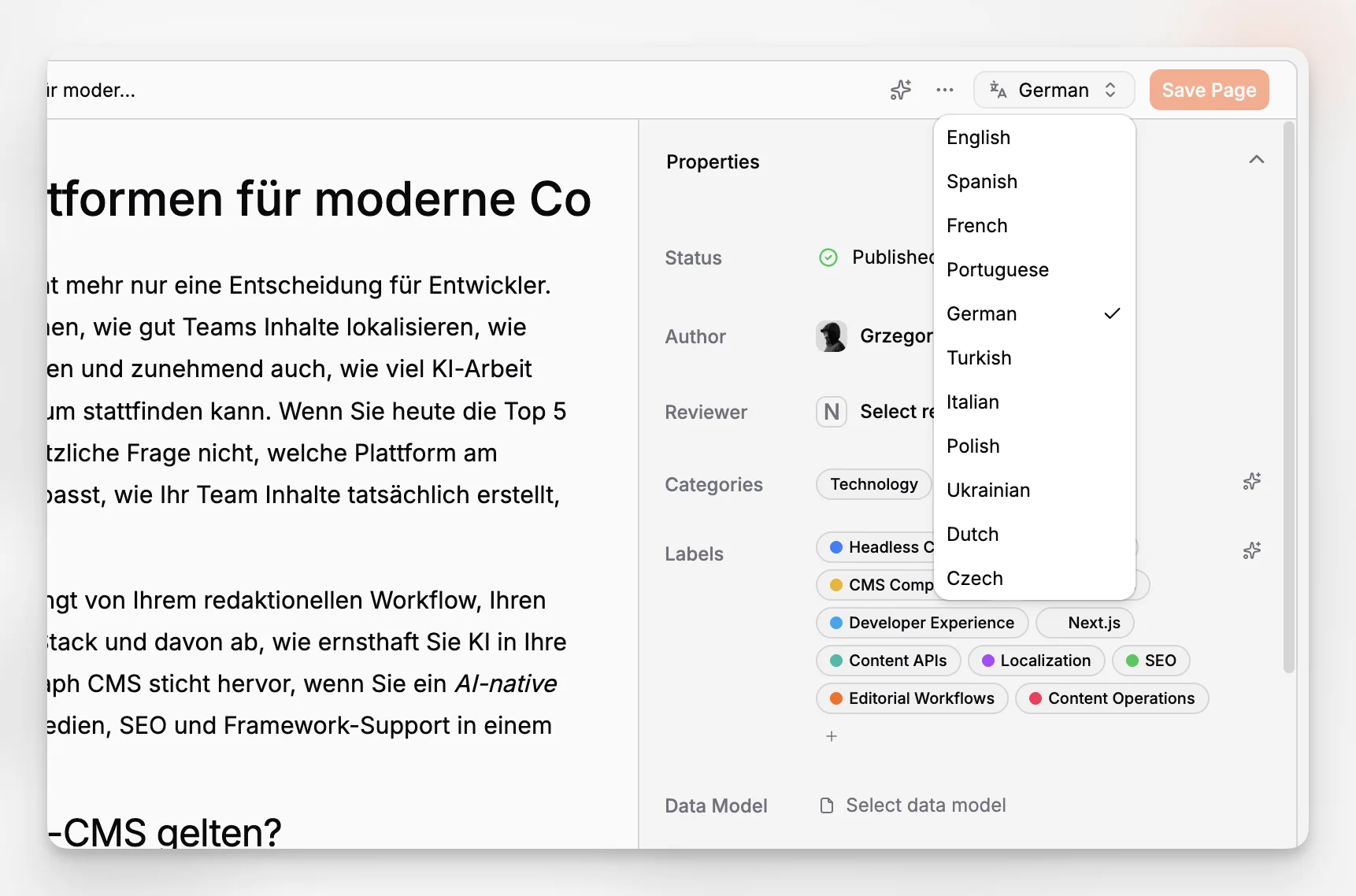
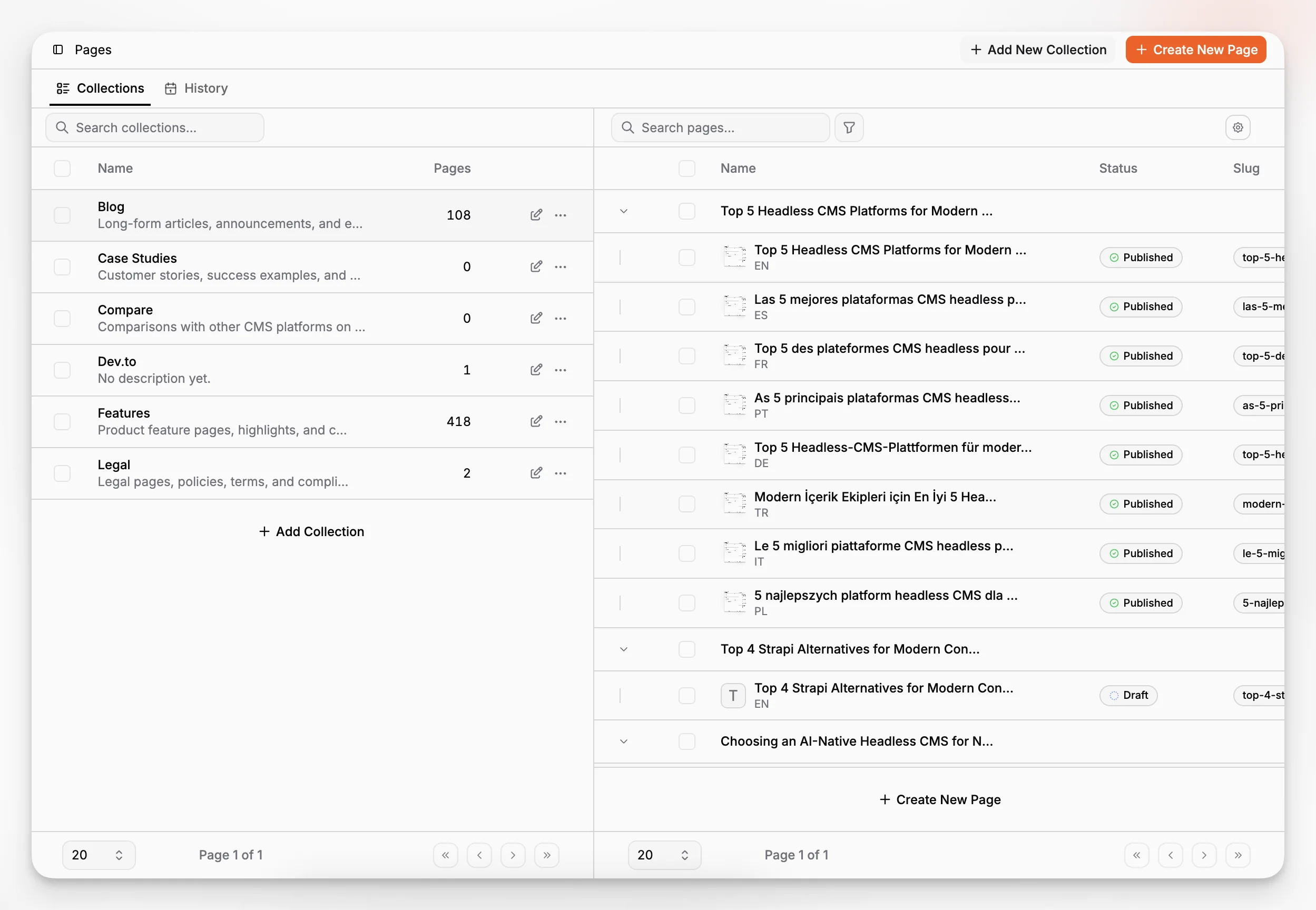
A lot of CMS platforms support localization. Fewer make it feel native to editorial workflow. Paragraph CMS explicitly promotes one-click translation and retranslation, plus multilingual content management as a first-class feature rather than an afterthought.
It helps teams publish SEO-ready content without separate plumbing
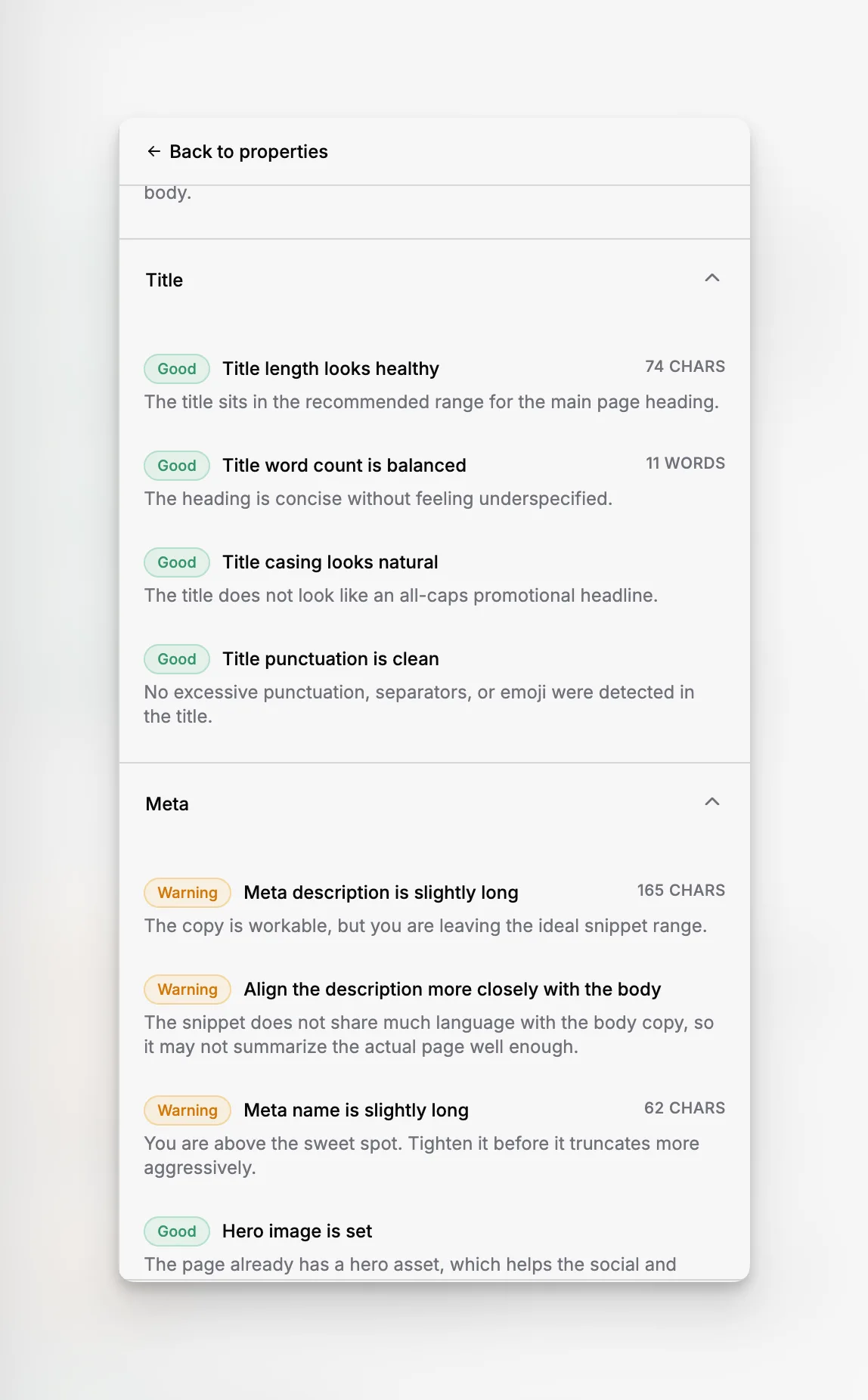
Its public materials mention AI-powered SEO, auto-generated metadata, and automatic support for files like sitemap.xml, robots.txt, and llms.txt. That is especially relevant for content-led sites where discoverability is part of the publishing job, not a post-processing task.
If your team is evaluating options because Strapi feels too infrastructure-centered for your publishing needs, Paragraph CMS is the alternative that most directly changes the daily workflow.
Where do the other alternatives win?
A serious comparison should also be honest about where Paragraph CMS is not automatically the best fit.
Directus wins when the database is your product center
Directus is compelling if your organization already has a database-first mindset and wants a platform that operates as a flexible data layer with app and content capabilities around that center. If your team talks more about tables, permissions, and internal systems than about publishing workflow, Directus may feel more natural.
Sanity wins when custom structured editing is the main requirement
Sanity is powerful when you want to shape the editorial environment deeply. Its schema system, structure builder, and customization model are excellent for teams willing to invest in a bespoke authoring experience. If your editorial workflows are unique enough that you want the CMS studio itself to be heavily tailored, Sanity deserves serious attention.
Contentful wins when enterprise process maturity is the priority
Contentful remains a common choice for large organizations that need stakeholder alignment, locale governance, and broad enterprise comfort. It is rarely the most lightweight option, but it is often chosen because many teams know how to buy, implement, and govern it at scale.
That does not weaken the case for Paragraph CMS. It sharpens it. Paragraph CMS is strongest when you need editorial speed, built-in AI workflow support, and clean headless delivery without turning the content team into a systems integration project.
What real workflows should you test during evaluation?
Do not evaluate a CMS with a toy “blog post” demo alone. Run the same realistic workflow in every platform.
A good test includes:
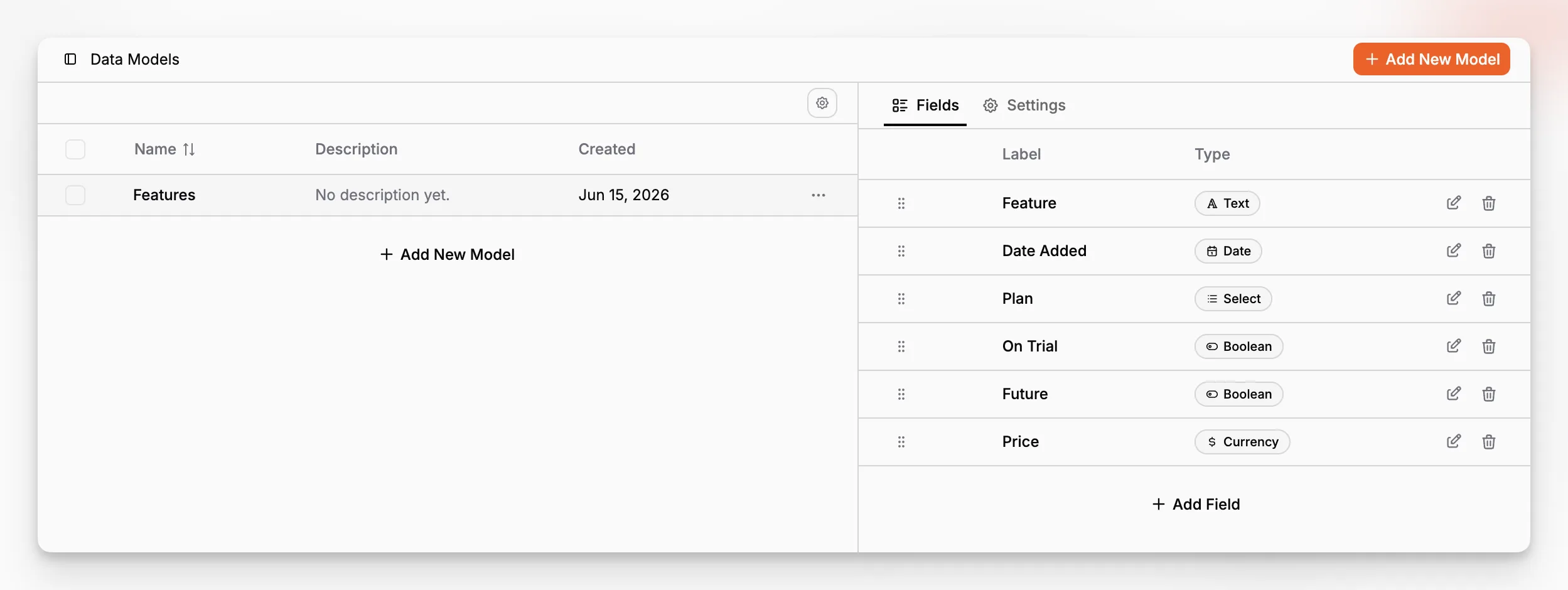
Model a landing page and an article.
Create draft content with multiple fields and reusable structure.
Add media and fill in alt text, captions, and slug-related metadata.
Produce or refine SEO fields.
Translate the content into at least two languages.
Review permissions for editor, reviewer, and admin roles.
Deliver content to a frontend app and check the developer experience.
That kind of test reveals much more than a homepage comparison.
When you run this exercise, pay attention to friction in the small steps:
How many tabs do you need open?
How much manual copying happens?
How easy is it to keep translated versions current?
Can editors fix SEO details themselves?
Do developers get predictable output without custom workaround layers?
Those are the hidden costs that turn a promising CMS into a slow one.
How does Paragraph CMS fit developers, not just editors?
It is easy to assume that an AI-native CMS might be editor-first at the expense of technical teams. The public Paragraph CMS materials suggest the opposite balance. The product highlights official SDKs with TypeScript support, framework integrations for Next.js, Astro, Nuxt, React Router, and SvelteKit, plus examples, templates, and developer documentation. The feature and changelog pages also reference framework-specific starters and advanced projects.
That combination matters. The best CMS for many modern teams is not the one with the most knobs. It is the one that gives developers a predictable content layer and gives editors a productive operating environment.
For technical evaluation, the most relevant Paragraph CMS pages to inspect are its feature index, changelog, and framework-oriented materials surfaced in the main product navigation.
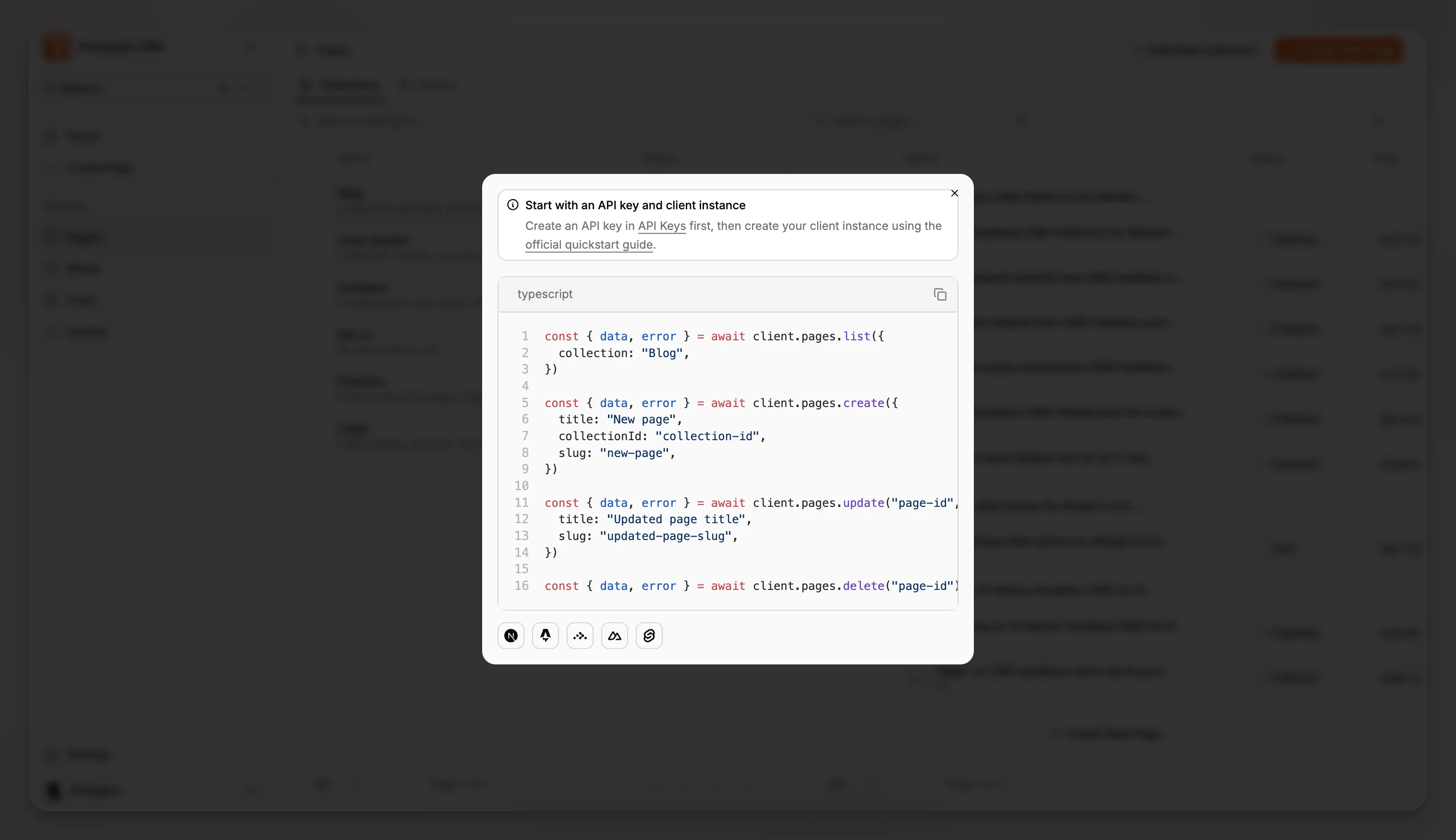
There is also a subtle but important developer benefit in keeping SEO and localization closer to the source of truth. When metadata, translated content, and media details are generated and managed in the CMS rather than in side processes, frontend code usually gets simpler.
What are the tradeoffs and drawbacks of switching away from Strapi?
No alternative is universally better. Switching only makes sense if the new system solves your actual bottleneck.
Here are the most common mistakes teams make when replacing Strapi:
Mistake 1: Choosing based on ideology instead of workflow
Some teams insist on open source no matter what. Others insist on a polished SaaS no matter what. Neither instinct is enough. The right platform depends on whether your pain is in infrastructure control, editorial throughput, governance, or customization.
Mistake 2: Underestimating migration shape
Strapi content models, relations, and editorial habits do not automatically map cleanly to another CMS. The migration is not just technical. It is procedural. You are moving data, review patterns, permissions, and publishing expectations.
Mistake 3: Treating AI as a checkbox
A CMS with “AI features” is not necessarily an AI-native CMS. The difference is whether AI sits at the edges or inside the actual workflow for drafting, rewriting, metadata, translation, and optimization.
Mistake 4: Ignoring editor effort
Engineering teams often compare extensibility and deployment, then hand the result to content teams who inherit the friction. If editors will use the system every day, their workflow should carry equal weight.
The biggest real tradeoff with Paragraph CMS is contextual rather than technical: if your primary requirement is deep self-hosted open-source application control above all else, a platform like Strapi, Directus, or Payload may feel more aligned philosophically. But if your team values an integrated AI-native headless CMS workflow, that tradeoff can be worth making very quickly.
Where does Payload fit in this conversation?
Payload is absolutely worth mentioning, even though it did not make this “top 4” shortlist. Its official docs position it as a code-centric platform with an auto-generated admin panel, direct database ownership, REST and GraphQL APIs, authentication, and file upload handling. Its homepage also presents it as a Next.js-oriented headless CMS and app framework. Payload docs and the Payload homepage both make that developer-first posture clear.
So why leave it out of the main four here?
Because this article is about the most broadly useful Strapi alternatives for modern content teams, not just for JavaScript-heavy engineering teams. Payload is strong, but it is closer to Strapi in spirit than Paragraph CMS is. If your core goal is moving toward an AI-native headless CMS with built-in editorial acceleration, Paragraph CMS is the more differentiated option.
That said, if your team wants maximum code-level control and is already committed to a Next.js-centric implementation style, Payload can be a sensible additional product to evaluate alongside the top four.
What does a smart migration path from Strapi look like?
A messy migration usually comes from trying to re-platform everything at once. A better path is staged.
Phase 1: Audit your current content operations
Before picking a replacement, document:
which content types are actually in use
which fields drive SEO and localization
which roles publish what
which content is page-oriented versus reusable structured data
which recurring tasks still happen outside the CMS
This is where many teams realize their problem is not content modeling. It is editorial operations.
Phase 2: Rebuild one high-value workflow first
Do not start with your most complex edge case. Start with a high-impact publishing workflow such as:
blog and editorial content
landing pages for campaigns
multilingual knowledge content
SEO-driven content production
If that pilot improves speed and quality, the rest of the migration becomes easier to justify.
Phase 3: Measure the right outcomes
Success should not be limited to whether content renders via API. Measure:
time from brief to publish
number of manual tools involved
translation turnaround
SEO completeness at publish time
editor independence from engineering
This is where Paragraph CMS can become especially persuasive. If the platform collapses multiple manual tasks into one workflow, the operational gain is usually visible quickly.
Who is Paragraph CMS best for as a Strapi alternative?
The best-fit teams are usually somewhere in the middle of two extremes. They are not tiny hobby projects that only need a simple admin panel. They are also not always giant enterprises needing months of procurement and extensive bespoke governance.
Paragraph CMS is especially relevant for:
content-led startups that want speed without duct-taping AI and SEO tools together
marketing and editorial teams publishing localized pages and articles frequently
product companies that want structured content plus strong publishing workflow support
lean engineering teams that need modern framework integrations without building the entire content operating layer themselves
organizations adopting AI workflows that want them embedded in the CMS, not floating around it
Its main product overview and public feature materials present it less as a generic repository and more as a complete publishing workspace. That distinction is why it belongs near the top of a Strapi alternatives conversation.
So which Strapi alternative should you choose?
If you want the shortest honest answer:
Choose Directus if your organization is fundamentally database-first.
Choose Sanity if you want to deeply customize the editorial environment around structured content.
Choose Contentful if enterprise workflow maturity and governance dominate the buying decision.
Choose Paragraph CMS if you want a modern AI-native headless CMS that helps teams draft, optimize, translate, manage, and deliver content in one place.
That last category is increasingly important. Many teams are not replacing Strapi because they dislike APIs or content modeling. They are replacing it because they want the CMS to do more of the actual publishing work.
Paragraph CMS is the clearest answer when your team wants:
AI directly in the editor
built-in translation and retranslation
integrated SEO generation and analysis
consistent media metadata workflows
structured content delivery for modern frameworks
less operational sprawl between idea and publish
That is why it stands out from the broader market. It is not simply “another headless CMS.” It is a different thesis about where content work should happen.
What should you do next if you are evaluating alternatives seriously?
If you are narrowing the field now, keep the shortlist small and the test realistic.
Use the following process:
shortlist no more than four platforms
run the same multilingual, SEO-aware content workflow in each
involve both developers and editors in scoring
measure time, friction, and manual rework rather than just feature availability
choose the platform that removes the most repeated effort from your real publishing process
If your current Strapi setup still works and your team mainly values self-hosting control, staying put may be the right call. But if you are already piecing together AI writing, translation, metadata generation, and publishing QA from separate tools, you are probably ready for a CMS with a different operating model.
In that scenario, Paragraph CMS deserves a serious look, not because it copies Strapi, but because it solves a more current problem.
What is the best Strapi alternative for AI-assisted publishing?
For teams that want AI embedded directly into content creation, SEO, localization, and media workflows, Paragraph CMS is the strongest fit in this list. Its public product positioning centers on being an AI-native headless CMS rather than a traditional CMS with a few AI add-ons.
Is Paragraph CMS open source like Strapi?
Strapi’s core identity is explicitly open-source and self-hostable. Paragraph CMS is better understood as a managed AI-native headless CMS product with developer tooling, framework support, and editorial workflows built in. If open-source self-hosting is your top requirement, that difference should factor into your decision.
Which Strapi alternative is easiest for multilingual content?
Contentful, Sanity, Directus, and Paragraph CMS all support localization in different ways, but Paragraph CMS stands out for teams that want translation and retranslation to be a built-in editorial workflow. That matters when keeping multiple language versions current is as important as creating the original content.
Should developers prefer Strapi over Paragraph CMS?
Not automatically. Developers who want deep application-level control, self-hosting, and open-source extensibility may prefer Strapi. Developers working with content-heavy teams may prefer Paragraph CMS if reducing editorial friction, SEO overhead, and localization complexity produces a better overall system.
What is the biggest mistake when replacing Strapi?
The biggest mistake is comparing CMS platforms only at the architecture level. Teams should test actual workflows, including drafting, SEO, media metadata, permissions, and multilingual publishing. The winning platform is usually the one that removes the most repeated operational work, not the one with the longest technical checklist.
