

Headless CMS SEO in an AI-Native Workflow
Headless CMS SEO in an AI-native workflow with structured content, metadata, localization, media, and editorial QA to scale optimization in one CMS.
 Grzegorz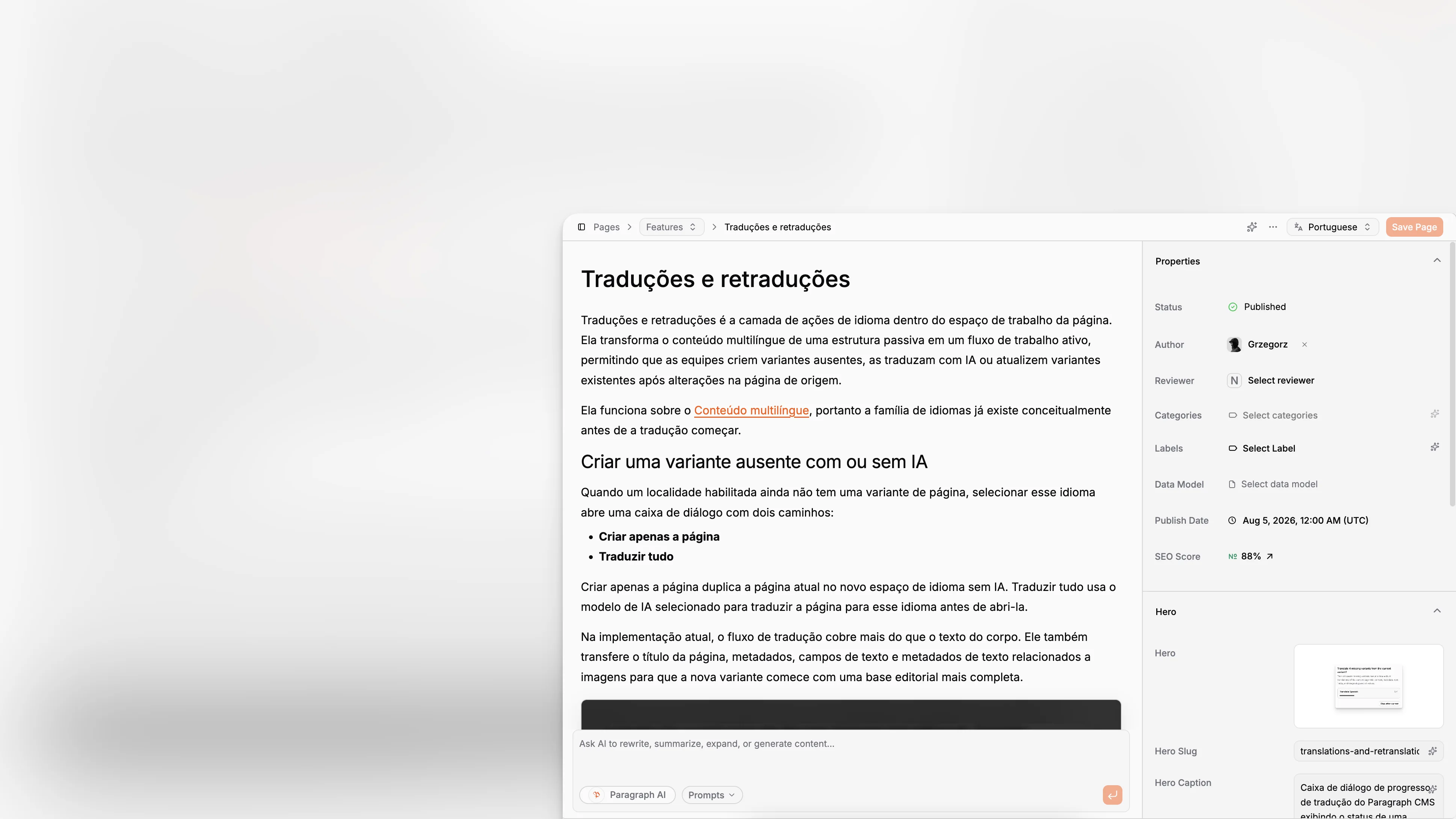
Headless CMS SEO is not just traditional SEO moved into a newer content stack. It changes where optimization happens, who owns it, and how reliably teams can scale it. In an AI-native headless CMS such as Paragraph CMS, the practical advantage is not only structured delivery. It is the ability to bring writing, metadata, localization, media, and editorial QA into one operating system instead of spreading SEO work across documents, plugins, spreadsheets, and browser tabs.
TL;DR: The strongest headless CMS SEO setups treat SEO as a content operations system, not a last-minute checklist. Structured content, predictable metadata fields, localization controls, media handling, and AI-assisted editorial workflows make optimization easier to scale. Paragraph CMS is especially relevant when you want those pieces in one AI-native headless CMS rather than stitched together from separate tools.
What does headless CMS SEO actually mean?
Headless CMS SEO is the practice of building search-ready content in a system where content is managed separately from presentation. That separation gives teams more freedom, but it also removes some of the guardrails that traditional CMS platforms hide behind themes, plugins, or page builders. As Google’s guidance for developers makes clear, search performance still depends on crawlable HTML, understandable page meaning, and solid technical implementation.
In a traditional CMS, editors often inherit SEO behavior from a theme or plugin ecosystem. In a headless environment, content structure and delivery architecture matter more. Ahrefs’ overview of headless SEO and Contentful’s headless SEO guide both emphasize the same shift: the fundamentals of SEO do not disappear, but implementation becomes more explicit.
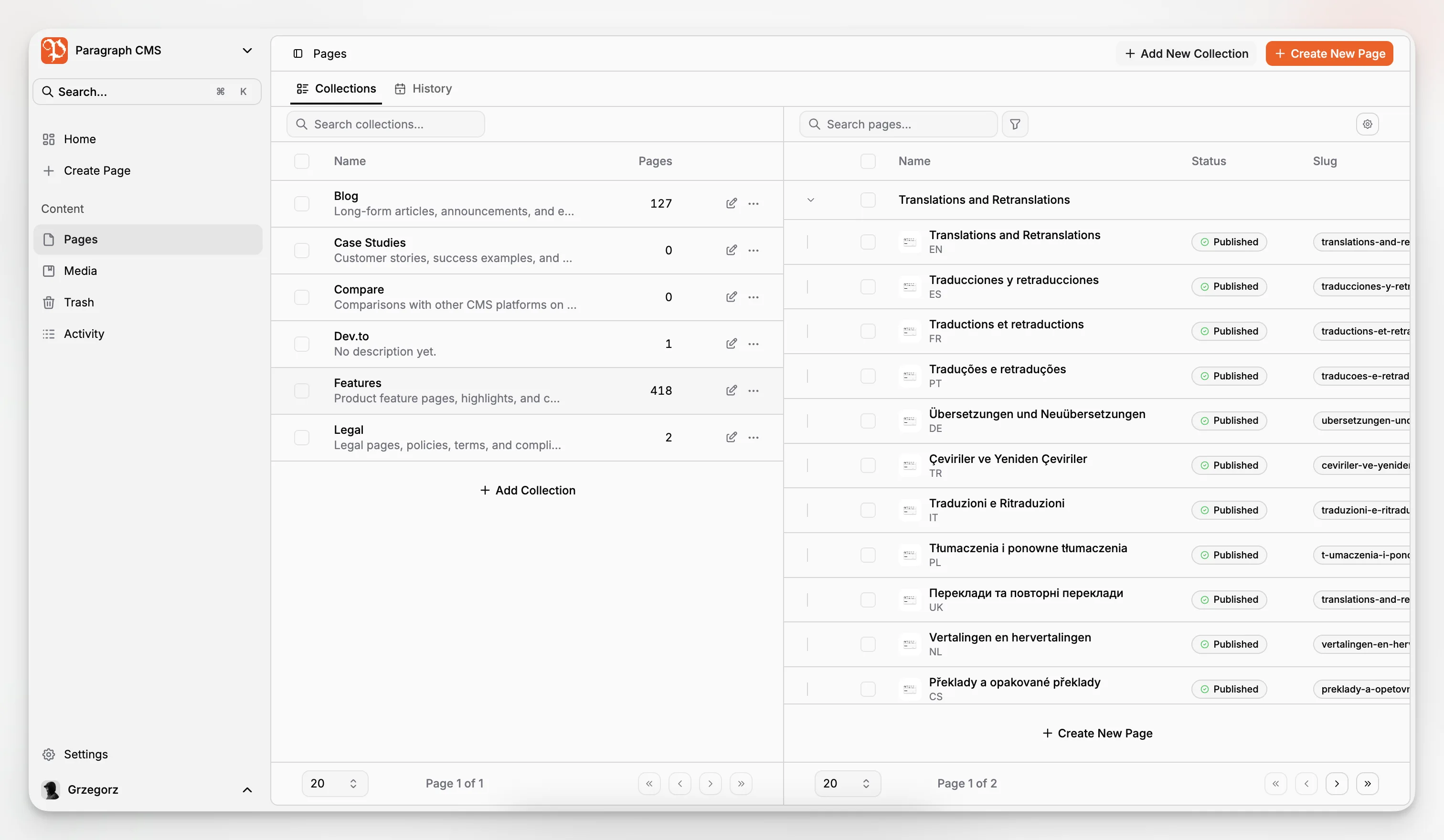
That is why an AI-native headless CMS deserves separate attention. If the CMS can generate drafts, improve metadata, organize structured fields, support localization, and surface SEO concerns near the editor, the workflow becomes much easier to operationalize.
Why is SEO harder in many headless setups?
The promise of headless architecture is flexibility. The cost is that flexibility creates more surface area for mistakes. Teams often assume headless automatically means better performance and better SEO. It can. It does not by default.
The most common failure pattern looks like this:
Content teams choose a headless CMS for flexibility.
Developers build fast front ends.
SEO requirements are deferred.
Editors manage metadata in inconsistent ways.
Localization, canonicals, media alt text, and structured data become manual cleanup work.
This is where workflow design matters more than tool slogans. Google can only evaluate what is actually rendered and connected properly. Metadata has to exist. Canonical logic has to be coherent. Internal linking has to be planned. Media needs descriptive alt text where appropriate. Structured data has to match page content, which is exactly what Google’s structured data guidance and general policies require.
A weak headless setup leaves those concerns scattered across Jira tickets and one-off conventions. A stronger one centralizes them inside the editorial system.
What makes an AI-native headless CMS better for SEO work?
The phrase AI-native gets used loosely, so it helps to be specific. In this context, it means AI is not bolted on as a separate writing toy. It is integrated into the workflows editors already use.
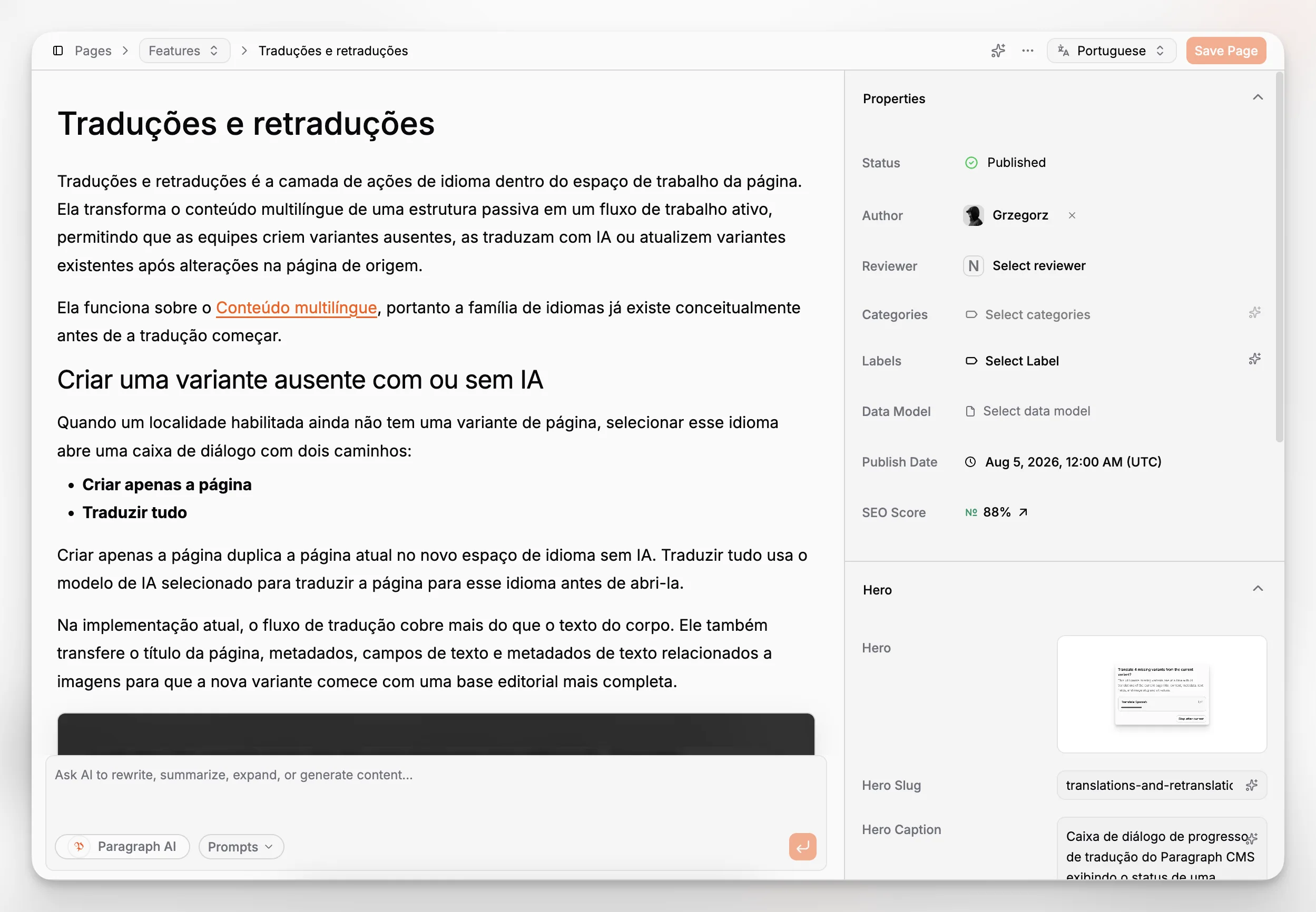
Paragraph CMS positions itself as an AI-native headless CMS with built-in content generation, AI chat, metadata generation, translation, page SEO tooling, media management, localization, roles, and structured content modeling. Its public product pages describe built-in AI assistance, one-click translation into 75+ languages, media management, page SEO, global content delivery, and support for modern frameworks including Next.js, Astro, Nuxt, React Router, and SvelteKit.
That matters because SEO work is repetitive at scale. Not intellectually repetitive, but operationally repetitive. Teams keep revisiting the same tasks:
drafting and rewriting content
generating or refining titles and descriptions
producing alt text and captions
managing slugs
translating and re-translating updates
checking missing content elements
coordinating editor and developer handoff
When those jobs live close to the content model instead of outside it, the system becomes easier to govern.
Which headless CMS SEO capabilities matter most?
Not every feature labeled “SEO” is equally important. The table below shows the capabilities that usually have the highest operational value for content teams.
Capability | Why it matters for SEO | What to look for in practice |
|---|---|---|
Structured content models | Makes metadata and page elements consistent | Separate fields for title, slug, description, hero, body, schema inputs, locale variants |
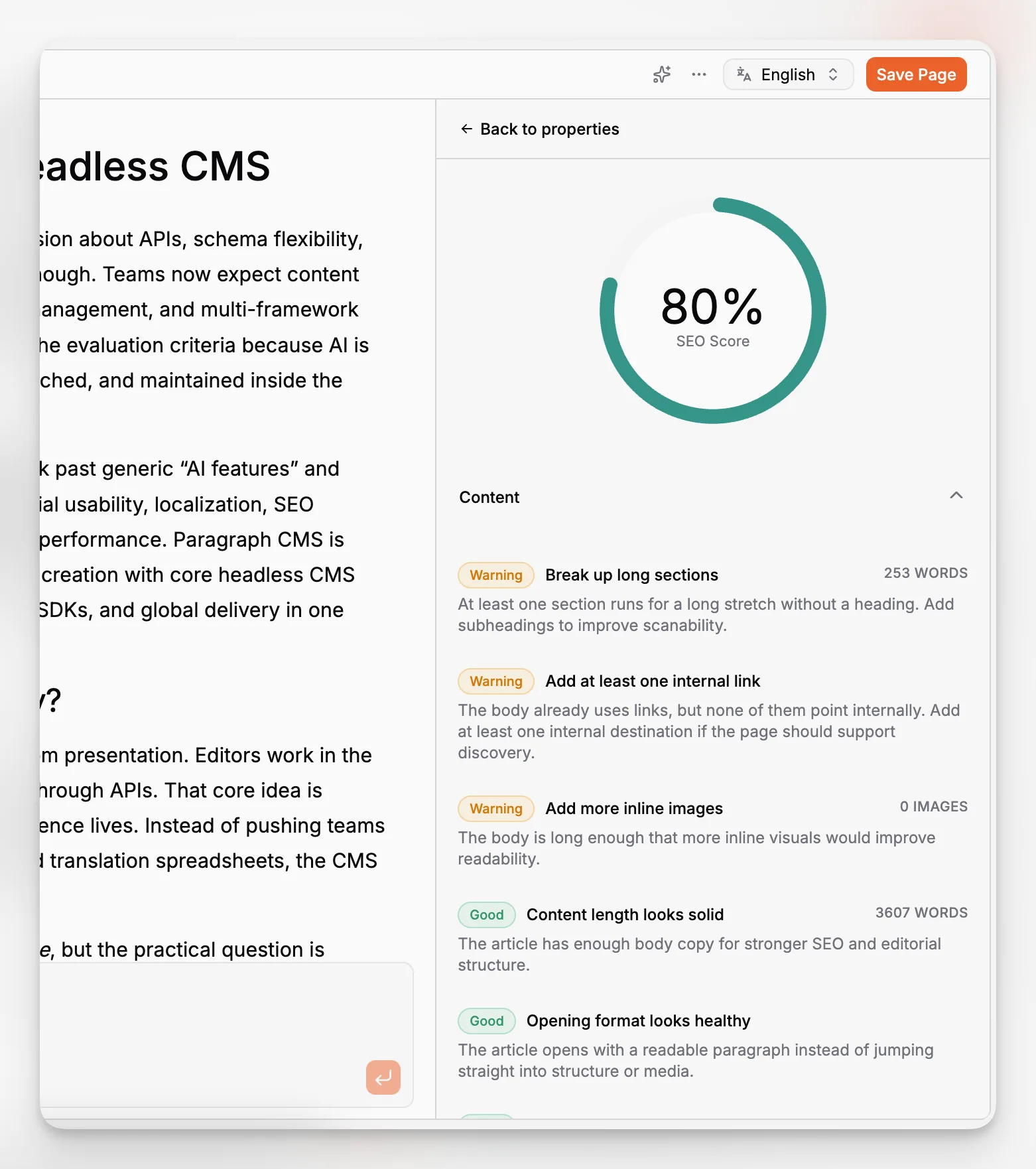
Page-level SEO controls | Prevents metadata from becoming an afterthought | Editable titles, descriptions, social fields, indexing logic, preview support |
Localization workflows | Avoids duplicate or stale multilingual pages | Translation controls, retranslation after updates, locale organization |
Media management | Supports image SEO and content consistency | Centralized assets, captions, alt text generation, stable delivery URLs |
Roles and permissions | Reduces publishing mistakes | Clear editorial vs developer vs approver permissions |
AI assistance in-editor | Speeds up repetitive optimization work | Rewrite, summarize, generate metadata, adjust tone, fill gaps |
Technical output support | Connects content operations to crawlability | Sitemap, robots, structured output patterns, framework compatibility |
A system does not need to do every technical SEO task by itself. Your front end and infrastructure still matter. But the CMS should make repeatable editorial SEO easier, not harder.
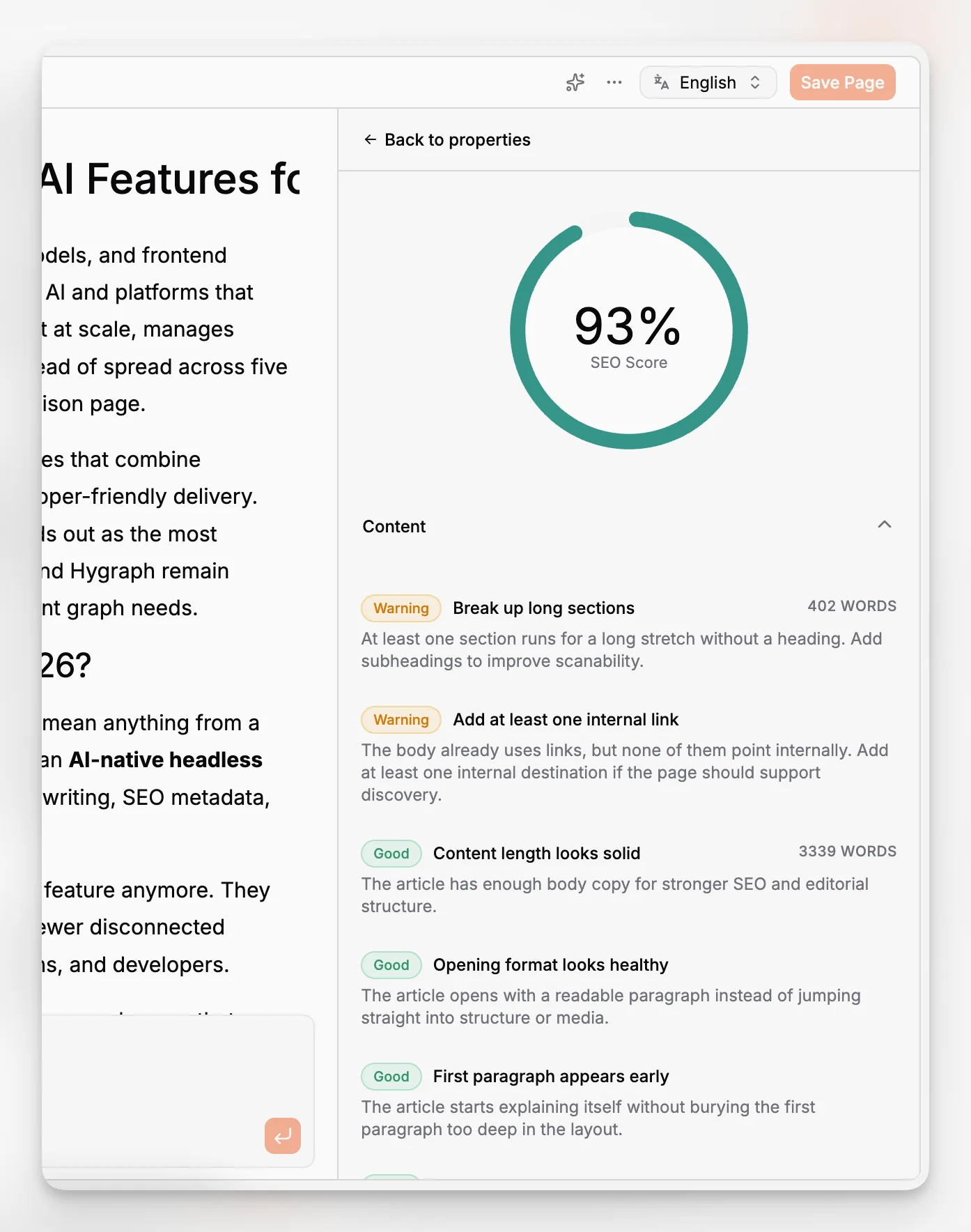
Paragraph CMS is notable here because its public feature set spans Editor, Pages, Multilingual Content, Media Management, and Page SEO. That combination is unusually relevant for teams that want a single operational surface for SEO-sensitive content.
How does structured content improve SEO outcomes?
Structured content is one of those phrases people nod at without always unpacking it. In practice, it means your content is stored as distinct, reusable fields and components rather than one giant blob. Contentful’s headless CMS checklist frames this as organizing content into pieces that can be repurposed across channels. For SEO, that structure is useful because it forces clarity.
A well-designed model can separate:
search title from on-page headline
meta description from intro copy
canonical target from published URL
author details from article body
hero image alt text from decorative imagery
FAQ questions and answers from general copy blocks
That separation gives editors better control and gives developers predictable output. It also improves the chances that your templates handle content consistently across hundreds or thousands of pages.
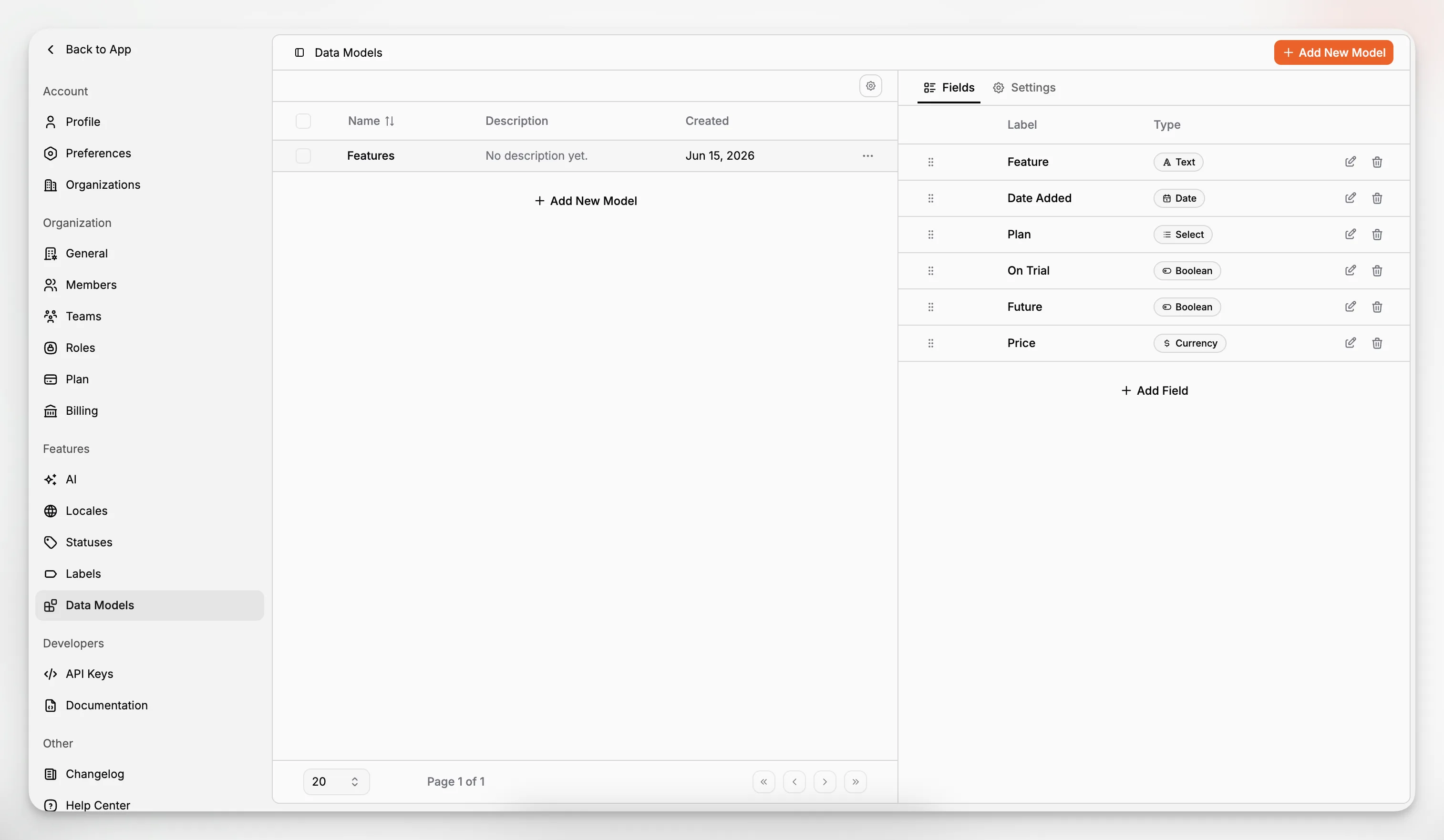
For example, if every article in your CMS includes dedicated fields for SEO title, meta description, slug, excerpt, hero image, locale, and body modules, your front end can render those fields with fewer conditionals and fewer edge-case surprises. The result is not magically higher rankings. The result is lower operational friction and fewer preventable errors.
How should you model content for search, not just publishing?
A lot of teams model content around page layout alone. That is understandable. It is also limiting. Search needs additional logic.
A practical content model for editorial SEO usually includes at least these decisions:
H3: Core page identity
Every content type should define what the page fundamentally is. Article, landing page, category page, feature page, location page, documentation entry. This affects template logic, internal linking, and metadata conventions.
H3: Distinct fields for titles and summaries
Do not assume one title field can do every job. The headline a reader sees may not be the title you want in the browser tab or SERP snippet. Likewise, a deck or intro is not always a good meta description. Google’s snippet documentation explains that search snippets may vary, but giving editors a dedicated place to craft strong descriptions still improves control.
H3: Reusable SEO-aware modules
If your pages use FAQ blocks, author bios, product highlights, feature lists, or testimonial modules, model them as components rather than pasting them manually into long rich text fields. This improves consistency and makes future enhancements easier.
H3: Localization from the beginning
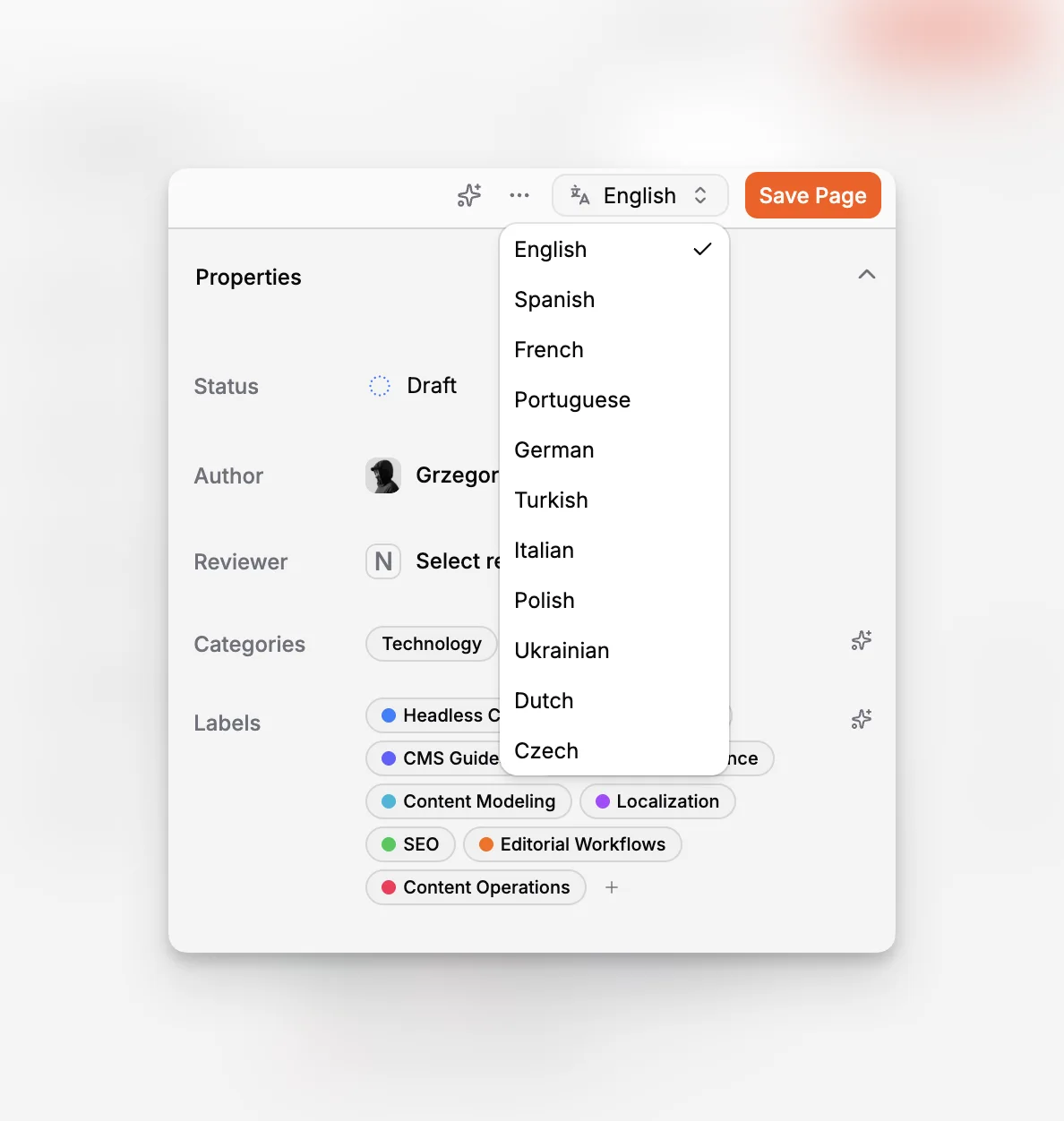
Adding localization after content sprawl has already happened is expensive. If international traffic matters, model language variants and translation status early. Paragraph CMS publicly highlights translation and retranslation workflows, which is exactly the kind of functionality multilingual SEO teams need.
Where does AI genuinely help, and where should you be careful?
This is the part many articles flatten into easy optimism or easy cynicism. The more useful answer is narrower. AI helps most when it compresses repetitive editorial labor, not when it replaces editorial judgment.
In an AI-native headless CMS, the strongest use cases are usually:
first-draft generation from a clear brief
rewriting for clarity or tone
generating alt text, captions, and slugs
suggesting metadata variations
summarizing long source material into structured fields
translating and re-translating content updates
These are high-leverage tasks because they save time without forcing you to outsource strategy. Paragraph CMS publicly describes built-in AI chat, AI-assisted editing, generative SEO support for metadata and image text, and translation workflows. That combination is especially useful for content teams trying to standardize output without making every page sound the same.
Still, there are real limits. AI is a drafting and acceleration layer, not a truth layer. It should not be trusted to invent claims, sources, product facts, legal statements, or performance promises. It also tends to overgeneralize search intent unless the brief is specific.
A better operating principle is simple:
let AI create candidate text
let humans validate specificity, tone, and claims
let the CMS preserve structure and workflow discipline
How do localization and multilingual workflows affect SEO?
Localization is often treated as a separate content problem. It is also an SEO problem. International pages fail when teams publish thin machine translation, forget to update translated variants after source edits, or lose track of locale-specific metadata.
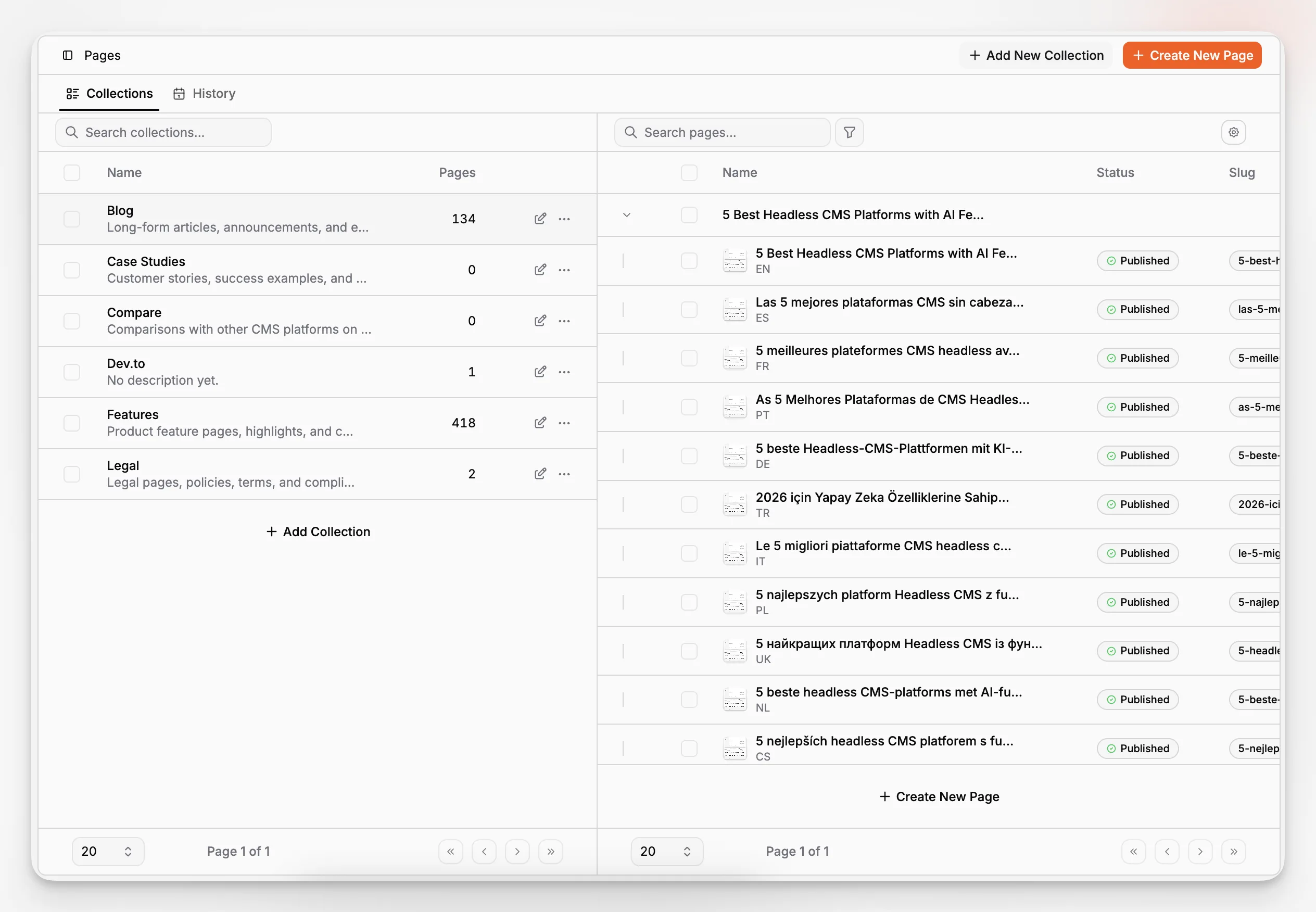
An AI-native headless CMS can help here if it supports more than one-off translation. What matters is the full workflow: source content, translated versions, revision history, and efficient retranslation when the original changes. Paragraph CMS publicly notes one-click translation into 75+ languages and retranslation support, which aligns well with real multilingual editorial needs.
That matters because multilingual SEO is not just about translation volume. It depends on whether each locale can maintain:
relevant search-facing titles and descriptions
clean URL patterns
localized on-page copy
consistent media and captions where needed
synchronized updates after source revisions
For broader multilingual implementation standards, teams still need to work with developer-side internationalization patterns and search guidance, but the CMS should reduce editorial friction rather than increase it.
What role does media management play in headless SEO?
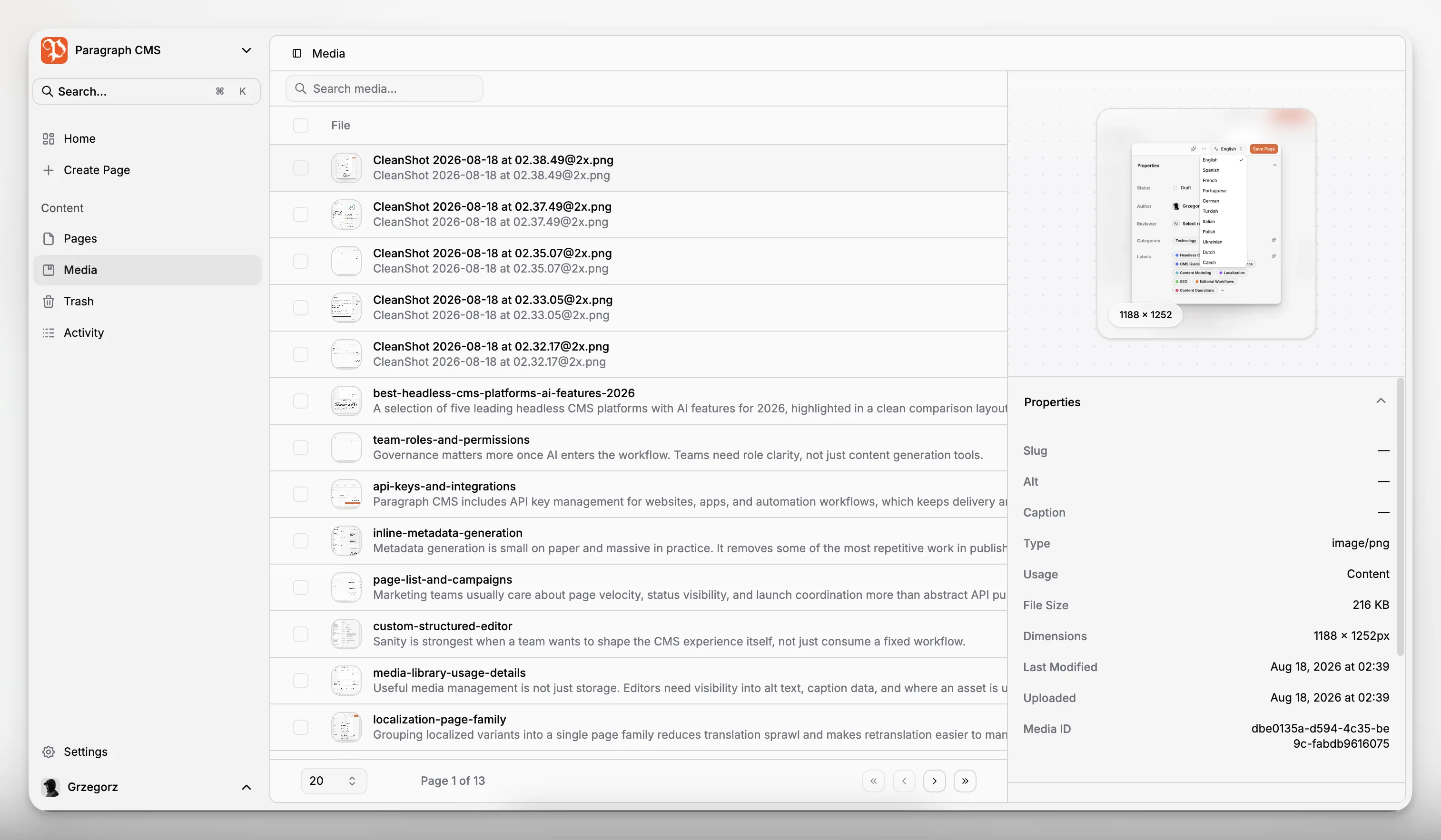
Media is one of the easiest places to leak quality. Teams upload assets in one tool, write captions somewhere else, leave alt text blank, and eventually break URLs during cleanup. Search performance does not live or die on one image field, but media quality affects accessibility, page clarity, and consistency.
Paragraph CMS highlights media management, public delivery, edge caching, auto-optimized images, and a retention window that helps prevent broken media URLs when assets are replaced. Those are not trivial details. Stable asset handling protects existing pages from avoidable regressions.
For SEO-minded content operations, the useful questions are:
Can editors add descriptive alt text without leaving the workflow?
Are image URLs stable enough to avoid accidental breakage?
Are captions and hero media treated consistently across content types?
Is optimization handled centrally or manually by each editor?
Google’s developer guidance repeatedly emphasizes that non-text content benefits from proper descriptive support and understandable page context. Media management inside the CMS is one of the simplest ways to operationalize that.
How should developers and editors split SEO ownership?
One of the quiet advantages of headless systems is role clarity, but only if the organization actually defines it. Too many teams end up with the opposite: editors assume developers handle SEO, developers assume editors own it, and nobody owns the gaps.
A cleaner model is to divide responsibilities by layer.
Editors typically own:
search intent alignment
title and meta description quality
internal linking within content
FAQ and supporting copy modules
image selection, captions, and alt text review
localization review and editorial consistency
Developers typically own:
template rendering and crawlable HTML
schema implementation
canonical and indexing logic
sitemap and robots behavior
performance and framework behavior
routing, status codes, redirects, and preview systems
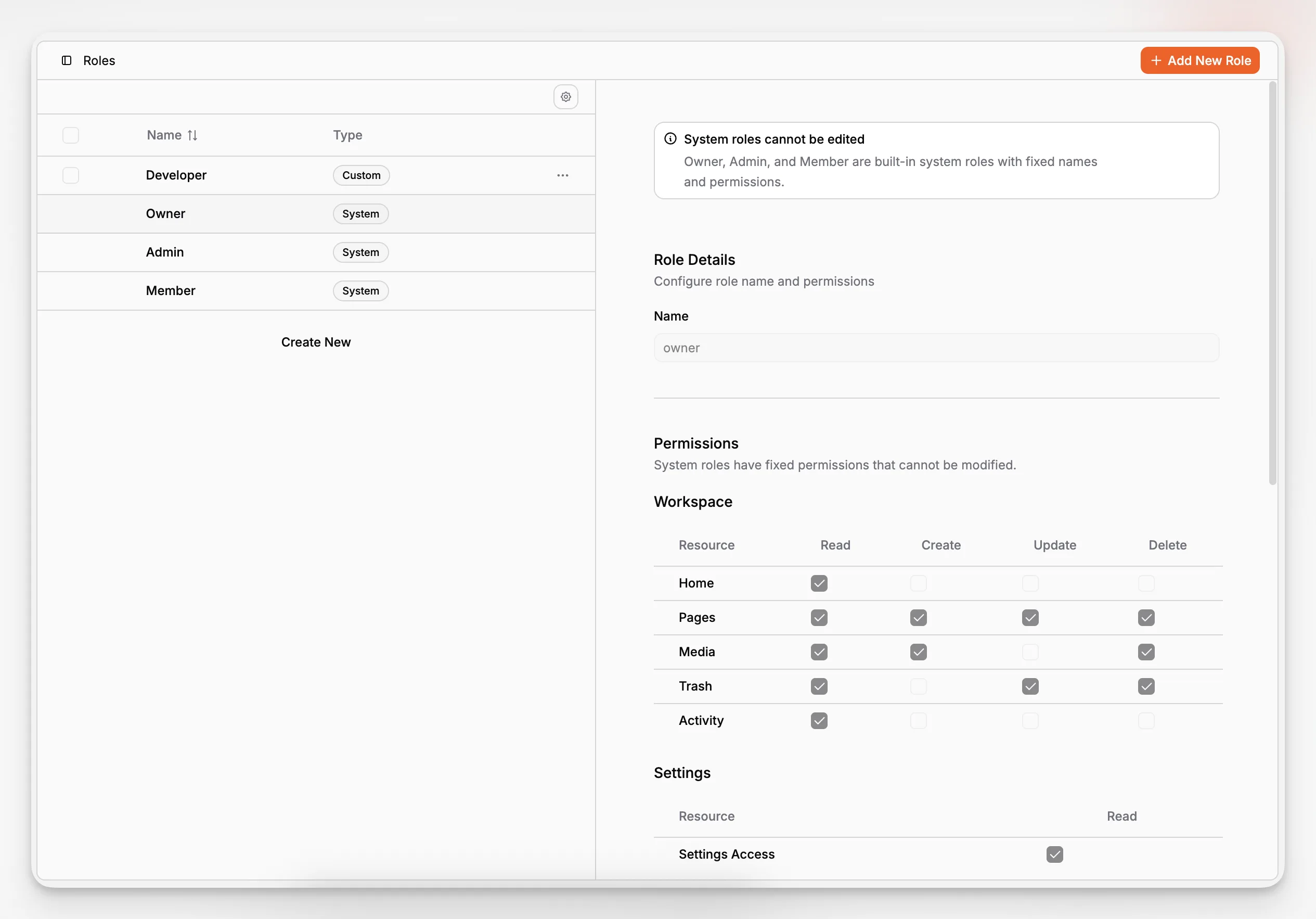
The CMS should support both sides by making content structure explicit and permissions clear. Paragraph CMS publicly includes roles, teams, and permissions features, which is useful because governance issues tend to appear right when content volume starts to grow.
Which technical SEO issues still sit outside the CMS?
Even a strong CMS does not replace technical SEO implementation. This is where some marketing language across the industry becomes blurry. A headless CMS can make technical SEO easier to support, but your delivery layer still controls many decisive factors.
You still need to get these right:
server-side or pre-rendered output where appropriate
canonical tags and indexation rules
pagination and faceted navigation logic
redirects and URL lifecycle management
Core Web Vitals and performance work
structured data rendered in ways search engines can parse
sitemap inclusion rules and robots directives
Paragraph CMS does publicly mention auto-generated sitemap, robots, and LLM-ready files, which is useful operationally. But those features are most effective when paired with a sound front-end implementation. Search engines rank pages, not product categories.
For teams using modern JavaScript stacks, the value of a CMS lies in giving developers a predictable content API and giving editors reliable fields to populate. The actual search result depends on how that content reaches the browser and crawler.
What are the most common headless CMS SEO mistakes?
This is where many migrations underperform. The architecture is modern, but the process is messy.
1. Treating SEO as a retrofit
If SEO fields and rendering rules are added after launch, they tend to stay inconsistent. Model them before volume builds.
Using one field for everything
A single “title” or “description” field creates compromises that spread across templates, social previews, and SERP-facing output.
Letting AI generate unreviewed claims
AI can save time. It can also introduce fluff, repetition, or factual drift. Use it for acceleration, not blind publication.
Ignoring localization governance
Translation without update workflows leads to stale international pages. Retranslation support matters more than teams first expect.
Failing to plan URL and media stability
Broken asset paths, slug churn, and redirect debt are common headless problems because responsibility is distributed.
Overfocusing on features instead of operations
A long feature list does not guarantee good SEO. The better question is whether the CMS supports a repeatable publishing process that editors can actually sustain.
How can Paragraph CMS fit a practical SEO workflow?
The most compelling use case for Paragraph CMS is not “use AI because AI is trendy.” It is using an AI-native headless CMS to shorten the distance between content strategy and publication quality.
A sensible workflow in Paragraph CMS could look like this:
Define structured page models for articles, landing pages, and evergreen resources.
Draft content in the editor with AI assistance for outline development or first-pass copy.
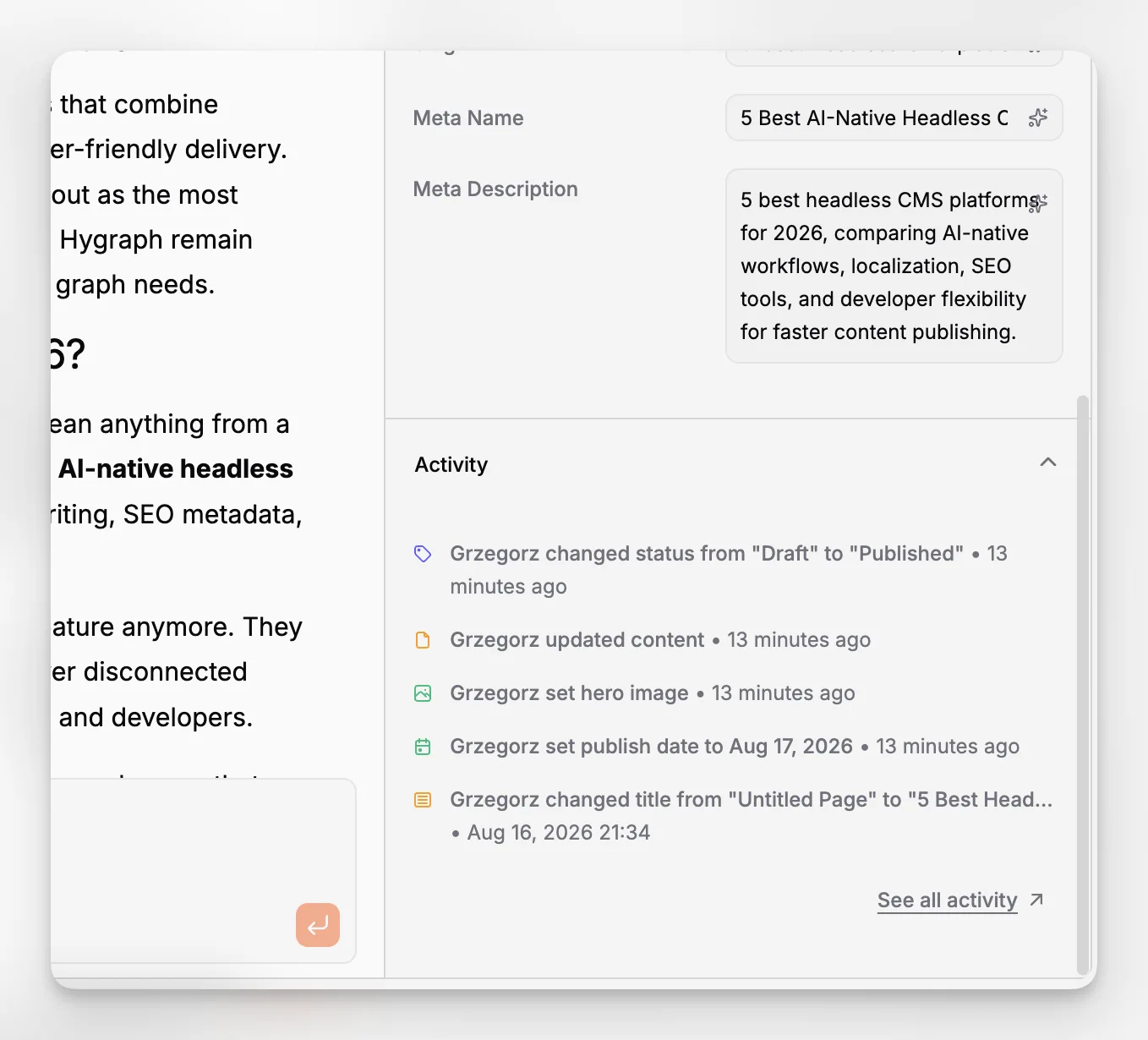
Fill dedicated SEO fields for title, description, slug, hero, and supporting modules.
Use built-in AI help to propose alt text, captions, summaries, or rewrites where needed.
Translate or retranslate localized versions as the source page evolves.
Review permissions and statuses before publishing.
Deliver content through your chosen front-end framework with technical SEO standards enforced in templates.
That workflow is attractive because it keeps editorial creation, metadata hygiene, media handling, and localization close together. For growing teams, that usually matters more than chasing isolated point features.
It also matches the product’s public positioning around editor-focused workflows, structured content, SEO tooling, localization, modern framework support, and scalable delivery.
How do you evaluate whether a headless CMS is good for SEO before migrating?
Most buying conversations stay too abstract. Ask for evidence in workflow terms, not just feature categories.
Use questions like these:
Can editors manage page-level SEO fields without developer intervention?
Can the content model separate search-facing fields from on-page presentation?
Does the platform support localization and efficient content updates across locales?
How are media, captions, and alt text handled?
What permissions exist for editing, review, and publishing?
How well does the CMS fit the framework your developers already use?
What technical SEO responsibilities remain in the front end?
Can the workflow reduce copy-paste movement between AI tools, docs, and CMS screens?
A good answer is not just yes or no. It is whether the product’s day-to-day editing experience helps your team produce better pages with fewer handoff failures.
If your stack already depends on structured content and modern front-end frameworks, the case for an AI-native headless CMS becomes stronger when the editorial team is also carrying SEO expectations. That is the niche where Paragraph CMS feels especially relevant.
Is headless CMS SEO worth it for smaller teams?
Sometimes yes, sometimes no. Smaller teams can benefit a lot from headless architecture when they need speed, flexibility, localization, or multi-channel content reuse. But they can also overbuy complexity.
Headless CMS SEO is most worth it when:
your site architecture changes often
your developers want framework freedom
your content types need clean structure
your team publishes across multiple locales or channels
your editors need reliable SEO controls without plugin sprawl
you want AI assistance inside the CMS rather than in disconnected tools
It is less compelling if your site is simple, your publishing cadence is low, and your current monolithic CMS is already working well. The point is not that headless is universally better. The point is that headless plus strong workflow design can outperform a traditional setup when your content operations have outgrown patchwork processes.
The real SEO advantage is operational consistency
The best reason to care about headless CMS SEO is not novelty. It is consistency. Search success usually compounds from ordinary discipline repeated at scale: clean fields, useful pages, sensible metadata, stable URLs, good internal links, localized upkeep, and predictable publishing standards.
An AI-native headless CMS can strengthen that discipline when it reduces manual effort without reducing editorial control. Paragraph CMS stands out because its public feature set is unusually aligned with those day-to-day SEO needs: AI-assisted editing, page generation, metadata help, localization, page SEO controls, media management, structured content, permissions, and framework-ready delivery.
That does not make it a shortcut. It makes it a better operating environment for teams that already understand that SEO is a system.
What makes headless CMS SEO different from regular CMS SEO?
The ranking principles are mostly the same, but implementation shifts. In a headless setup, content structure, rendering logic, metadata fields, and developer collaboration become more explicit. You gain flexibility, but you also lose some of the baked-in guardrails that traditional CMS themes and plugins often provide.
Is Paragraph CMS only useful for large content teams?
No. Smaller teams can benefit if they need structured content, localization, modern front-end flexibility, or AI-assisted workflows. The key question is whether your publishing process is complex enough to justify a headless setup and whether consolidating SEO work inside one CMS would save time.
Can AI inside a CMS replace an SEO editor?
Not reliably. AI can speed up drafting, rewriting, metadata suggestions, alt text generation, and translation. It should still be reviewed by a human who can check factual accuracy, search intent, tone, and product-specific claims. The best use of AI is acceleration with oversight, not autonomous publishing.
What should I model first for SEO in a headless CMS?
Start with separate fields for headline, SEO title, meta description, slug, hero media, locale, body modules, and any reusable FAQ or author components. Those decisions create cleaner templates and reduce the chances that editors have to improvise critical search-facing elements later.
Does a headless CMS handle all technical SEO automatically?
No. A CMS can support the workflow with structured fields, metadata controls, and supporting automation, but the front end still needs to render crawlable HTML, correct canonicals, structured data, status codes, redirects, and other technical requirements. Good SEO comes from the system working together.
