
Best Sanity Alternative in 2026: Why Teams Choose Paragraph CMS
Best Sanity alternative in 2026? Paragraph CMS combines AI-native editing, localization, SEO, and media tools in one headless platform.
 Grzegorz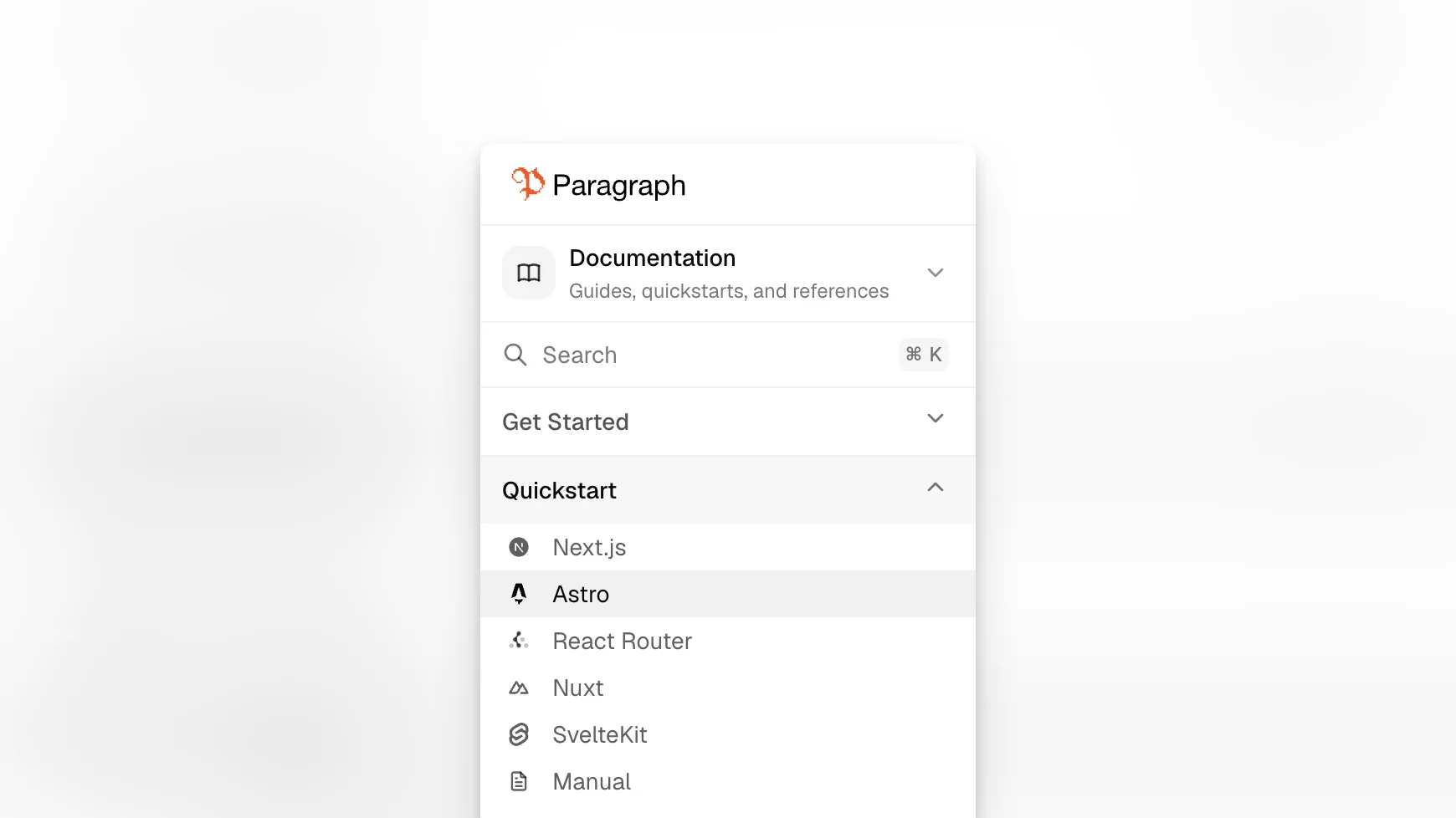
If you are looking for a Sanity alternative in 2026, you are probably not trying to replace a bad product. You are trying to solve a mismatch. Sanity remains a serious headless CMS with a strong developer reputation, configurable Studio, real-time content infrastructure, and a broad ecosystem. But many teams now want an AI-native headless CMS that reduces setup, shortens editorial loops, and keeps AI, localization, SEO, media, and delivery closer together. That is where Paragraph CMS becomes worth a close look.
TL;DR: Sanity is still powerful, especially for developer-led teams that want a highly customizable content workspace. But in 2026, many teams want less assembly and more built-in workflow. Paragraph CMS stands out as a Sanity alternative because it combines structured content, AI-assisted editing, localization, media management, SEO tooling, and framework-ready delivery in one product.
Why are teams searching for a Sanity alternative in 2026?
The search intent behind this topic is usually more specific than "which CMS is best?" Teams evaluating alternatives often already understand headless architecture. What they need is a better fit for how they actually work day to day.
For some organizations, Sanity is still the right answer. Its Studio is intentionally customizable, and its platform emphasizes the Content Lake, live content workflows, and developer extensibility through documentation and SDKs. Sanity also supports media handling, visual presentation workflows, and a broad range of custom setups through code. That flexibility is real, and it is a major reason the platform remains widely considered in modern CMS evaluations.
But flexibility cuts both ways. A CMS that is highly adaptable can also require more architectural decisions, more operational discipline, and more implementation work before editors feel fully supported. That is often where the alternative search begins.
The most common reasons teams start comparing options include:
They want AI workflows inside the CMS, not bolted on through external tools.
They want editorial teams to move faster without depending on developers for every improvement.
They want localization, SEO, and media workflows to feel like one system.
They want framework-ready headless delivery without piecing together multiple products.
They want a clearer path from content model to published page.
Those are not complaints about headless CMS as a category. They are signs that the category is maturing.
What should a modern Sanity alternative actually improve?
A useful alternative should not just imitate the same architecture with different branding. It should improve the parts of the workflow that create friction.
In 2026, the strongest alternatives usually improve at least four areas: editorial speed, AI assistance, content operations, and delivery readiness. That is a more practical lens than feature-count comparisons.
Sanity itself continues to present as a platform for structured content, composable applications, and AI-era content operations through its official site and docs. It also offers plan-based platform management and paid add-ons across features such as media and live content capabilities. For many teams, that is powerful. For others, it means more moving parts to evaluate across build, governance, and publishing workflows.
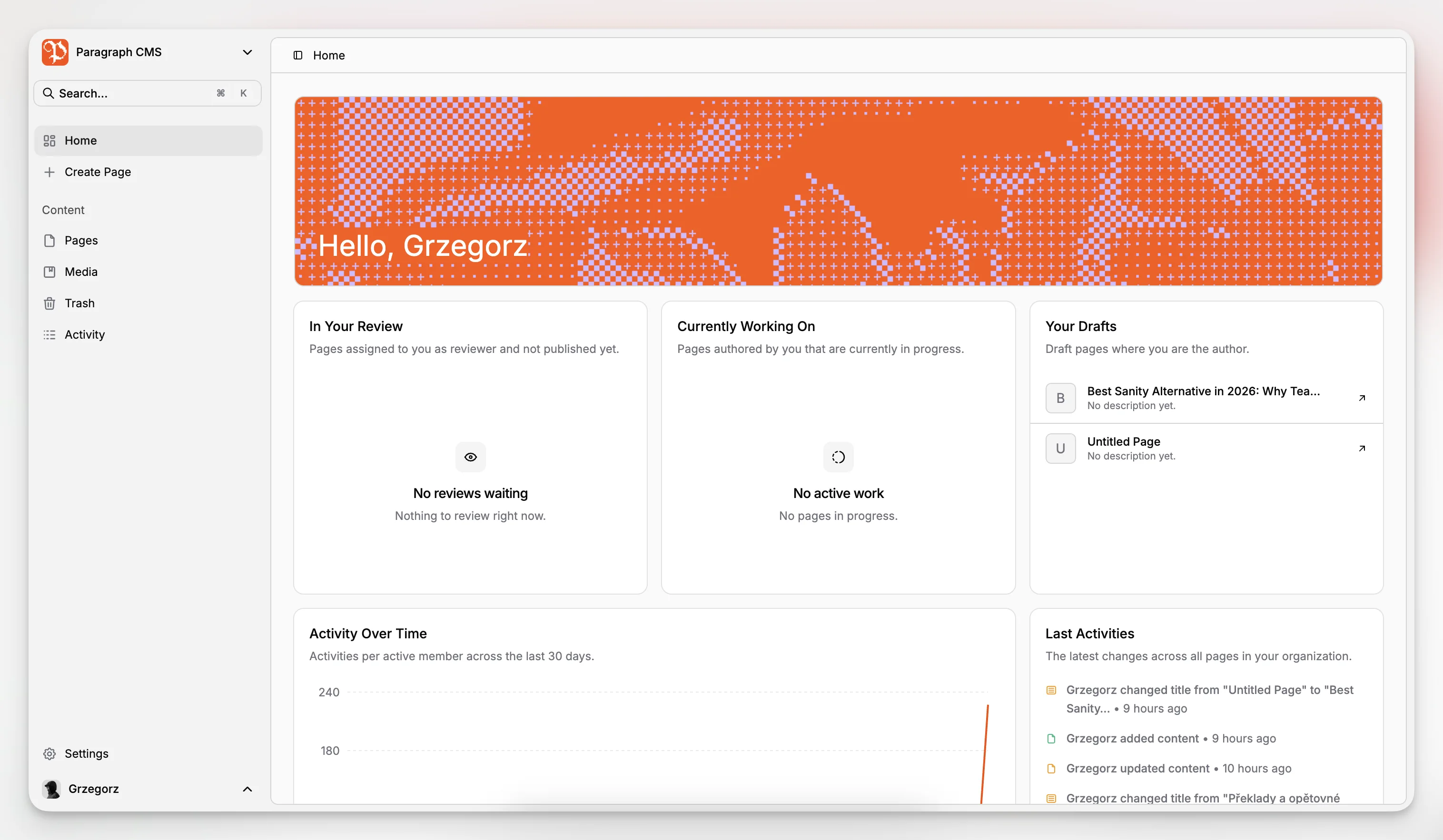
Paragraph CMS takes a different posture. On its homepage, it describes itself as an AI-native headless CMS with AI, global CDN, localization, media management, and AI-powered SEO in one workspace. Its public feature set and changelog also show a product emphasis on built-in editorial workflow rather than pure customization alone.
That distinction matters. A strong alternative is not just another API-first CMS. It is a headless CMS that changes how work gets done.
How does Paragraph CMS differ from Sanity at a practical level?
The quickest way to understand the difference is to compare how both products tend to feel during implementation.
Sanity is excellent when your team wants an all-code content workspace and is comfortable shaping editorial experience through configuration. Its own product pages describe Sanity Studio as a customizable content workspace backed by Content Lake, with tools for preview and structured modeling. That can be ideal for organizations with dedicated frontend and content platform resources.
Paragraph CMS, by contrast, is positioned more directly around an integrated workflow. According to its homepage and features catalog, it brings together AI writing help, multilingual content, media management, page SEO, roles, API keys, history, collections, and framework support in one product surface. Its recent changelog also documents additions such as AI-generated image metadata, translation and retranslation improvements, starter and advanced framework projects, and built-in generation support for SEO-related resources.
Here is the simpler comparison:
Criteria | Sanity | Paragraph CMS |
|---|---|---|
Core posture | Highly customizable headless platform | AI-native headless CMS with integrated workflow |
Editorial UX | Strong, but often shaped through code and setup | More out-of-the-box for content teams |
AI inside the CMS | Expanding AI capabilities and content tooling | AI is built into writing, metadata, prompts, and workflow |
Localization workflow | Powerful, but implementation varies by setup | Built-in multilingual content and retranslation focus |
SEO operations | Possible through integrations and implementation | SEO-oriented workflow and generation built into product direction |
Framework onboarding | Strong docs and ecosystem | Starter and advanced projects for multiple frameworks |
Best fit | Developer-led customization | Teams wanting faster editorial velocity with less assembly |
This table simplifies a complex decision, but it captures the main tradeoff. Sanity optimizes for flexibility. Paragraph CMS optimizes for integrated execution.
Why does AI-native matter more in 2026 than it did a year ago?
A year ago, many CMS vendors could claim they had "AI features." In practice, that often meant a thin integration or a prompt box that lived next to the real workflow. In 2026, buyers are becoming more skeptical. They want to know whether AI helps create better structured content, cleaner metadata, faster translation, and fewer handoffs.
That is why AI-native is more than a slogan. It means the product is designed so AI participates in the content lifecycle rather than floating on top of it.
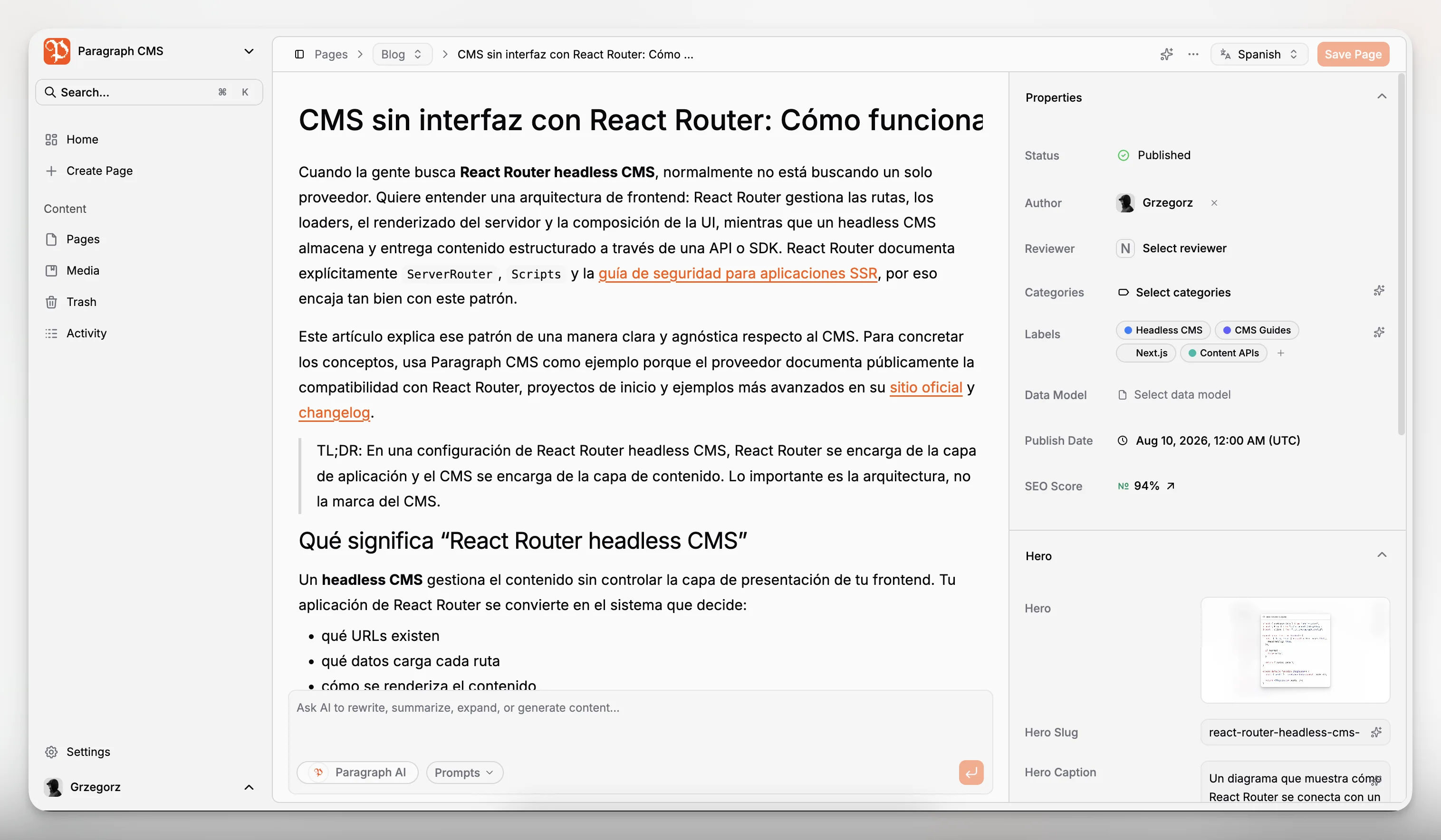
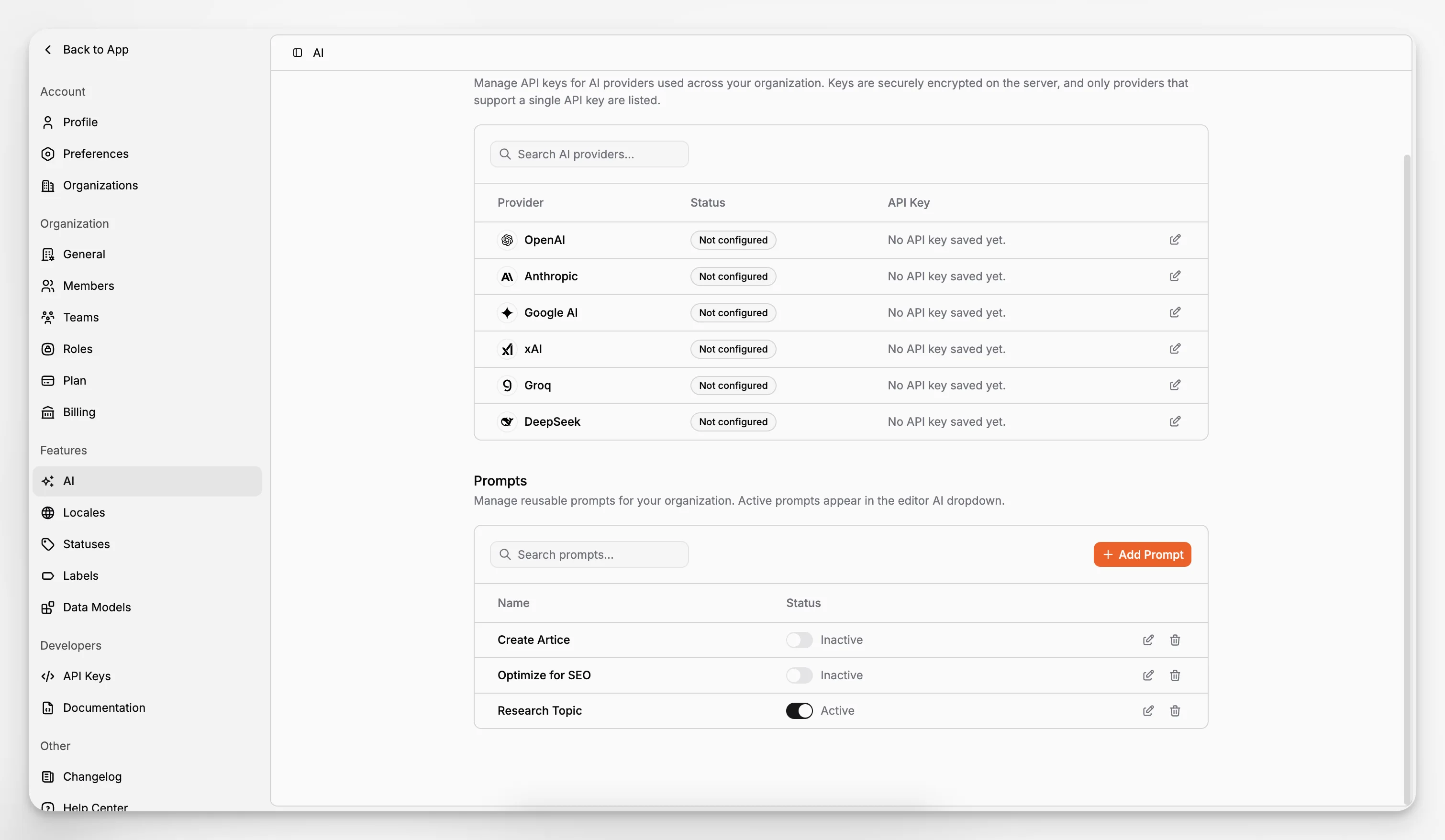
Paragraph CMS publicly emphasizes that direction. Its homepage highlights built-in chat, AI editor assistance, generative SEO, prompt reuse, provider choice, BYOK, translation into 75+ languages, and automatic generation of files like robots.txt, sitemap.xml, and llms.txt. Its changelog adds more concrete signs of product depth, including AI generation for image slugs and captions, hero metadata generation, prompt library capabilities, and faster retranslation workflows.
That combination changes the everyday experience for teams who publish often. Instead of switching between a chat tool, a translation tool, an SEO plugin, and a media workflow, the team can work inside one content system.
This is where many Sanity comparisons become less about schema power and more about operational efficiency. If your team publishes in multiple languages, manages many images, or needs repeatable SEO hygiene, built-in workflow can matter more than theoretical flexibility.
What kinds of teams are most likely to outgrow Sanity?
Not every team outgrows Sanity. Some grow into it. But certain operating models are more likely to feel strain.
Marketing-led teams without a CMS engineer
If your content team is expected to ship landing pages, articles, localized updates, and SEO improvements quickly, a system that depends on regular developer intervention can start to feel expensive. Not because developers are unnecessary, but because their time becomes the bottleneck.
Paragraph CMS is often easier to justify in this scenario because its product direction is visibly editor-centered. Its public feature pages list media management, locales, multilingual content, page SEO, history, collections, roles, and AI prompts as first-class features rather than adjacent tooling.
Teams running multilingual publishing programs
Localization is easy to underestimate in CMS selection. The hard part is not adding locale fields. The hard part is keeping language variants synchronized when the source content changes.
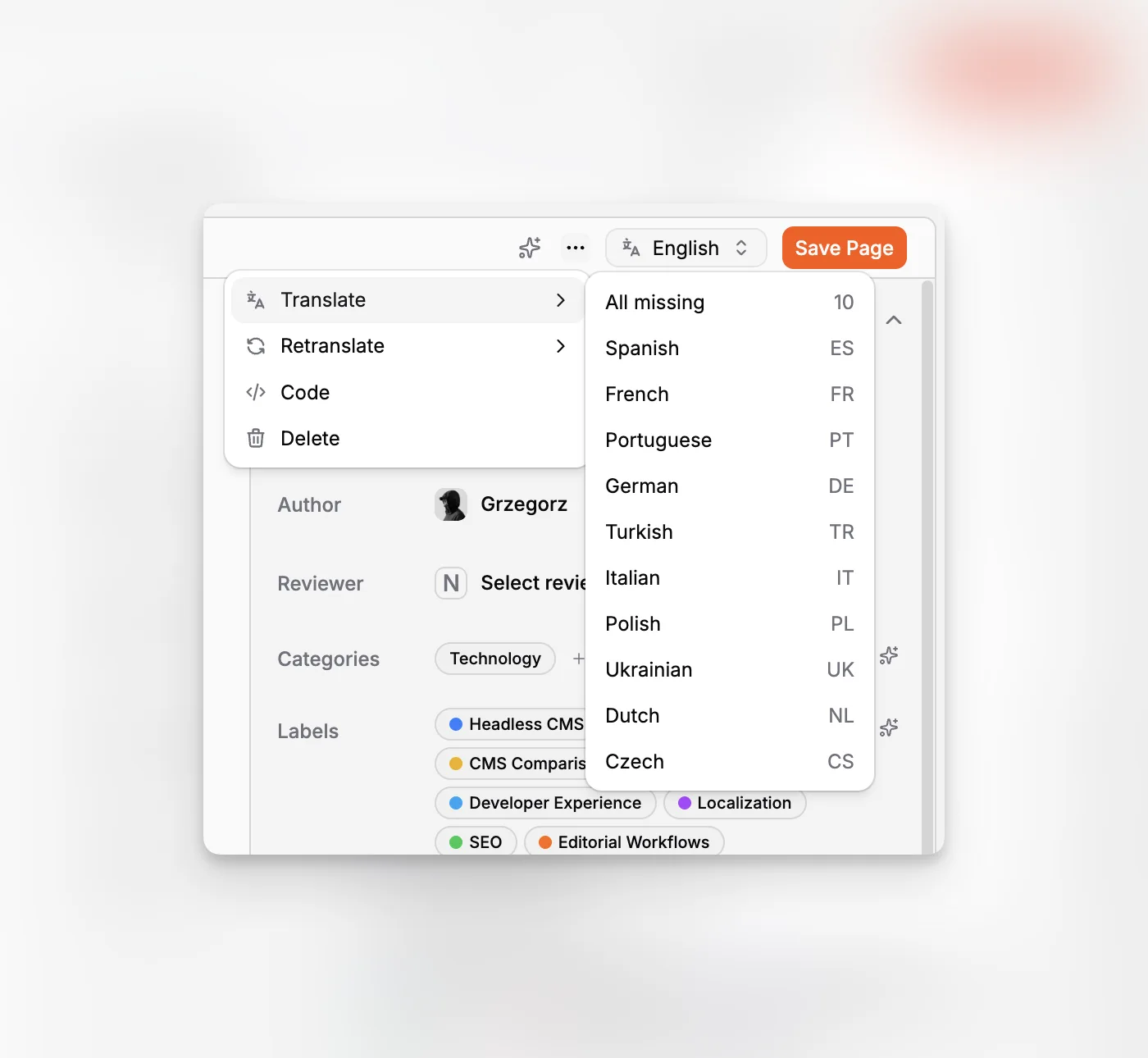
Paragraph CMS specifically calls out translate and retranslate workflows, and its June 2026 changelog notes faster translation for language variants and faster retranslation of all language versions. That matters for teams running blogs, docs, product marketing, or region-specific content where change propagation is constant.
Teams that need SEO workflow, not just SEO fields
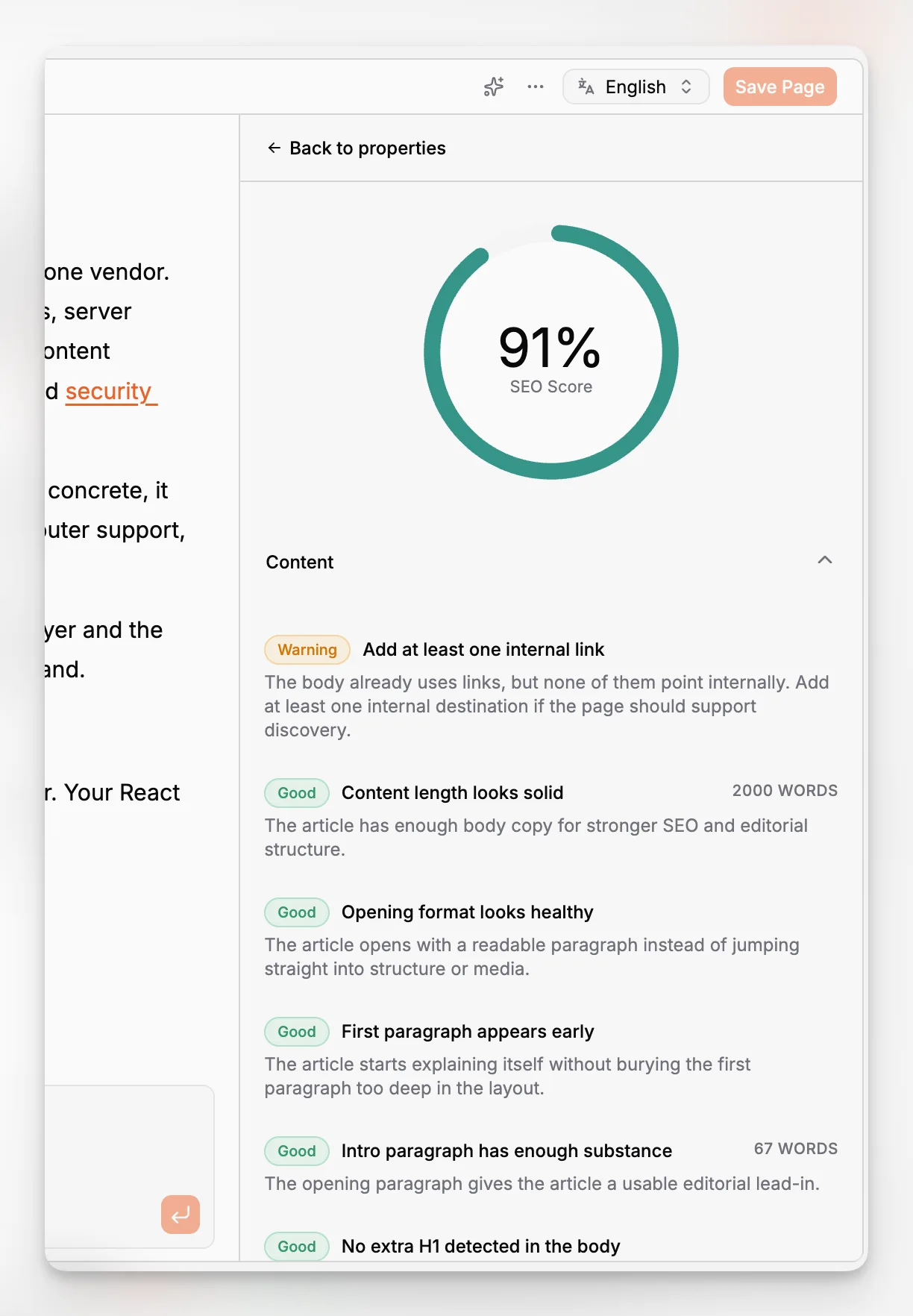
Most headless CMS platforms can store titles, descriptions, canonical URLs, and image metadata. That is table stakes. What teams increasingly want is guidance and automation around what to fill, what is missing, and what can be generated safely.
Paragraph CMS leans into this. Its site highlights AI-powered SEO, real-time SEO analytics, and generation of metadata and discovery files through its SEO tooling. Its feature taxonomy also includes page SEO and SEO analytics, while its changelog documents support for automatic robots.txt, sitemap.xml, rss.xml, and llms.txt generation.
Teams that want fewer disconnected systems
A lot of CMS stacks still look like this:
CMS for content structure.
Separate AI tool for drafting.
Separate media workflow.
Separate translation process.
Separate SEO plugin or custom implementation.
Separate project boilerplate for delivery.
That stack can work. It can also become fragile. Every extra tool introduces configuration, handoff, and maintenance cost. A meaningful alternative should reduce system count where doing so helps content quality and publishing speed.
Where does Paragraph CMS feel stronger than Sanity?
This is the part readers usually want, but it is worth answering carefully. A better alternative is not "better at everything." It is stronger in specific scenarios.
1. Faster editorial throughput
Paragraph CMS is built around reducing repetitive publishing work. The public product pages emphasize AI help for drafting, rewriting, metadata generation, and prompt reuse. The changelog adds practical evidence that these features are not static marketing copy but an actively developing workflow layer.
If your team wants to spend less time on slugs, alt text, image captions, hero metadata, and repeated prompt engineering, this matters.
2. Better built-in multilingual flow
Localization is not just a technical capability. It is an editorial maintenance problem. Paragraph CMS appears to treat multilingual content as a native product concern, with listed features for locales, default locale, multilingual content, and translations/retranslations.
That makes it a stronger fit for teams that need to move source content and translated content forward together, rather than managing translation as a separate project.
3. More integrated SEO execution
Paragraph CMS clearly treats SEO as part of content operations, not an afterthought. That includes visible page SEO features, analytics references, AI-generated metadata, and automated generation of important crawl and discovery assets.
By comparison, Sanity supports powerful structured content and frontend flexibility, but the SEO operating model usually depends more heavily on how your team implements it.
4. Less assembly for framework-ready setups
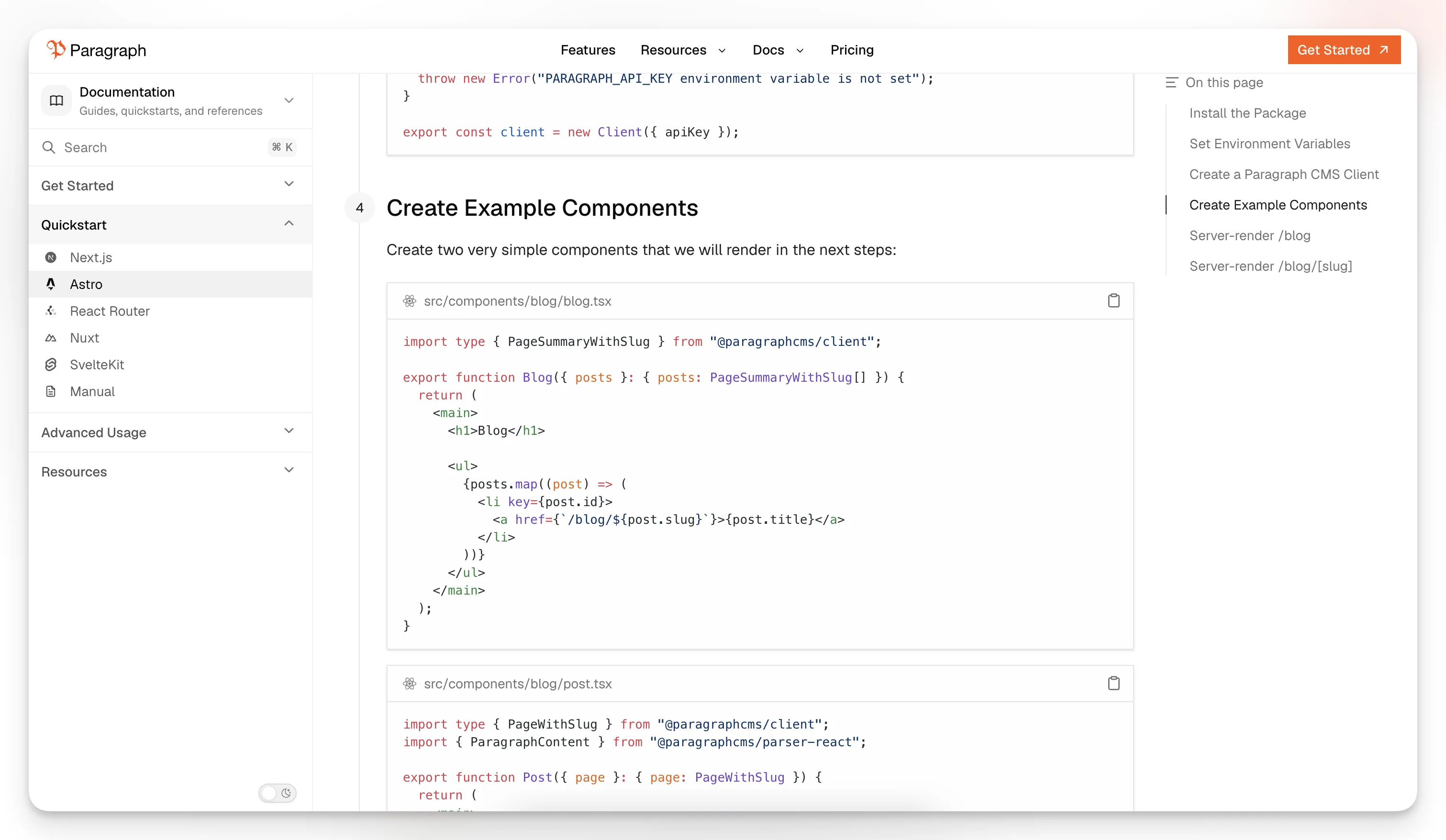
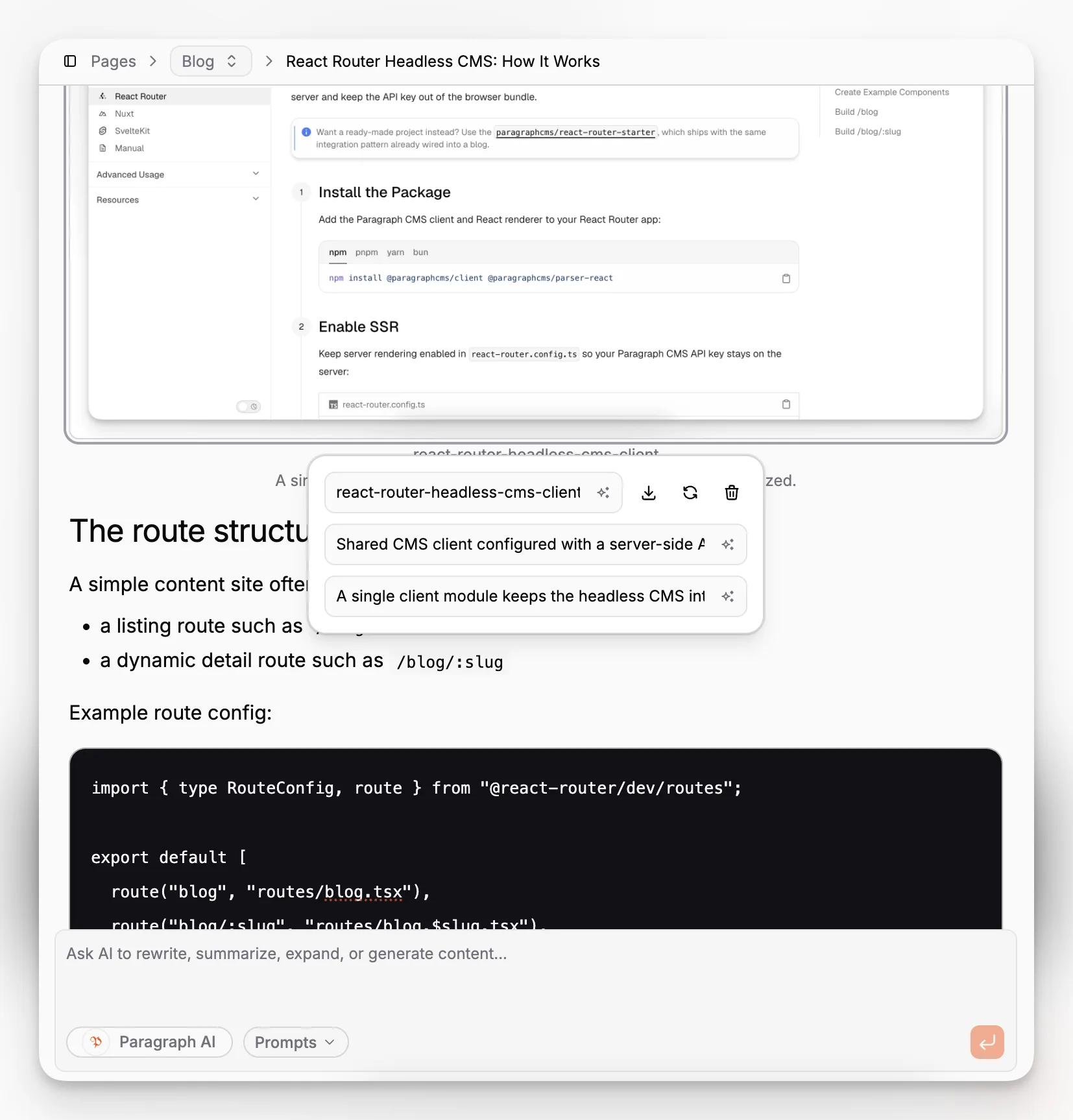
Sanity has a mature ecosystem and strong documentation. But if your goal is to get from blank repo to functioning content application quickly, Paragraph CMS has made that a product priority. Its changelog documents starter and advanced projects for Next.js, Astro, Nuxt, React Router, and SvelteKit, with built-in blog routing and generation of common output files.
That is the kind of detail that saves real project time.
Where might Sanity still be the better fit?
A credible comparison has to say this plainly: Sanity can still be the better choice.
If your organization wants a deeply customizable content workspace, has internal engineering capacity, and prefers to shape editorial systems through code, Sanity remains very strong. Its documentation highlights configurable schema types, custom document structures, block content, Studio tools, live content options, and presentation workflows. That is a compelling stack for product teams building something very specific.
Sanity may also win when:
You need a highly bespoke content application built around internal workflows.
Your team already knows GROQ and has established Studio patterns.
You have platform engineers who prefer maximum control over CMS behavior.
Your content model is complex enough that customization is a strategic requirement, not a cost.
In other words, the question is not whether Sanity is good. It is whether your team wants to assemble a system or operate a system that is already opinionated in the right places.
That distinction becomes sharper as organizations try to fold AI into everyday publishing rather than experimentation.
What does Paragraph CMS offer that maps to real selection criteria?
When teams evaluate alternatives, they usually need evidence that a product can cover practical requirements. Paragraph CMS has a public feature footprint that aligns with the questions buyers actually ask.
Editorial and content modeling
The product site and features directory reference editor, pages, collections, data models, labels, statuses, page properties, page hero, history, and trash. That suggests a content system built not just for storage, but for repeatable editorial workflow.
Media workflow
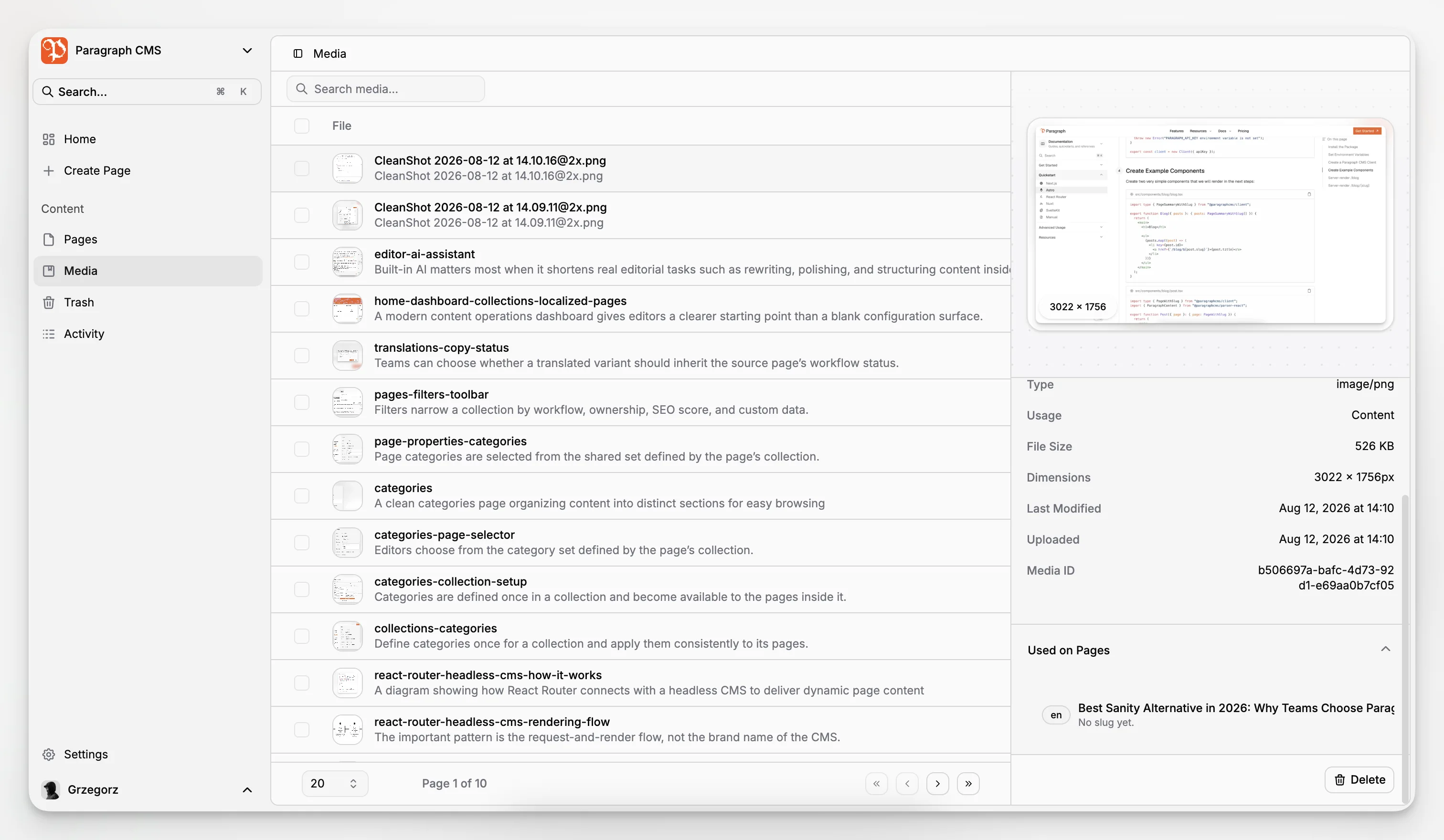
Paragraph CMS publicly references media management, image retention, consistent delivery paths for hero and inline images, and automatic image optimization. Its changelog also documents dedicated alt support, AI generation of alt tags, and support for replacing media across multiple language variants.
For teams publishing lots of editorial or marketing content, that is more useful than a generic asset bucket.
Team and permissions structure
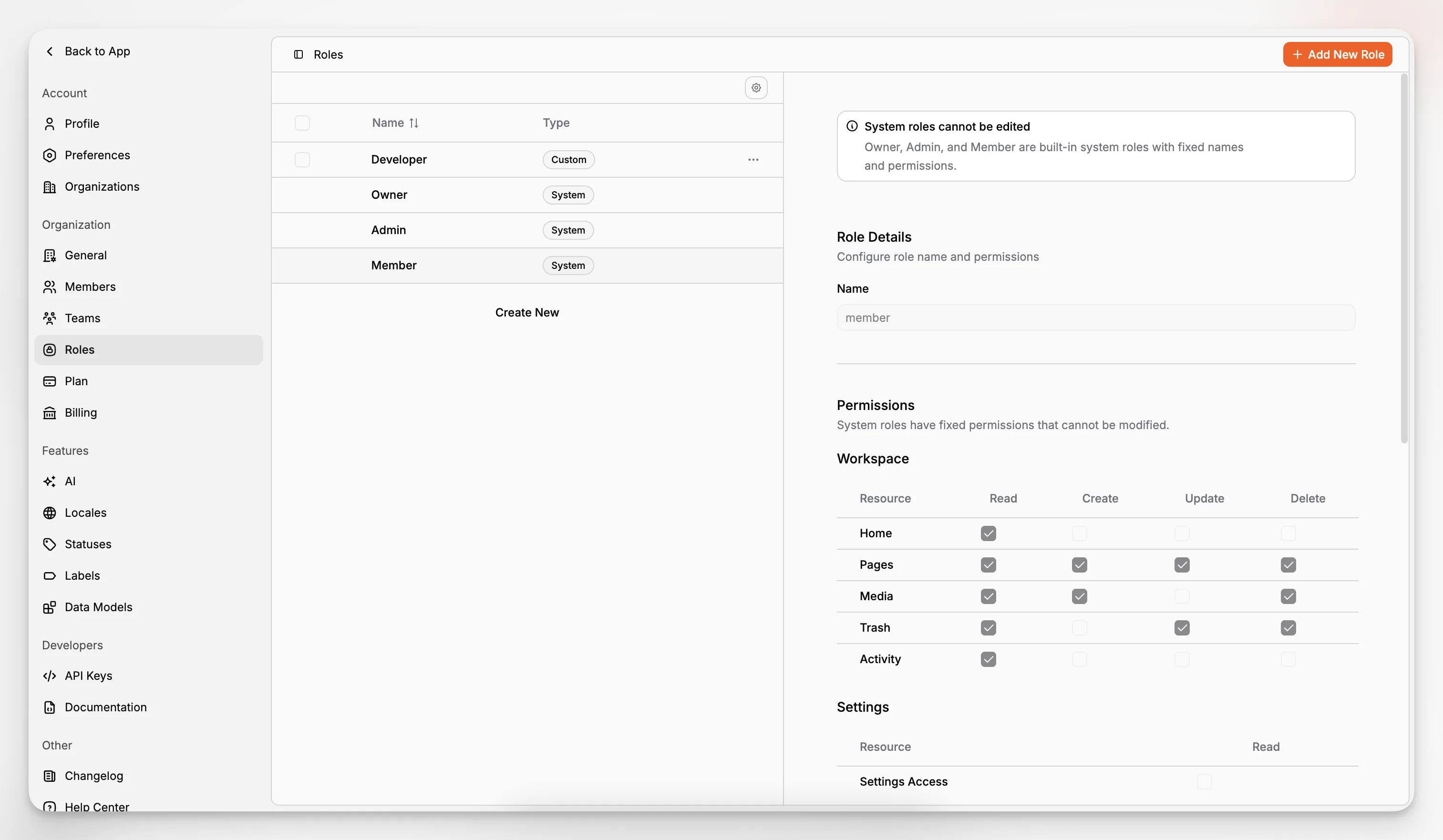
The homepage and features pages list members, teams, roles, system roles, organizations, and permissions-oriented access management. That makes it relevant for companies that need structured collaboration without building permission logic from scratch.
Developer support
Paragraph CMS also positions itself for developers. The public site references open-source SDKs with TypeScript support, security resources in documentation navigation, API keys, examples, and first-class framework support. Its changelog explicitly notes improved helper buttons for showing how to fetch and update data during integration.
This is worth stressing because some AI-heavy CMS products underserve engineers. Paragraph CMS appears to be trying to avoid that trap.
Delivery and infrastructure
The homepage describes a global edge network, public media edge caching, and auto-optimized images. The public status page also breaks out uptime reporting for docs, app, CDN, API, storage, and database services, which is the kind of operational transparency buyers like to see in a maturing platform.
How should you compare Sanity and Paragraph CMS without getting lost in feature lists?
The best evaluation method is to compare workflows, not abstractions.
A simple test is to run both platforms through the same publishing scenario:
Create a multilingual article.
Add hero and inline media.
Generate or refine SEO metadata.
Localize the article into at least two languages.
Update the source article and propagate the changes.
Publish to a real frontend project.
Verify what happened to editor effort, developer effort, and cleanup work.
That exercise reveals more than any generic comparison grid.
Below is a practical scorecard you can use internally:
Question | Why it matters | What to watch for |
|---|---|---|
How many tasks happen outside the CMS? | Extra tools create friction | Drafting, AI prompting, translation, SEO, media cleanup |
How much developer setup is required before editors can work well? | Setup delays ROI | Schema work, preview setup, metadata logic, integrations |
How easy is localization maintenance after updates? | This is where teams lose time | Retranslation, synchronized metadata, asset replacement |
How opinionated is the SEO workflow? | Fields alone do not improve content | Suggestions, generation, missing-data visibility |
How quickly can the frontend team ship a usable starter? | Delivery speed matters | Ready-made examples, routing, sitemap and feed support |
A CMS that looks simpler on paper can still win if it removes dozens of repetitive actions per week.
What are the tradeoffs of choosing Paragraph CMS instead?
No serious platform decision is only upside. If you are moving from Sanity, Paragraph CMS will feel opinionated in ways some teams love and others may resist.
You may get less infinite flexibility
A more integrated product usually narrows the amount of system design you need to do yourself. That is often a benefit. It can also mean fewer reasons to reinvent editorial UX from scratch.
For many buyers, that is exactly the point. But if your content platform strategy depends on building a heavily customized authoring environment, Sanity may still give you a broader canvas.
The ecosystem question is different
Sanity has had more time in market and a broader recognizable ecosystem around its Studio and content platform. Paragraph CMS is newer. Its public changelog shows rapid development since beta opened in March 2026, including framework starters, advanced examples, SEO tooling, media improvements, and AI workflow additions. That momentum is promising, but some organizations will still prefer a platform with a longer enterprise track record.
Opinionated workflows need to match your team
An AI-native CMS is helpful when the built-in workflow reflects real editorial work. It is less helpful if your team has unusual review, compliance, or publishing requirements that require extensive customization. That is why a live trial matters more than marketing pages.
What common mistakes do teams make when replacing Sanity?
This is where many migrations go wrong. They compare surface features and miss the operational model.
Mistake 1: treating all headless CMS products as interchangeable
Headless is an architecture category, not a user experience. Two platforms can both expose APIs and still differ dramatically in editorial efficiency, localization maintenance, and SEO support.
Mistake 2: optimizing only for developer preference
Developer experience matters. But a content system lives or dies on whether editors can use it accurately and quickly. If every routine improvement requires engineering help, the cost shows up later.
Mistake 3: overvaluing customizability and undervaluing defaults
A platform with fewer built-in opinions can seem more powerful during procurement. Six months later, the same team may be maintaining a patchwork of custom logic for metadata, translation, previews, roles, and asset handling.
Mistake 4: forgetting ongoing multilingual maintenance
Many teams validate localization with a one-time translation demo. The real challenge comes after publication, when source content changes weekly and language variants drift.
Mistake 5: ignoring content output requirements
SEO resources, feeds, and machine-readable discovery files are not glamorous, but they matter. Paragraph CMS explicitly documents support for outputs like sitemap.xml, robots.txt, RSS, and llms.txt, which is useful if you care about discoverability and automation.
How does Paragraph CMS fit modern frontend stacks?
This matters because a CMS purchase is never only about the editor. The frontend team has to live with it too.
Paragraph CMS publicly states first-class support for major frameworks, and its changelog lists starter and advanced projects for Next.js, Astro, Nuxt, React Router, and SvelteKit. It also documents framework-ready blog routes and automatic generation of common output files in advanced examples.
That is a strong signal for teams building content-heavy sites with modern frameworks such as Next.js, Astro, Nuxt, React Router, or SvelteKit.
If your current Sanity implementation has gradually accumulated custom boilerplate for content fetching, route handling, metadata generation, and localization-aware routing, an opinionated starter can be more valuable than another flexible primitive.
A modern AI-native headless CMS should support both sides of the equation:
Editors need structured, guided workflows.
Developers need clean APIs, examples, and predictable delivery patterns.
Paragraph CMS appears to be designed around that split.
How important are media delivery and infrastructure in this comparison?
More important than many buying guides suggest.
If your site is image-heavy, runs across regions, or publishes often, media workflow can become one of the hidden costs of a CMS. Delivery speed, image format optimization, broken URL risk, metadata quality, and replacement behavior all affect the publishing experience.
Paragraph CMS claims public media edge caching and automatic image optimization to .webp in the current implementation. It also notes an image retention window for removed or replaced images, with the June 23, 2026 changelog documenting 30-day retention on the Free plan and 3-month retention on the Scale plan. That is a practical safeguard for teams that do not want content updates to create broken media references immediately.
Operationally, that is the kind of detail buyers should notice. It shows that the product is thinking about what happens after editors click publish.
The public status page also adds useful context by reporting service categories such as app, CDN, API, storage, and database. Not every buyer will care, but infrastructure transparency helps during due diligence.
Is Paragraph CMS a better fit for SEO-focused content programs?
For many teams, yes. Especially if the challenge is not just storing content, but publishing optimized content consistently.
Paragraph CMS is unusually explicit about SEO in its product positioning. Its homepage references AI-powered SEO, real-time analytics, generative metadata workflows, and automatic generation of search-related resources. Its features list includes page SEO and SEO analytics, while the changelog documents the @paragraphcms/seo package and outputs for robots.txt, sitemap.xml, rss.xml, and llms.txt.
That does not mean Sanity cannot support excellent SEO. It can, especially when paired with a capable frontend implementation and disciplined editorial processes. But Paragraph CMS appears to reduce how much of that system you need to invent yourself.
For editorial teams, that difference often shows up in small tasks:
writing descriptive alt text,
maintaining slug consistency,
checking metadata completeness,
updating hero content,
regenerating discoverability files,
keeping localized SEO fields aligned.
Those are exactly the kinds of tasks AI and workflow automation should help with.
What does a migration decision look like in real life?
Most teams do not replace Sanity because of a single missing feature. They replace it when the total friction of content operations becomes too high.
A realistic migration conversation usually sounds like this:
The developers are capable, but they are tired of being the glue between editors and the CMS.
The marketing team wants better AI support inside the real workflow.
Localization is taking too much manual effort.
SEO is inconsistently implemented across pages.
Media metadata is not maintained well enough.
New sites or sections still require too much setup.
That is exactly the context where Paragraph CMS is compelling.
Its public product direction suggests a CMS designed around the idea that content operations are part of the product, not merely an integration layer sitting on top of a content API.
Who should seriously shortlist Paragraph CMS as a Sanity alternative?
You should put Paragraph CMS on the shortlist if the following describe your team:
You want an AI-native CMS rather than a traditional headless CMS with AI added around the edges.
Your editors need to create, refine, localize, and optimize content in one place.
You care about SEO workflow as much as SEO fields.
Your developers want a faster path to production with framework-friendly starters.
You want fewer systems involved in content creation and delivery.
You are comfortable choosing a newer platform if the product direction is clearly aligned with your workflow.
It is especially relevant for startups, SaaS companies, editorial teams, agencies, and growth teams that need structured content without building a content platform department around it.
If that sounds close to your environment, reviewing Paragraph CMS features like multilingual content, page SEO, collections, and media management is more useful than reading another generic "top 10 CMS" roundup.
What should you test before making the switch?
Do not evaluate this category with a spreadsheet alone. Run a hands-on pilot.
A good trial should include:
Modeling one real content type.
Publishing at least one article and one landing page.
Adding media with alt text and captions.
Running an AI-assisted editing pass.
Translating content into two or more locales.
Updating the source article and rechecking the localization flow.
Shipping the content into a real frontend route.
Verifying your SEO output and content governance.
While testing, ask sharper questions than "can it do this?" Ask:
How many clicks does this take?
How many people need to be involved?
How much cleanup is still manual?
How much knowledge lives only in developer heads?
How much of the workflow is reusable next month?
That is where a better CMS proves itself.
The bottom line: is Paragraph CMS the best Sanity alternative in 2026?
For teams that want maximum customizability, Sanity remains a serious option and, in some cases, the right one. Its official product and documentation continue to emphasize a flexible, developer-shaped content platform with strong structured content fundamentals.
But if your real requirement is a more integrated AI-native headless CMS, Paragraph CMS is one of the most credible Sanity alternatives to evaluate in 2026. The public product evidence is specific: AI-assisted editing, built-in chat, prompt reuse, multilingual and retranslation workflows, media metadata generation, framework starters, SEO tooling, structured content features, and transparent operational infrastructure.
That combination makes Paragraph CMS especially attractive for teams that want to spend less time assembling a CMS stack and more time publishing high-quality content.
There is a broader lesson here. The best Sanity alternative is not the platform that copies Sanity most closely. It is the one that solves the reasons you started searching in the first place.
FAQ
Is Paragraph CMS only for marketing teams?
No. It is well suited to marketing-led publishing, but its headless architecture, structured content model, API access, framework support, and team permissions also make it relevant for product content, documentation, editorial publishing, and multi-site content operations.
What makes Paragraph CMS different from a typical headless CMS?
The clearest difference is its AI-native workflow. Instead of treating AI as a separate add-on, Paragraph CMS integrates AI assistance into writing, metadata generation, prompt reuse, localization, and SEO-oriented publishing tasks alongside structured content management.
Can Paragraph CMS handle multilingual publishing?
Yes. Its public product materials reference locales, default locale, multilingual content, and translation plus retranslation workflows. That makes it a relevant choice for teams that need to maintain multiple language variants as source content changes over time.
Should developers still consider Paragraph CMS if they liked Sanity?
Yes. Paragraph CMS appears to balance editor-focused workflow with developer needs through API keys, SDKs, framework starters, advanced examples, and TypeScript-oriented integration paths. The tradeoff is that it is more opinionated than a platform built primarily for custom authoring environments.
What is the biggest reason to switch from Sanity to Paragraph CMS?
Usually it is not one isolated feature. It is the desire for a more integrated system where AI, localization, SEO, media, and structured publishing happen in one workflow, with less assembly work and less dependence on separate tools or custom implementation.
