
A Better Contentful Alternative for AI-Native Teams
A better Contentful alternative for AI-native teams with built-in AI, localization, SEO, and media workflows in one headless CMS.
 Grzegorz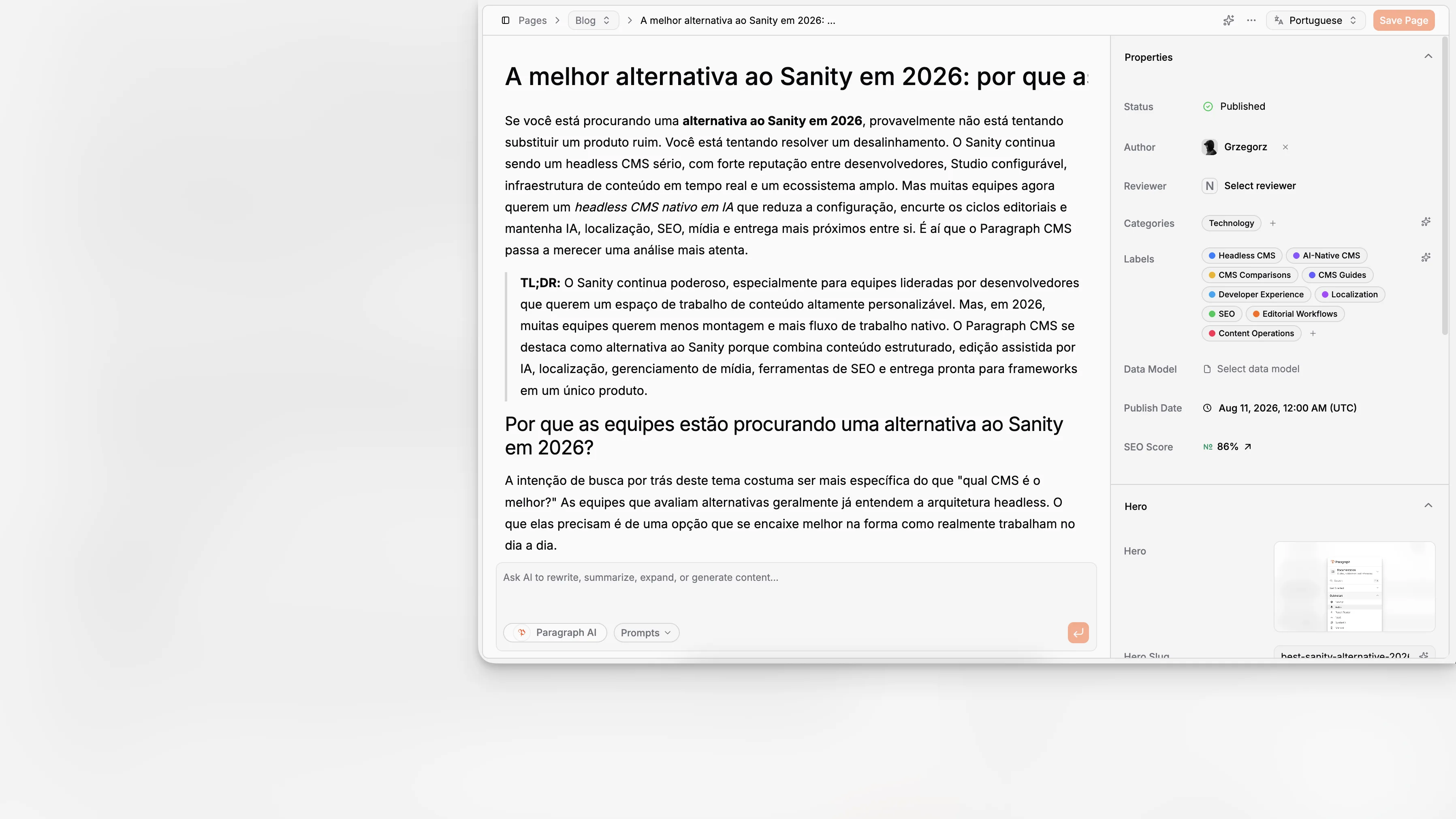
If you are looking for a Contentful alternative, the real question is not just which headless CMS has the longest feature checklist. It is which system makes structured content easier to create, localize, optimize, and ship without forcing your team to glue together separate AI, SEO, media, and workflow tools. That is where Paragraph CMS stands out. It positions itself as an AI-native headless CMS, not simply a traditional headless platform with AI pasted on later.
TL;DR: Contentful is a well-known headless CMS, but many teams now want a more integrated workflow for AI drafting, localization, image metadata, SEO support, and developer-friendly delivery. Paragraph CMS is a strong Contentful alternative when you want structured content operations, built-in AI workflows, and modern headless delivery in one place.
What should a Contentful alternative actually improve?
Most comparison articles start with brand names and pricing tiers. That is not the most useful place to begin. A better starting point is the job your CMS needs to do.
According to Contentful’s explanation of headless CMS, the core value of headless architecture is separating content management from presentation so teams can publish across websites, apps, and other channels. That architectural shift still matters. But for many teams, architecture alone is no longer enough.
A modern alternative should improve at least four things at once:
Editorial speed without sacrificing structured content quality.
Developer flexibility across frameworks and delivery patterns.
Operational simplicity so teams stop managing extra tools for translation, SEO, and media metadata.
Scalability that works for both a first project and a larger multi-market setup.
That is the lens to use when evaluating Paragraph CMS against Contentful or any other headless CMS.
Why do teams start looking beyond Contentful?
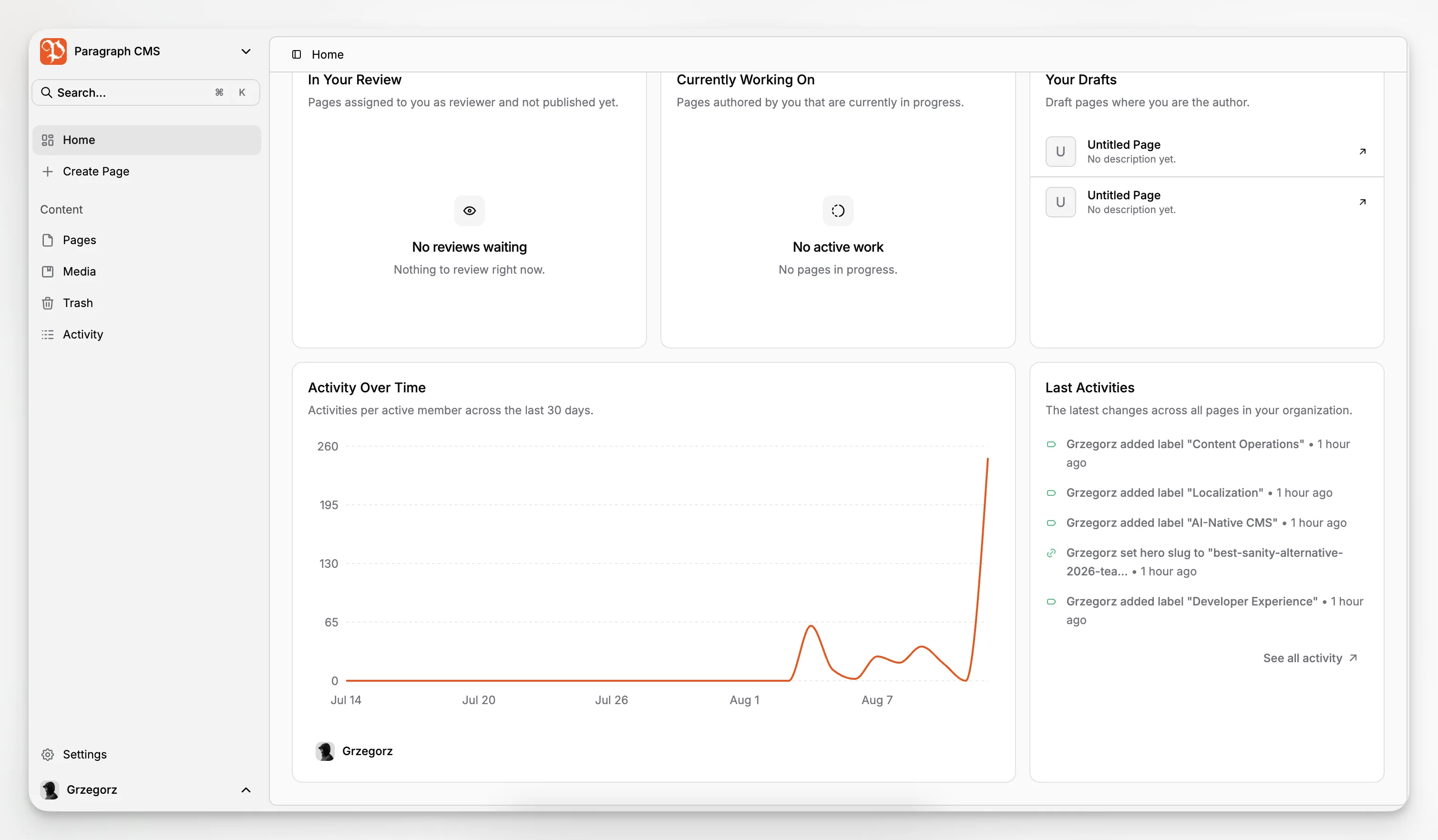
Contentful remains one of the most recognized names in the category, and its own resources repeatedly emphasize composable architecture, APIs, and multichannel delivery. That is useful background because it clarifies what buyers expect from the category. But it also reveals the gap. Teams are no longer searching for a CMS that only decouples front end from back end. They want a system that reduces day-to-day production friction.
In practice, teams often begin looking for alternatives when they run into one or more of these issues:
The editorial workflow feels too fragmented.
AI usage lives outside the CMS instead of inside the actual publishing process.
Localization requires too much manual coordination.
SEO work happens in separate tools and spreadsheets.
Media metadata such as alt text, captions, and hero content become cleanup work.
New projects need starter code and framework support, not just APIs.
This is where Paragraph CMS is directionally different. On its public product pages, it presents AI, localization, media management, a built-in CDN, and SEO workflows as native parts of the product, not add-ons scattered across a larger stack. Its homepage explicitly describes the platform as combining AI, global CDN, localization, media management, and AI-powered SEO in one workspace, alongside framework support for Next.js, React Router, Nuxt, Astro, and SvelteKit.
If your team is actively replacing Contentful, that integrated posture matters more than a vague promise of extensibility.
What is Paragraph CMS, and how is it positioned?
Paragraph CMS presents itself as an AI-native headless CMS built for editors and developers. That positioning is important because it shapes how you should compare it.
This is not a website builder. It is not a legacy page-centric CMS trying to keep up with API-first systems. It is also not best understood as a generic database with a content UI attached. Instead, the product is oriented around structured content workflows with AI-assisted creation, multilingual operations, delivery tooling, and editorial ergonomics.
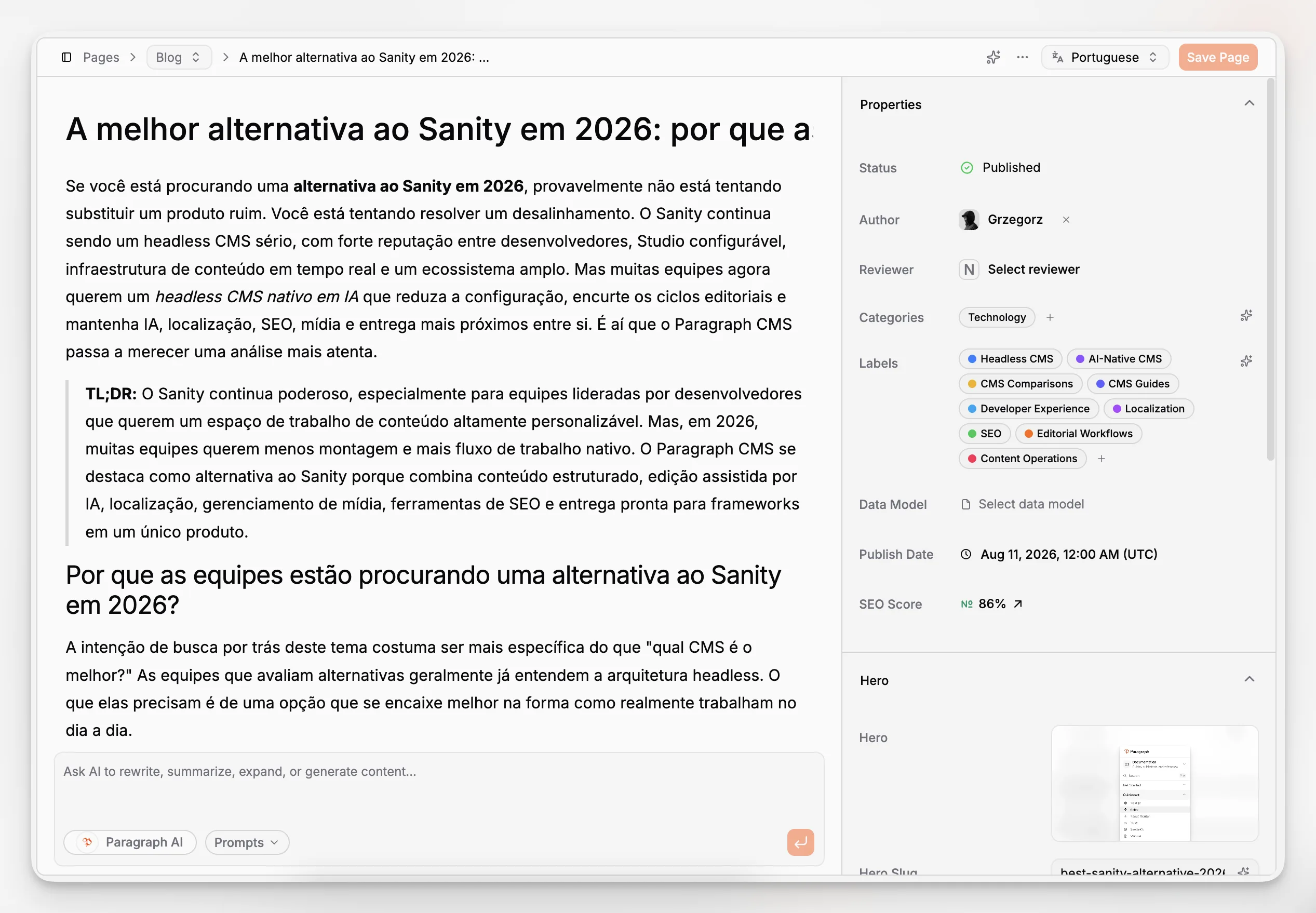
The category term AI-native headless CMS is not just marketing language when the implementation reflects it. In Paragraph CMS, the public feature and changelog pages show recurring investment in AI prompt workflows, translation and retranslation, metadata generation, media handling, and developer integration. That suggests a product built around the entire content pipeline rather than only content storage.
For teams coming from Contentful, the biggest mindset change is this: you are not merely swapping content repositories. You are choosing a different operating model for content.
How does Paragraph CMS compare with Contentful at a practical level?
A useful comparison has to stay grounded in what is publicly documented. The table below focuses on clear category differences and documented Paragraph CMS capabilities.
Decision area | Contentful approach | Paragraph CMS approach |
|---|---|---|
Core architecture | API-first headless CMS with composable content emphasis | AI-native headless CMS with structured content and integrated AI workflows |
Content creation | Structured editing, often paired with external AI tools | Built-in AI chat, AI editor help, prompt reuse, and page generation workflows |
Localization | Headless localization capabilities | One-click translation and retranslation workflows, plus multilingual content features |
SEO operations | Typically handled through modeling, integrations, and external tooling | Native SEO-oriented workflows, metadata generation, analytics, and automated sitemap-related tooling |
Media workflow | Managed media within broader platform workflows | Media management with dedicated alt and caption handling and AI-generated metadata |
Developer onboarding | API-centric with ecosystem depth | SDKs, framework support, starter projects, advanced examples, and in-app getting-started guidance |
Delivery setup | Composable stack decisions vary by team | Product messaging highlights built-in CDN and edge delivery |
The point is not that one platform is universally better. The point is that Paragraph CMS is opinionated in ways that help a certain kind of team move faster.
If your organization wants a broad enterprise composable platform and is comfortable stitching together specialized tools, Contentful may still fit. If your team wants fewer handoffs, more integrated AI-assisted production, and a clearer path from draft to publish, Paragraph CMS has a stronger day-to-day workflow story.
What makes an AI-native headless CMS different from a regular headless CMS?
A regular headless CMS gives you content models, APIs, and editorial interfaces. That is valuable, but it still leaves a surprising amount of work outside the system. Writers draft in one place. SEO specialists maintain another process. Translators work somewhere else. Developers handle integration logic. Editors chase missing captions, slugs, and alt text right before launch.
An AI-native CMS changes that by embedding assistance inside the operational layer of content production.
Paragraph CMS publicly describes several examples of this approach:
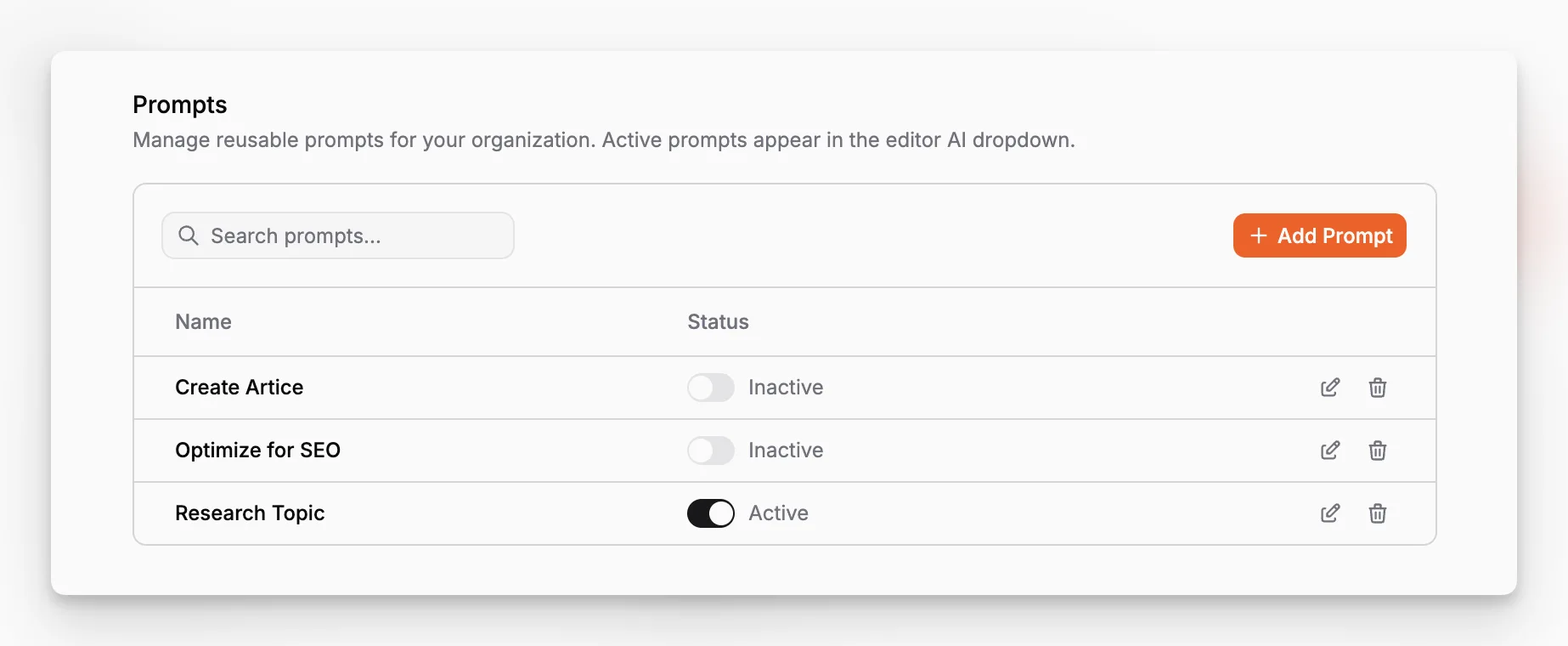
built-in AI chat for research, brainstorming, rewriting, and content creation
AI-assisted page generation from a brief
AI generation for metadata such as slugs, captions, and alt text
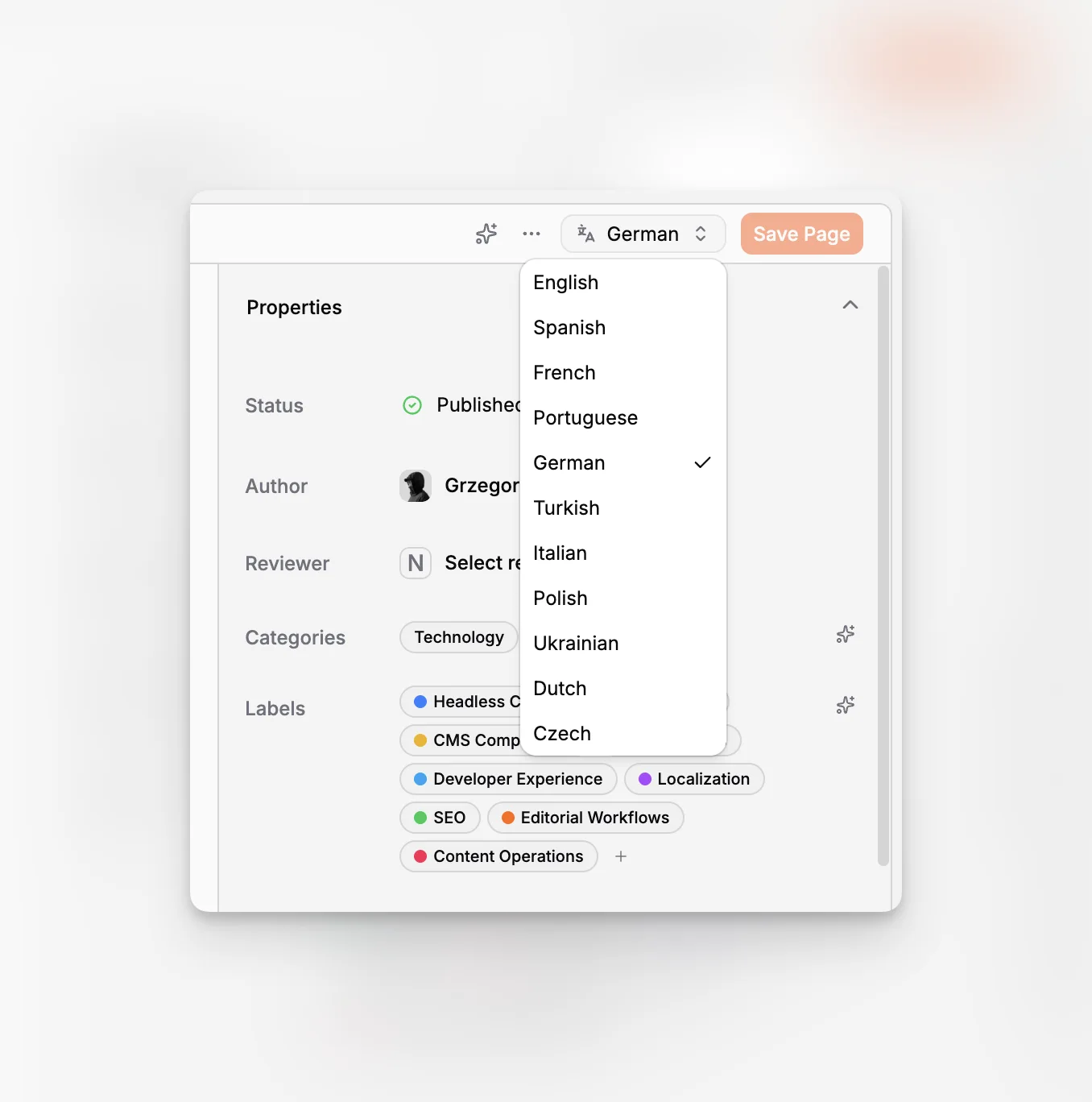
translation and retranslation across more than 75 languages
reusable prompt workflows through an AI prompt library
Those are not minor conveniences. They change how teams work. Instead of using AI as an external drafting assistant and then manually porting output into structured fields, the CMS becomes the place where generation, revision, metadata completion, and localization happen.
That distinction is especially relevant for content teams that publish frequently. When you produce dozens or hundreds of pages, tiny friction points compound. An AI-native workflow removes repetitive work at the field level, not just the document level.
Which Paragraph CMS features matter most if you are replacing Contentful?
Not every feature matters equally during migration. The highest-impact features are the ones that alter cost, speed, and workflow quality.
1. AI-assisted editorial workflows
The homepage and features pages position AI as a central layer of the product, not an afterthought. Paragraph CMS includes built-in chat, AI editor assistance, prompt reuse, and generative SEO support. That is a meaningful distinction if your team currently uses external LLM tools for ideation, rewriting, metadata generation, and optimization.
The operational benefit is straightforward: fewer browser tabs, fewer copy-paste loops, and less inconsistency between draft creation and final structured content.
You can review the product direction directly on the Paragraph CMS features page, which lists AI prompts, editor capabilities, SEO analytics, API tooling, collections, data models, multilingual content, roles, and other feature areas.
2. Translation and retranslation
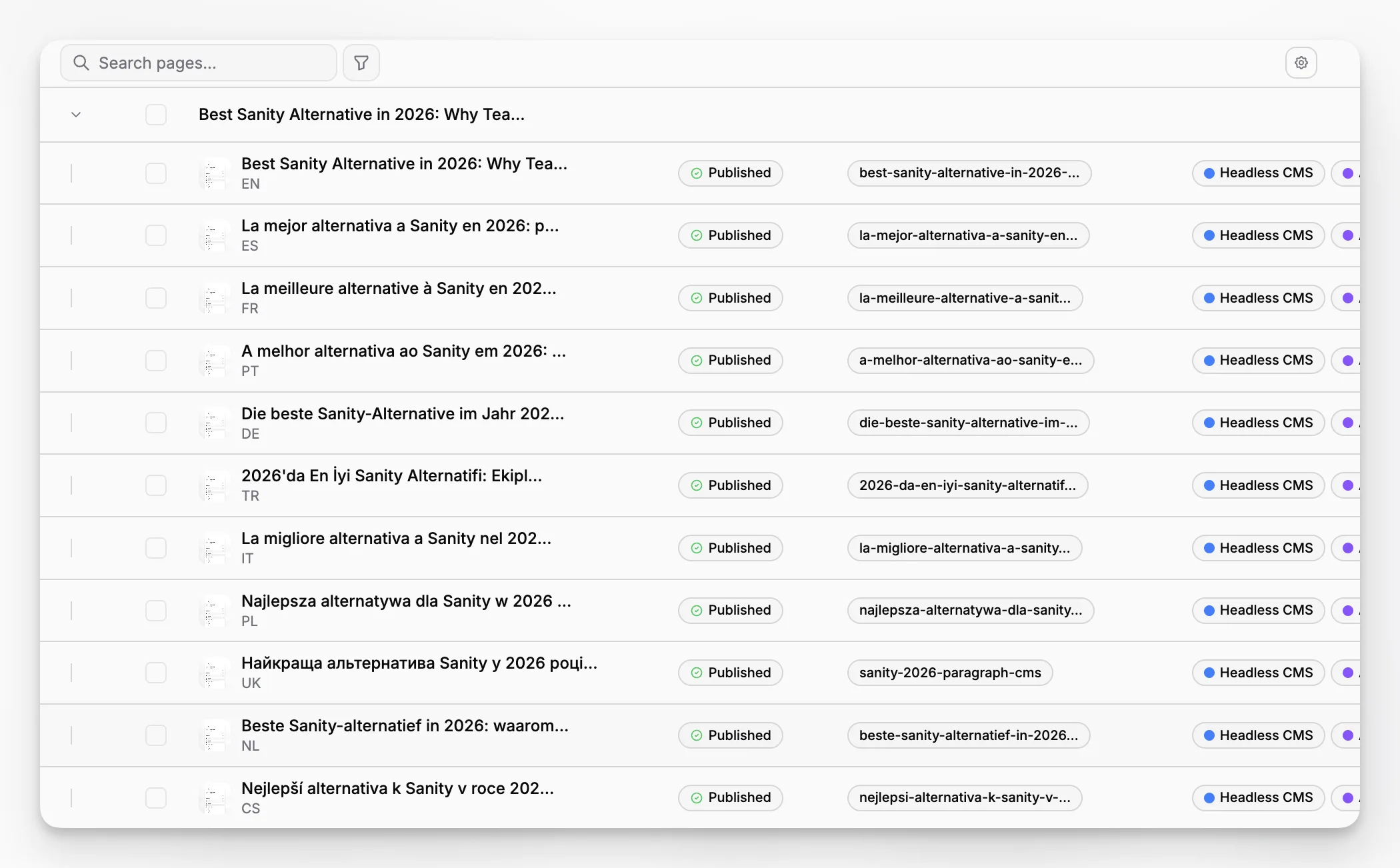
Localization is where many CMS workflows become expensive. Public Paragraph CMS materials highlight Translations and Retranslations as a first-class feature, and the June 27, 2026 changelog notes faster translation for language variants and faster retranslation of all language versions.
That matters because content rarely stays finished for long. Product pages change. Articles get updated. Compliance copy shifts. A CMS that treats retranslations as a core workflow can save substantial editorial coordination.
3. Media metadata handling
Media is one of the least glamorous but most persistent workflow problems in content systems. Paragraph CMS’s June 2026 changelog documents improvements to media support, unified handling for alt and caption fields, AI generation for image alt tags, and the ability to replace media assets across multiple language variants.
That is the kind of feature depth buyers often overlook during evaluation. Then they discover later that image metadata, localization, and replacement workflows consume far more time than expected.
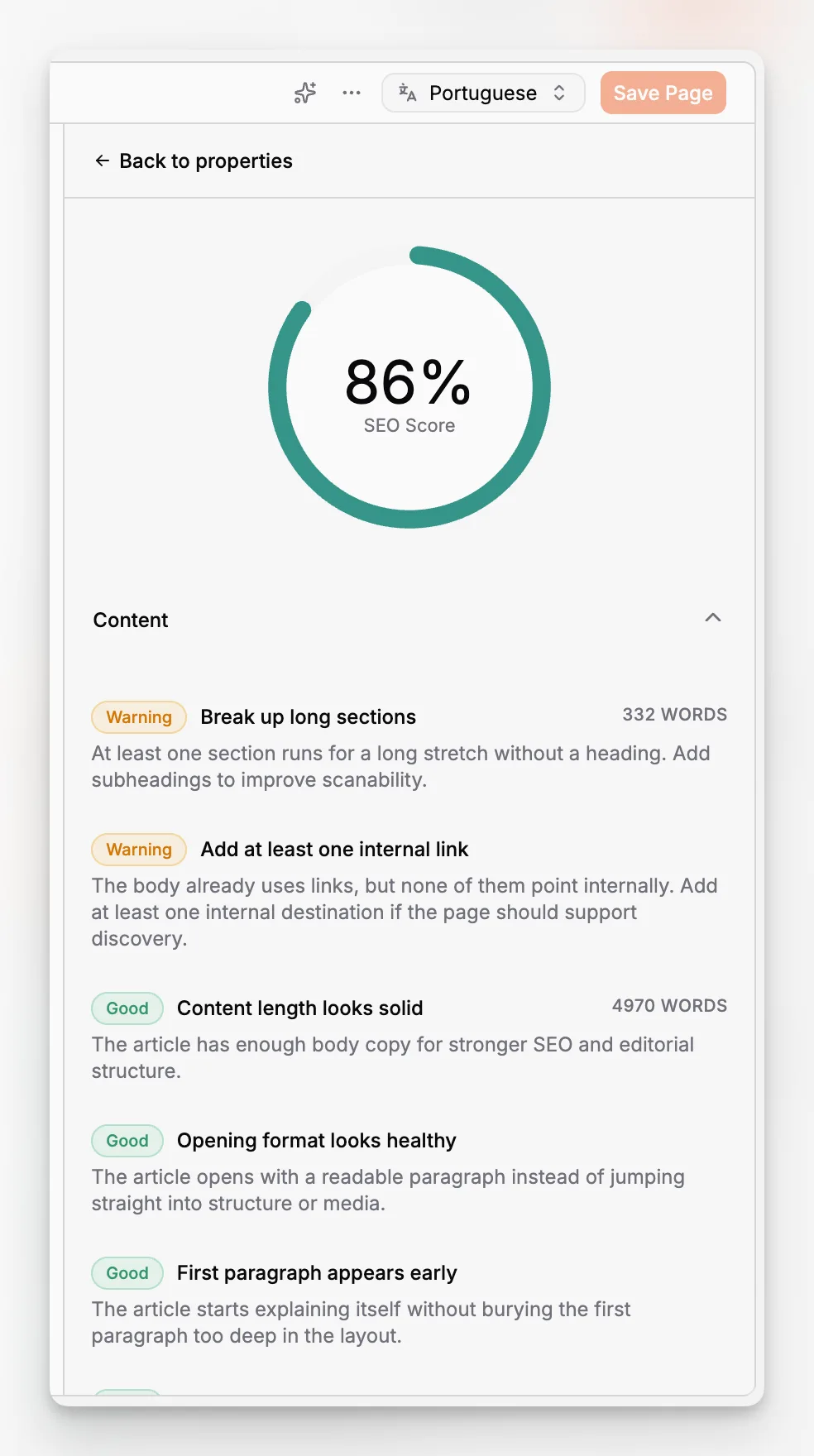
4. SEO-native support
Google’s Search Central documentation on helpful content, article structured data, and search appearance guidance all reinforce the same basic reality: your CMS needs to support clean metadata, structured content, and technically sound publishing.
Paragraph CMS leans into this with AI-powered SEO positioning, SEO analytics, and the @paragraphcms/seo tooling described in its changelog, including automatic generation for sitemap.xml, robots.txt, RSS, and llms.txt.
For content-heavy teams, SEO support inside the CMS workflow is often more useful than a separate audit process after pages are already drafted.
5. Developer onboarding and framework support
CMS selection is often framed as editor versus developer. In reality, both groups pay for poor product decisions.
Paragraph CMS publicly supports Next.js, Astro, Nuxt, React Router, and SvelteKit on its homepage. Its changelog also references starter projects and advanced localized examples for these frameworks, as well as an official client library and examples for common tasks.
If your current Contentful implementation works but feels custom-heavy, this matters. A platform with opinionated starter patterns can reduce setup time and make future projects less fragile.
The Paragraph CMS changelog is especially useful here because it documents concrete developer-facing releases, such as in-app getting-started guidance, client library changes, and SEO package support.
Who is Paragraph CMS a good fit for?
The strongest fit is not every company. It is teams that want structured content and composable delivery, but do not want content operations to become a full-time integration project.
Paragraph CMS is especially compelling for:
Lean marketing and content teams that still need serious headless flexibility.
Product-led companies publishing documentation, landing pages, changelogs, and editorial content across markets.
Agencies and consultants that want a modern headless stack without rebuilding the same workflow pieces for every client.
Developer-led teams that care about framework support and APIs but also want editors to work independently.
Global or multilingual brands that need translation and retranslation to be operationally sane.
If you recognize your team in that list, the product’s integrated approach may deliver more value than a broader but more disjointed CMS stack.
Where can Paragraph CMS outperform a more established headless CMS?
This is the heart of the comparison. Category leaders often win on brand familiarity. Smaller or newer entrants win when they are built around the problems buyers are struggling with right now.
Paragraph CMS can outperform in several practical scenarios.
When content creation and optimization are tightly linked
If your team creates SEO articles, landing pages, feature pages, or documentation updates at a steady pace, the connection between writing and optimization matters. Having AI-assisted drafting, metadata generation, and SEO support in the same environment reduces lag between creation and publication.
Google’s guidance repeatedly emphasizes meaningful text, descriptive metadata, and structured clarity. A CMS that helps you complete those tasks inside the workflow can be more effective than one that leaves optimization as an external checklist.
When localization is constant, not occasional
Many CMS products technically support multilingual content. Fewer make recurring localization smooth. Paragraph CMS explicitly highlights multilingual content, locales, default locale management, and retranslation. That suggests it is built for ongoing language operations rather than a one-time translation project.
When teams want fewer tools
A lot of CMS stacks accumulate layers: one system for content, another for AI, another for search optimization, another for prompts, another for edge delivery, another for image metadata, and another for documentation on how all of it fits together.
Paragraph CMS’s value is partly about tool consolidation. That does not mean fewer capabilities. It means fewer workflow boundaries.
What tradeoffs or limitations should you think about?
A good alternative article should not pretend every buyer has the same requirements.
There are real tradeoffs to weigh.
Ecosystem maturity
Contentful has been around longer, with a broad market presence, enterprise adoption, and a large body of implementation knowledge around it. If your organization prioritizes ecosystem depth, third-party familiarity, or large-scale vendor recognition, that can still matter.
Paragraph CMS appears newer by comparison. Its March 19, 2026 changelog entry notes the beta opening, which is a concrete date that helps frame product maturity. Newer products can move faster and feel more modern, but some enterprise buyers will view earlier-stage maturity as a consideration.
Opinionated workflow design
The more integrated a platform is, the more it encourages a particular way of working. For many teams, that is a strength. For others, especially organizations with already-entrenched AI, localization, or SEO tooling, it may require workflow change management.
Category fit
If you primarily need a deeply extensible enterprise content platform with heavy internal customization and a long list of existing corporate integrations, you should evaluate whether Paragraph CMS’s product philosophy aligns with that environment.
These are not reasons to avoid the product. They are reasons to evaluate it honestly.
How should you evaluate a Contentful alternative without getting distracted?
A clean evaluation process helps avoid feature-tour confusion. Instead of asking every vendor every possible question, test the stack against real editorial and delivery work.
Here is a practical evaluation sequence:
Model one real content type, such as a feature page or blog article.
Test drafting, revisions, and metadata completion inside the editor.
Validate translation and retranslation on a changed page.
Upload media and complete alt and caption workflows.
Fetch content into your actual framework.
Review SEO-related output such as sitemaps, metadata, and page structure.
Measure whether editors and developers can work independently without constant support.
This process tells you far more than a generic demo.
When evaluating Paragraph CMS specifically, the most relevant product areas to inspect are its AI-native homepage overview, the feature directory, and any developer quickstart or example material surfaced from the main site navigation.
What does migration from Contentful usually involve?
The migration itself is rarely the hardest part. The harder part is deciding what should stay the same and what should improve.
A sensible migration plan usually includes three layers:
Content model review
Do not copy every legacy content type without scrutiny. Contentful setups often reflect years of incremental decisions. Migration is a chance to simplify field structures, remove duplicate types, and separate reusable content from page-specific content.
Workflow review
Ask where your team currently uses side-channel workarounds. Those are the places where Paragraph CMS may produce the biggest gains. Common examples include AI drafting outside the CMS, spreadsheets for translation tracking, and last-minute manual SEO cleanup.
Delivery review
A modern headless migration should also assess how content is fetched, cached, localized, and published in the front end. Paragraph CMS’s documented framework support, client tooling, and built-in delivery posture can help reduce custom setup overhead here.
If you are migrating with SEO in mind, Google’s SEO starter guidance for developers and organization structured data documentation are useful references while validating technical output.
How does Paragraph CMS support SEO-heavy publishing workflows?
This is where the platform becomes particularly interesting for growth teams.
An SEO-friendly CMS needs to support more than editable title tags. It should make it easy to produce complete, well-structured pages and publish the supporting technical assets around them.
Paragraph CMS publicly surfaces several relevant capabilities:
AI generation for slugs, captions, and alt text
dedicated page SEO and hero metadata workflows
SEO analytics in the feature list
automated
sitemap.xml,robots.txt, RSS, andllms.txtgeneration via its SEO package
That aligns well with what search teams actually need: cleaner production at the source.
This also matches broader search guidance. Google’s documentation explains that structured data helps search engines understand content, and that non-text content should still be expressed in textual form where possible. A CMS that systematizes alt text, captions, page metadata, and structured output helps content teams meet those standards more consistently.
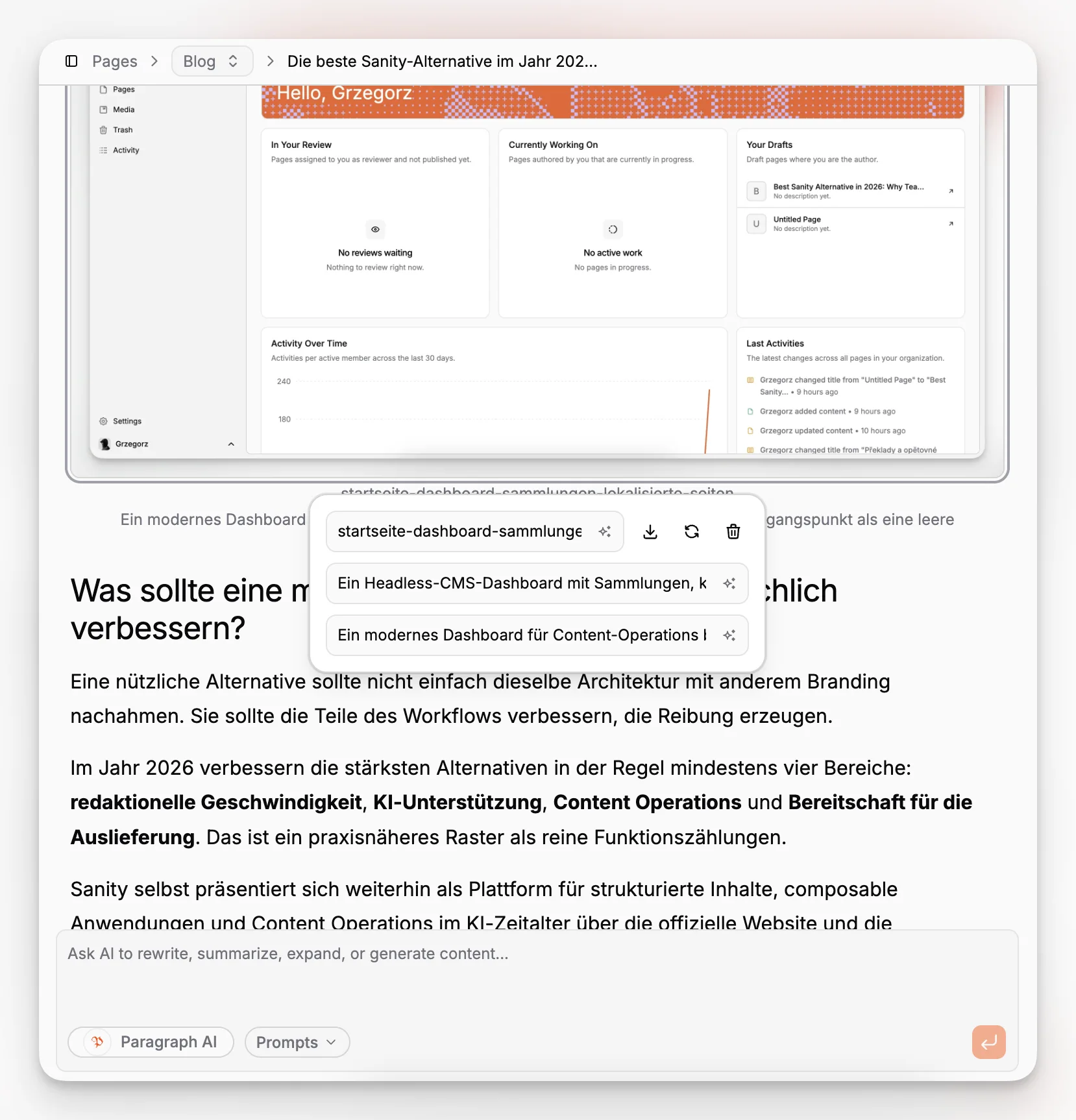
What about developers who care more about APIs than AI?
They should still care. The key question is whether AI features get in the way of structured content and delivery. In Paragraph CMS’s case, the public materials suggest the opposite.
The product also emphasizes:
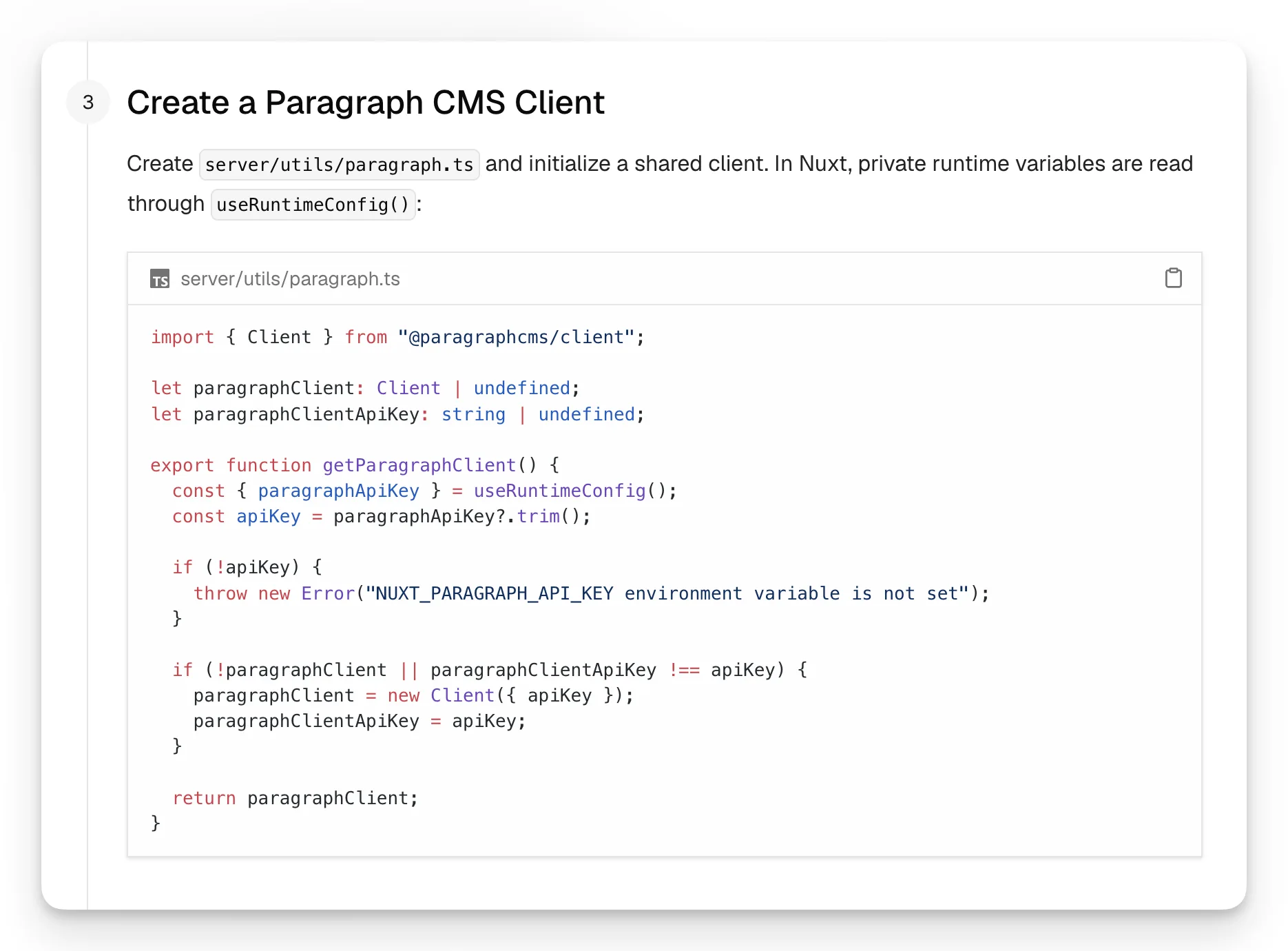
official open-source SDKs with TypeScript support
framework support across major modern stacks
starter projects for blog routes and framework setup
advanced examples for localized blog routing and generated files
API client and API key management in the feature catalog
That means the platform is not trying to replace good engineering practice with magic. It is trying to shorten the path from structured content model to production-ready implementation.
This matters for teams building with composable architectures. A headless CMS still has to behave like infrastructure. The difference is that Paragraph CMS appears to combine that infrastructure mindset with stronger content operations ergonomics.
For developers who want clear ownership boundaries, that can be a feature, not a compromise.
Is Paragraph CMS only for marketers?
No. Its positioning is more balanced than that.
The homepage language is explicit: built for editors, ready for developers, designed to scale. That balance shows up in the public information. Editors get AI-assisted authoring, translations, SEO workflows, collections, page properties, and media support. Developers get SDKs, framework support, API tooling, and examples.
That combination is exactly what many teams are missing when they outgrow a CMS that is either:
too developer-centric for independent editorial work, or
too page-builder-centric for structured, API-first delivery.
Paragraph CMS sits in the middle ground where editor usability and developer control are meant to reinforce each other.
Which real product areas should you inspect before deciding?
If you are seriously considering Paragraph CMS as a Contentful alternative, focus your evaluation on these concrete areas surfaced from the website and feature pages:
Content structure and governance
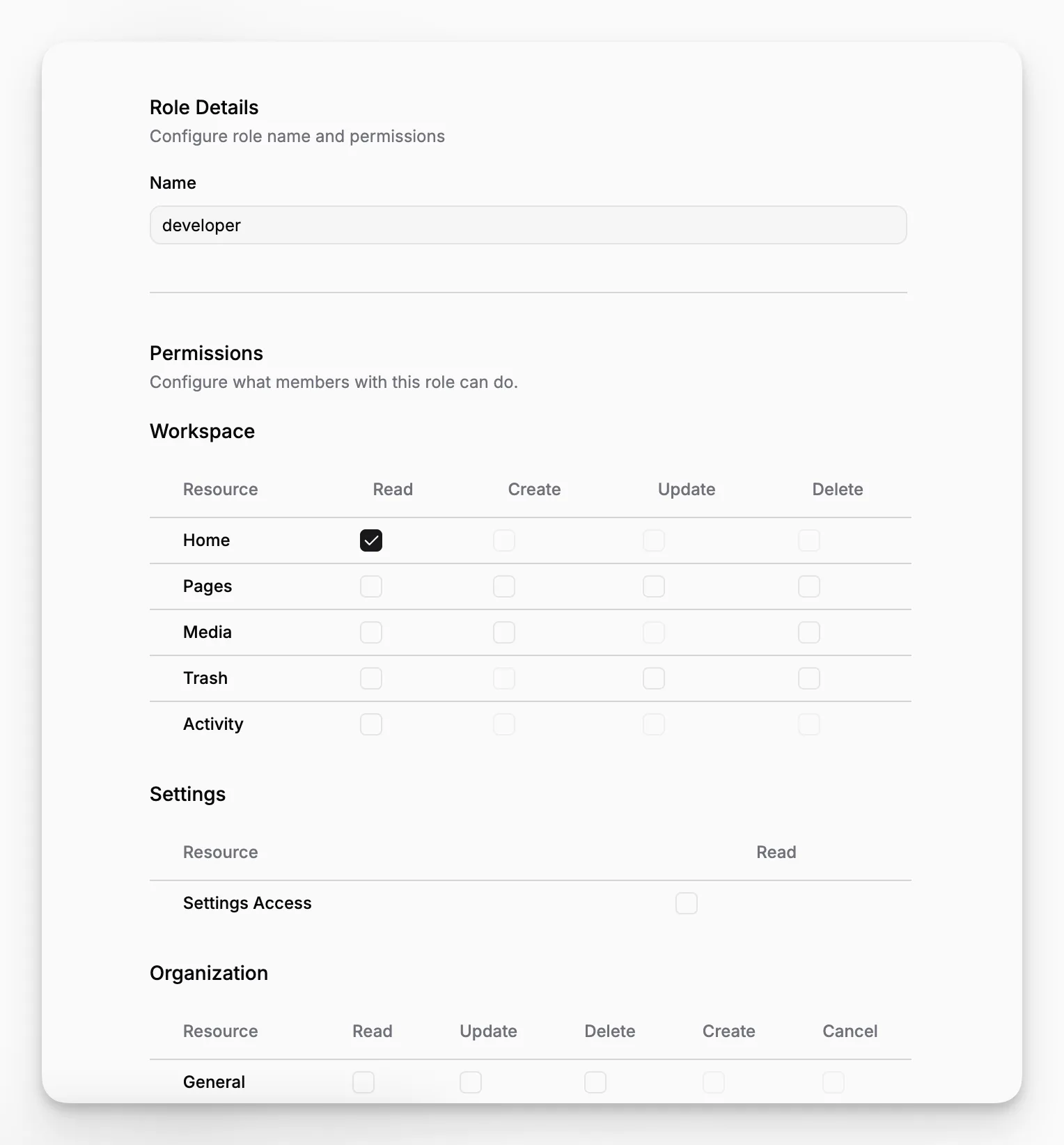
Look at data models, collections, statuses, labels, roles, system roles, teams, members, and activity tracking. These tell you whether the CMS can support real editorial operations instead of just single-user publishing.
Localization depth
Inspect locales, default locale handling, multilingual content, translations, and retranslations. These features reveal whether international publishing is genuinely supported or merely tolerated.
AI workflow quality
Review AI prompts, built-in chat, generation workflows, and prompt reuse. The important question is not whether the product has AI. It is whether the AI helps complete structured work accurately.
SEO support
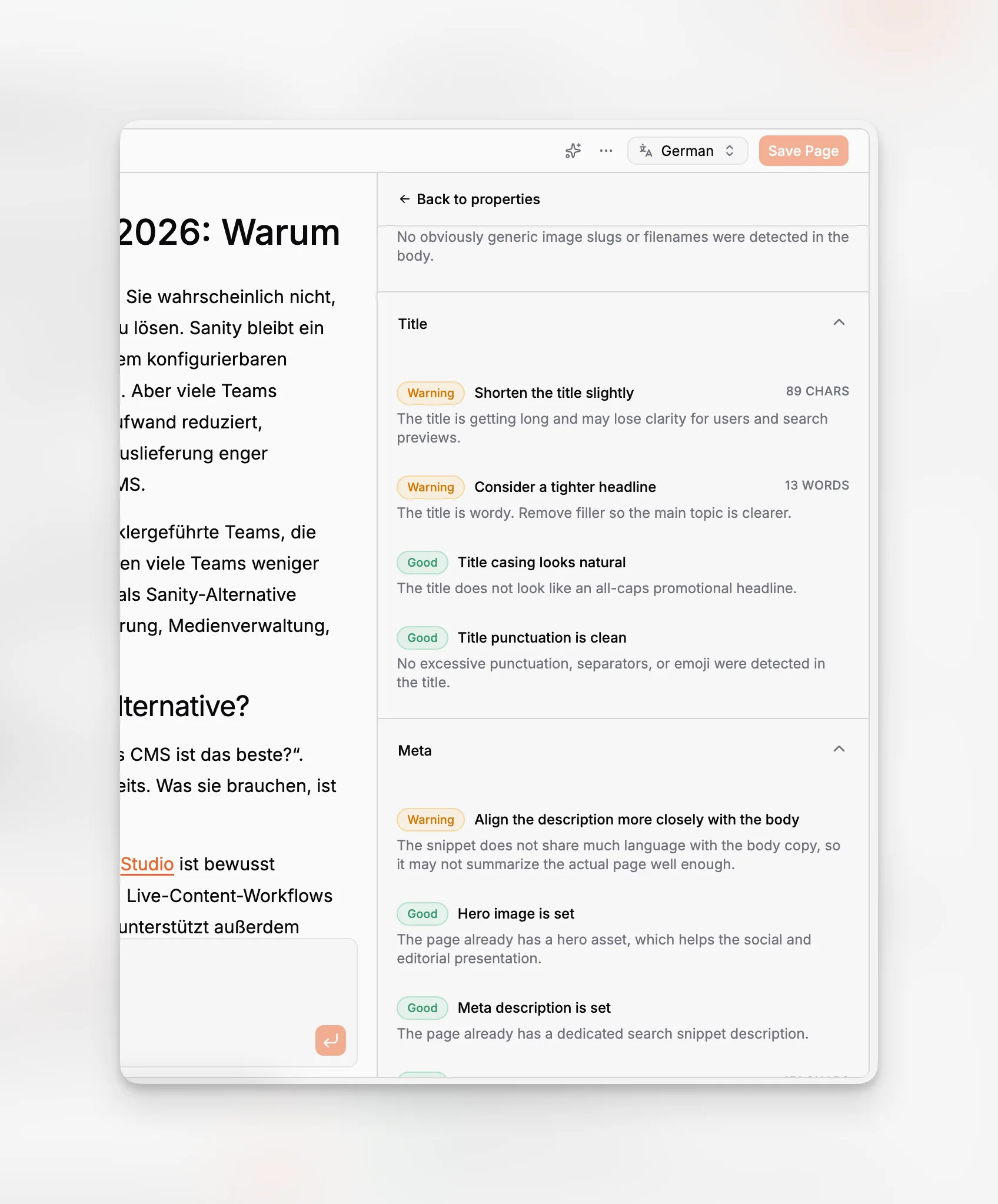
Evaluate page SEO, SEO analytics, generated assets, and hero metadata. This is where growth teams often feel the difference between a generic headless CMS and an AI-native one.
Developer path to production
Check framework support, API client ergonomics, example projects, and starter setups. You want evidence that the product reduces setup friction rather than shifting it elsewhere.
So, is Paragraph CMS a better Contentful alternative?
For some teams, yes. For all teams, not automatically.
Paragraph CMS is a stronger fit when your evaluation criteria include integrated AI, content operations efficiency, multilingual workflow support, SEO-aware publishing, and a modern headless developer experience. It is especially appealing if your current stack feels like a series of disconnected tools wrapped around a CMS.
Contentful still makes sense for organizations that prefer its ecosystem, market maturity, or broader enterprise familiarity. But if your content workflow pain points are not architectural in the abstract and are instead painfully concrete, such as rewriting drafts, retranslating updates, generating metadata, managing hero content, shipping structured pages, and publishing SEO-ready output, then Paragraph CMS is a more targeted answer.
That is why the best way to frame the choice is not "Which CMS is bigger?" It is "Which CMS helps our team publish better content with less operational drag?"
In that comparison, Paragraph CMS makes a credible and distinct case.
What common mistakes do teams make when switching from Contentful?
Migration decisions go sideways when buyers focus too much on parity and not enough on improvement. A few mistakes show up repeatedly.
Recreating the old model exactly
Teams often port every field, every type, and every historical workaround into the new platform. That preserves clutter. A better approach is to migrate the intent of the content model, not its accidental complexity.
Ignoring editor workflow
A technically elegant CMS can still fail if editors avoid using it properly. Test real drafting, metadata completion, media replacement, and localization work. Do not treat the editor as secondary.
Underestimating metadata labor
Things like hero captions, alt text, slugs, and SEO fields seem small until you scale content production. Paragraph CMS’s public changelog shows repeated investment in exactly these areas, which is a signal worth paying attention to.
Evaluating AI as a demo trick
The important question is not whether an AI button exists. It is whether AI is integrated into content governance, revision, localization, and publishing. That is a higher standard, and it is the one an AI-native CMS should be held to.
Final FAQ
What makes Paragraph CMS a Contentful alternative rather than just another CMS?
Paragraph CMS belongs to the same headless CMS category, but it approaches the problem differently. It emphasizes AI-native editorial workflows, localization, SEO support, media metadata, and developer integration in one product, which makes it a practical alternative for teams that want fewer disconnected tools.
Is Paragraph CMS suitable for developers building with modern frameworks?
Yes. Public product materials reference support for Next.js, Astro, Nuxt, React Router, and SvelteKit, along with official SDKs, starter projects, and advanced examples. That makes it relevant for teams that need API-first delivery without sacrificing editor usability.
Does Paragraph CMS support multilingual publishing?
Yes. The site’s feature listings and changelog reference locales, multilingual content, translations, and retranslations. That suggests Paragraph CMS is designed not only for initial translation but also for ongoing updates across language variants.
Why does AI-native matter in a headless CMS?
It matters because AI-native workflows reduce manual production work inside the CMS itself. Instead of drafting in one tool, generating metadata in another, and translating in a third, teams can handle those jobs as part of structured content operations.
When might Contentful still be the better fit?
Contentful may still suit organizations that prioritize ecosystem maturity, long-standing enterprise adoption, or a broader composable platform footprint. The best choice depends on whether your main need is maximum ecosystem familiarity or a more integrated AI-native publishing workflow.
